

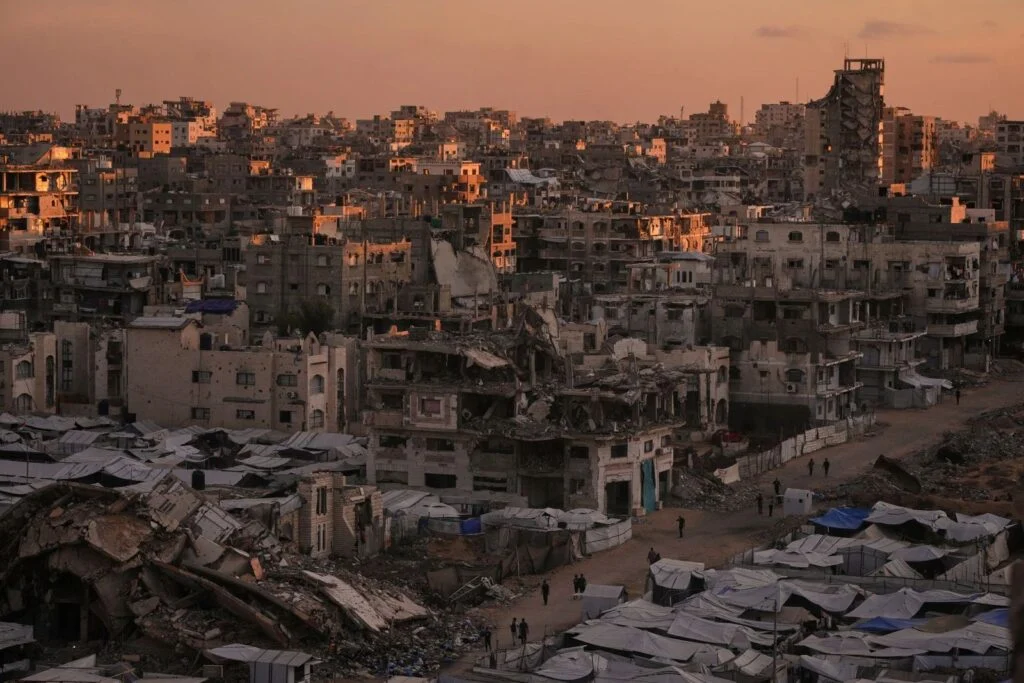
Beneath the mountains of pulverised concrete covering Gaza lies a crisis that goes far beyond logistics. The latest UN estimates put the total rubble at around 61 million tonnes, roughly 33 times the volume cleared from Ground Zero in New York after the Sep. 11 attacks. At the current pace, clearing it could take between seven and 14 years.
The UN estimates that 82% of Gaza’s buildings have been damaged, with at least two-thirds completely destroyed. There are approx. 169 kg of debris per square meter across the strip. The scale has grown steadily, rising from around 40 million tonnes in mid-2024 to over 60 million today.
The rubble conceals dangers on multiple fronts. A UN Environment Programme report from July 2025 estimated that 8 million tonnes of the debris could be hazardous, including nearly 5 million tonnes potentially contaminated with asbestos. Unexploded ordnance adds another layer of risk, with estimates suggesting around 7,000 tonnes of unexploded munitions lie buried across the territory. Hundreds of thousands of acute respiratory infections have been recorded in Gaza since Oct. 7, 2023, with concrete dust identified as a contributing factor.
The UN Development Programme estimates that between 8,000 and 10,000 bodies remain trapped beneath the rubble. So far, only about 907,000 tonnes, roughly 1.5% of the total, have been removed.Clearance teams rely on just seven crushers, all of which were in Gaza before the war.