

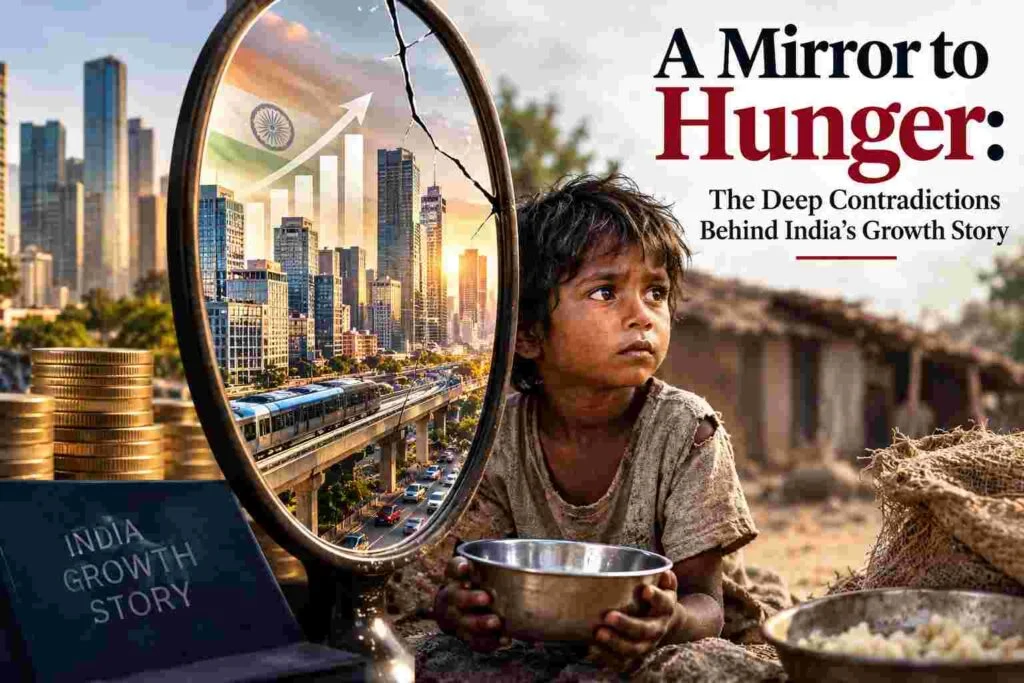
India presents a deeply puzzling picture today. We live in a reality where the shampoo bought by the rich often contains more nutrients than the daily meals of the poor. A quick look at personal care products reveals fruit extracts in shampoos, proteins in moisturizers, and vitamins in skin creams. Society agrees that hair and skin need proper nourishment. But what about the plates of the millions who labour all day under the sun?
The latest Global Hunger Index (GHI) report highlights this silent crisis of hunger and malnutrition. Ranking near the bottom among surveyed nations with a score that places it in the serious category, India’s position shows the scale of the problem. Beyond statistics and rankings, these numbers represent a human tragedy.
Nearly one-tenth of the population continues to live with hunger. The numbers for children under five are even more troubling: nearly thirty per cent suffer from stunting due to long-term malnutrition, while almost twenty per cent suffer from wasting.
These figures should not be read as mere economic data. They represent real children facing real hardship. For a child living in poverty, milk is not a brand seen on a television advertisement; it is essential nourishment for a growing body. Mothers across the country wish to serve milk, pulses, and fruits to their children, but daily financial struggles force them to make difficult choices.
This contrast raises an urgent moral question: Have we prioritised cosmetic nutrition over basic human nutrition? The issue is not about consumer products themselves, but about what our choices say about our priorities. True national progress cannot exist alongside deep inequality in basic needs.
India has made remarkable strides in science and technology, including lunar missions. Yet, the critical challenge remains ensuring that the benefits of this progress reach every household. Economic growth rates and rising skylines alone cannot define success. The true measure of development is whether every citizen has access to health, security, and basic nutrition.
The ambition to be a global leader is positive, but lasting strength comes from a healthy and well-nourished population. Reaching the moon showcases technological capability, but ensuring no child goes to bed hungry remains the primary responsibility of any society.
Real progress will not be measured by official speeches or public campaigns. It will be visible when every child receives adequate nourishment and every family lives with dignity.