

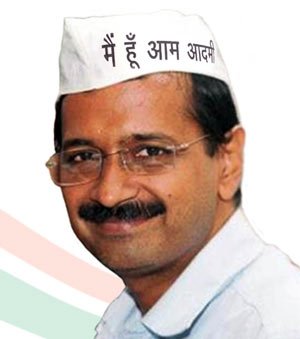
AAP has emerged as an alternative to Congress and BJP in Delhi and has the capability to replicate it elsewhere in due course of time. The electoral verdict shows the writings on the wall for the Congress are much more evident than ever before and it did happen because Congress takes its traditional voters for granted. The stupendous performance of the AAP in Delhi certainly puts question mark on the performance of Congress and the BJP in many ways. In 2014 general elections, AAP is most likely to harm the BJP more than the Congress, especially in urban areas if it chooses to fight elections and does not compromise on its idealism.
The outcome of the verdict in Delhi suggests that AAP has set the agenda and changed the political landscape of the future political blueprint of the politics of idealism to the issues of ground reality which when pitched before the people in a transparent manner got translated into votes of hopes and aspiration for an all together different kind of politics, unlike the traditional ones followed by the BJP or the Congress in the past. The defeat of three time chief minister Sheila Dixit by none other than Arvind Kejriwal and most of the Congress ministers spells the magnitude of the disaster and people’s anger against the Congress regime. Even after the combine anti-incumbency of the Centre and state such kind of political debacle was neither anticipated nor desired.
In Delhi, there are at least 15 assembly constituencies where the percentage of Muslims ranges from 15 to 50 per cent. In 2008 and 2013 Congress gave 6 tickets to Muslims while the BJP gave only 1 ticket to a Muslim candidate. AAP gave tickets to 6 Muslim candidates in 2013 while both BSP and SP gave 11 tickets to Muslim candidates in 2013. Of the total 8 winners of Congress, 5 are Muslims. Out of six Muslim candidates on AAP tickets none of them managed to win. BJP’s only Muslim candidate Mohd Nizamuddin also lost.
In a weeks’ time from here it would be apparent as to how the future course of politics would unfold because the BJP has got 32 seats which is still short of half way mark and AAP has made it clear from day one that it will neither support Congress or BJP nor take support from the BJP or Congress. Although the BJP is the single largest party in Delhi, its vote share has gone down by more than one per cent. Now if we dissect the verdict in Delhi, it becomes almost clear that the AAP has done more harm to the Congress than to the BJP. But what is even more evident that people across sections have voted for the AAP. The only factor that came in way for the AAP was the perception of some of their supporters that if we vote for AAP we may end up by wasting our votes, otherwise they could have easily formed the government. Now it is only a one-year old party and it has to go a long way from one step to another and the party has successfully laid down the foundation of their political journey from the national capital.
In Rajasthan, people’s verdict gets changed after every five years but the margin of loss for the Congress is more than predicted or envisaged. Many believe that in the absence of spontaneous action in the aftermath of the Gopalgarh firing incident and the government’s failure to take prompt action in a number of communal violences in the state and the freebies just before elections took its toll and resulted in the defeat of the Congress in Rajasthan. In Madhya Pradesh, Shivraj Singh Chouhan was unstoppable. Here too, Congress could have minimised the damage if they had projected Jyotiradhe Scindia as the face of the Congress.
Is there more to read from the victory of Shivraj Singh Chouhan? Seema Chisti, in her article, “Signs and wonders,” in The Indian Express on 6 December has rightly said that the strengthening of the BJP chief ministers, especially Shivraj Singh Chouhan — who will be sworn in for the for the third time if the BJP wins, that too in a state bigger than Gujarat — that could lead to the emergence of new power centre within BJP. If we talk of Modi factor in the assembly polls, in Delhi and in Chhattisgarh, the Modi factor cannot be said to have made any kind of impact. Because in Delhi the man of the match is Arvind Kejriwal and there has been sharp decline of percentage of vote share of the BJP as compared to last elections. In Chhattisgarh too, the BJP managed to win by few seats and not any kind of Modi wave was apparent. A simple win cannot be attributed to any kind of wave.
Another significant aspect of the 2013 assembly polls was record voting turnout. As we go by the usual lines, record voting amounts to anger displayed against the ruling party or the people have voted for a change. In Madhya Pradesh, the voting turnout was 72.52 per cent against 69.52 per cent in 2008. In Rajasthan, it was 73 per cent this year as compared to 67 per cent in 2008. In Chhattisgarh, it was 78 per cent as compared to 71 per cent in last assembly elections. In Delhi the polling percentage was 66 per cent as against 61 per cent as compared to 2008 assembly elections. In Mizoram, the polling percentage was 82 per cent this year. Apart from all other factors, massive enrolment of new voters and voters’ awareness drive campaign and most importantly the impact of social media resulted in increased polling percentage. After almost 4/0 in the assembly polls in various states and becoming as a single largest party, the BJP will try to aggressively corner the Congress to demoralise them ahead of 2014 general elections which is not very far from here. As a matter of fact, the BJP will now oppose the Communal Violence Bill to regroup some former allies and to attract new ones to its fold in order to expand the horizons of the NDA.
However, Prime Minister Manmohan Singh, while replying to a question during the Hindustan Times Leadership Summit on 6 December, said that as an organised political party we cannot underestimate the power of opposition to unsettle the ship of the state. Therefore I am one of those who take very seriously our opposition and there is hardly any room for complacency.” On the wakeup of fresh debate on the Communal Violence Bill, Singh said, “It is not a vote catching gimmick.” He also reminded that in the last five or six years the country has witnessed communal riots in many parts of the country in general and in Muzaffarnagar in particular. The Prime Minister also mentioned that as a country we can take pride in our ability to protect all the people of our country and yet there are times when that do not happen. Singh categorically said that our effort has been to create an environment where the officials would have the responsibility to look after the law and order situation effectively; and if riots cannot be prevented, there should be timely compensation for the victims.
Surprisingly, the new draft which is likely to be tabled in the winter session of Parliament is less likely to be effective as desired by minority leaders. Congress has once again compromised on the Communal Violence Bill in order to pacify other political parties for a consensus on it. If by any means it does not serve the purpose then a mammoth exercise to draft and redraft will go in vain.