

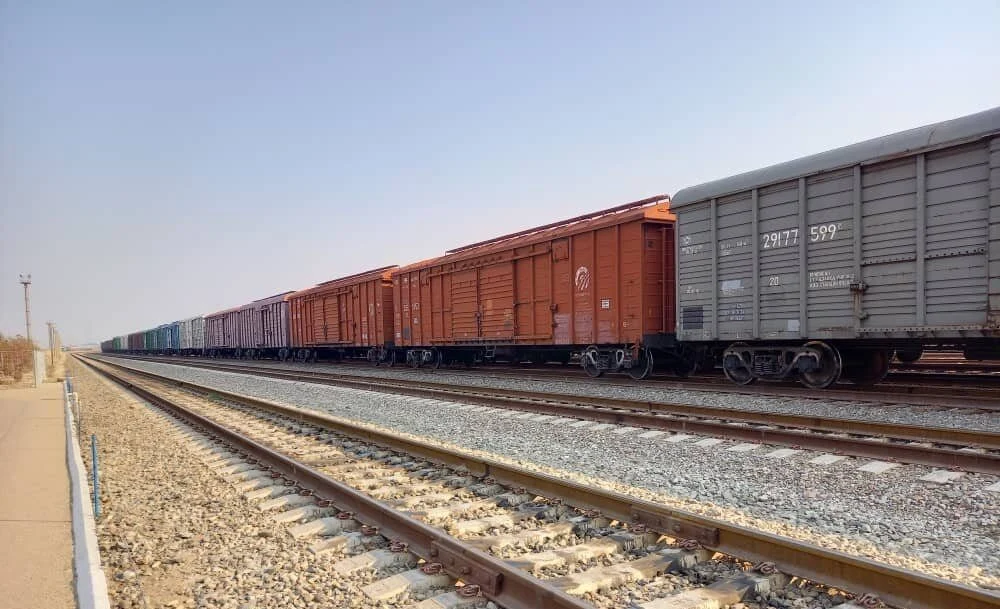
Afghanistan has recorded a sharp increase in rail freight activity, with cargo transported through the country’s railway network rising by more than 33% in the first 11 months of the current year compared to the same period last year, officials said.Mohammad Ashraf Haqshenas, spokesperson for the Ministry of Public Works, said more than five million metric tons of goods were moved through four major railway ports during the reporting period.
As perHaqshenas, shipments included fuel, non-oil commercial goods and other materials entering and transiting the country via the northern and western corridors.The bulk of cargo passed through the key rail links at Hairatan, Aqina, Torghundi, and the Khawaf–Herat railway connecting Afghanistan with Iran.
The rail network plays a critical role in Afghanistan’s trade infrastructure, offering a cost-effective alternative to road transport for bulk imports such as petroleum, construction materials and food supplies.As a landlocked country, Afghanistan relies heavily on transit routes through neighboring states to sustain its economy.
Haqshenas said since the return to power of the Islamic Emirate of Afghanistan, several railway development and expansion projects have been initiated to improve connectivity and increase freight capacity. Some projects have been completed, while others remain under construction. Continued investment in rail infrastructure is expected to strengthen economic activity.