

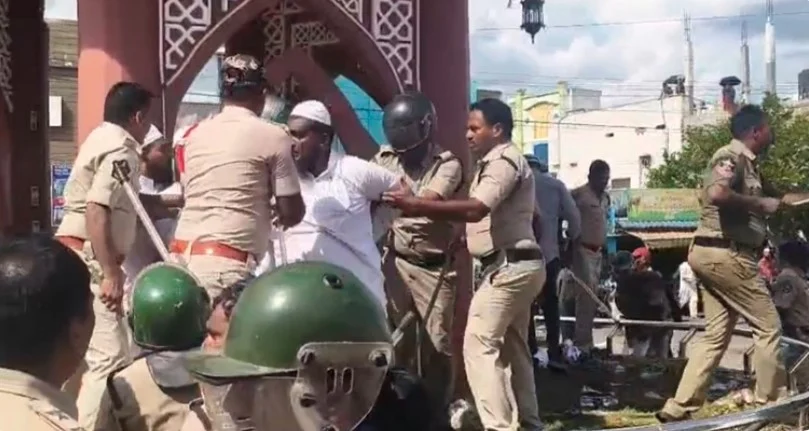
The Association for Protection of Civil Rights (APCR) has released a fact-finding report on the May 9 violence at Almaspet Circle in Kadapa, Andhra Pradesh, raising serious allegations of selective policing, unlawful detention, custodial violence, and discriminatory targeting of Muslims in the aftermath of the incident.
Titled “Selective Justice: Detention, Torture, and Religious Targeting”, the report is based on field visits, witness accounts, interviews with affected families, examinations of FIRs and remand reports, and other supporting documentation collected by the organisation’s fact-finding team.
According to the report, tensions erupted over competing demands to rename Almaspet Circle as either “Tipu Sultan Circle” or “Hanuman Circle.” APCR stated that the conflict intensified after unauthorised “Hanuman Circle” banners were allegedly installed despite an earlier municipal proposal favouring the name “Tipu Sultan Circle.”
The report claims that Muslim residents were disproportionately targeted during the police response. APCR alleged that at least 25 Muslim minors were detained and assaulted without adherence to juvenile justice safeguards. It further alleged that 22 Muslims were illegally detained for at least three days without warrants and subjected to custodial assault.
The organisation also accused the police of filing serious non-bailable charges against Muslim accused, while non-Muslim individuals involved in the incident were allegedly booked under comparatively lighter sections. The report additionally alleged that police personnel carried out aggressive lathi charges inside Muslim-majority localities even after crowds had dispersed.
Victims and witnesses interviewed by the fact-finding team reportedly described instances of custodial torture, intimidation, and denial of due process.
APCR said its investigation challenges the official portrayal of the incident as merely a “clash between two communities.” According to the organisation, the testimonies and evidence gathered suggest patterns of selective enforcement and discriminatory prosecution.
The report also criticised the local administration for allegedly failing to defuse tensions despite prior knowledge of the naming dispute and for not acting promptly against provocative mobilisation by right-wing groups.
In its recommendations, APCR has demanded an independent judicial or magisterial inquiry into both the violence and the subsequent police action. It also called for a review of cases involving minors under juvenile justice standards, examination of FIRs to ensure parity and procedural fairness, preservation and forensic examination of CCTV footage and police records, and action against officials accused of custodial violence or discriminatory conduct.
The organisation further sought legal aid, medical assistance, and protection for victims and witnesses, stressing that accountability and equal application of the law are necessary for restoring communal harmony and public trust.
The full report, “Selective Justice: Detention, Torture, and Religious Targeting – Fact-Finding Report on the Kadapa Almaspet Incident,” has been made available by APCR.