

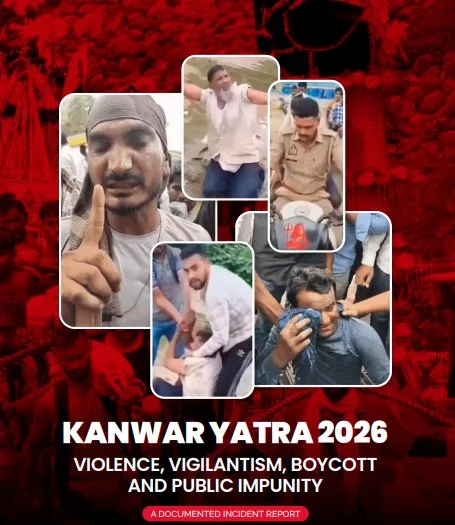
The Association for Protection of Civil Rights (APCR) has released a report titled “Kanwar Yatra 2026: Violence, Vigilantism, Boycott and Public Impunity,” documenting reported incidents of physical violence, road-related assaults, economic and food boycotts, administrative restrictions, obscene public conduct, and concerns over unequal enforcement of public order during and around this year’s Kanwar Yatra.
The Kanwar Yatra formally took place from July 30 to August 11, 2026, with several related incidents reported before, during and immediately after the main pilgrimage period. The report covers incidents across Uttar Pradesh, Uttarakhand, Madhya Pradesh, Delhi and Bihar, with spillover incidents continuing through August.
According to APCR, the report records 18 reported hate incidents across the 13-day period, comprising nine documented physical or coercive incidents, at least four boycott or discriminatory food-economy measures, and at least five viral or reported references to obscene conduct that the organisation says require independent verification. The report also records 18 reported fatal assaults among the compiled cases.
APCR clarifies that these figures represent counts of distinct entries documented in its report rather than an official national crime total, and it states that the report does not suggest all Kanwariyas engaged in misconduct.
The report’s central concern, according to APCR, is the unequal enforcement of public order. It documents how traffic restrictions affected residents, commuters and businesses, while route-side restrictions affected food sellers and Muslim-owned businesses in particular. The report also examines how administrative restrictions combined with vigilante enforcement can create conditions in which economic exclusion and physical coercion overlap.
The organisation said it is releasing the report to consolidate the documented incidents into a single public record and to draw attention to the need for consistent enforcement of law and public-order rules irrespective of religious identity. The report says it distinguishes documented incidents from interpretation and flags areas where available video or online material requires further verification.