

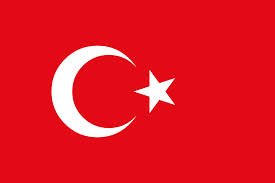
US President Joe Biden has created an avoidable major controversy by taking a stand on the occasion of Armenian Genocide Remembrance Day on April 24 that the killings of Armenians in 1915-16 during World War-I in territories under the control of the Ottoman Empire constituted “an act of genocide”. His remarks appear to be neither in the interest of the 60,000 plus Armenians living in Turkey nor the US itself. Reports suggest that the statement, made by any US President for the first time, may lead to increased hate crimes against the tiny minority community in Turkey.
The Ottoman Empire with Istanbul as its capital and founded by Turkmen tribal chief Osman, spelt as Othman in Arabic, lasted over 600 years before it ended in 1922, giving birth to the modern Republic of Turkey and many other countries in Europe, West Asia and Africa.
The claim that 1.5 million Armenians lost their lives because of actions of the Ottoman Empire in territories under their control is not acceptable to Turkey. Even otherwise, what could the present rulers of Turkey do about something that happened over 100 years ago? But Turkey will suffer economically and otherwise if the world community insists on describing the 1915-16 killings of Armenians as “an act of genocide” as it may have legal implications.
The Ottoman rulers entered the war on the Germany-Austria-Hungary side, called the Central Powers, willy-nilly. Sultan Mehmed V, the head of the Ottoman Empire, had grown too weak after a war with Italy to have full control over his ministers, who were unsure of which side of the World War they should align with. The secret pact signed between the Germans and the Ottomans in 1914 did not have the ruler’s signature. The situation that prevailed was such that the Ottomans had to take a side, but they could not be on the side that included Russia with which they had troubled relations. That is why they abandoned the alliance constituted by the UK and France as it included Russia too. The genocide issue, therefore, deserves to be buried for good despite the provocations from extremist Armenians.
Biden, of course, may boast that he has honoured a promise he had made during his presidential election campaign and that his statement will enable the US to join over 30 countries which have been insisting that the Armenians suffered “a genocide” at the hands of the Ottoman rulers. But the stand he has taken in the name of giving primacy to human rights will damage considerably the US relations with Turkey, a
member of NATO, a country which cannot be ignored for protecting American interests in West Asia, Central Asia and Afghanistan.
Biden says he took the stand to “honour” the victims and not to blame anyone, but the truth lies elsewhere. Perhaps, Biden primarily wanted to express his displeasure over the Turkish decision to buy Russian missiles – S400 defence system – and a Turkish state bank’s role in facilitating payments to Iran for its transactions with other countries despite the US sanctions against Teheran being in force.
Turkey’s role has also been controversial in last year’s war between Armenia and Azerbaijan. Ankara openly supported Azerbaijan, ignoring the views of many countries, as this suited its regional interests.
In any case, the relations between the US and Turkey have been tense ever since an unsuccessful but bloody coup in July 2016 to overthrow Turkish President Recep Tayyip Erdogan by elements supported by US-based controversial religious figure Fetullah Gulen in the Turkish armed forces. The Turkish government has punished all those involved in the failed coup attempt except for Gulen, a Turkish national who lives in the US and the authorities in Washington DC refuse to hand him over to Turkey.
Biden and Erdogan are scheduled to be in Brussels, Belgium, for the NATO meeting on June 14 when they may discuss the Armenian genocide issue with the Turkish President trying to convince the American leader to abandon his controversial stand. But chances are that Biden would refuse to oblige the Turkish leader.
If Biden refuses to change his stand it will not only lead to a new low in the relations between the US and Turkey, but also a tremendous pressure on the world community to punish Ankara for the actions of the Ottoman Empire against Armenians.
Let us see what genocide exactly stands for according to the UN Convention on the Prevention and Punishment for the Crime of Genocide? The Convention’s Article II says, “In the present Convention, genocide means any of the following acts committed with intent to destroy, in whole or in part, a national, ethnical, racial or religious group, as such: (a) Killing members of the group; (b) Causing serious bodily or mental harm to members of the group; (c) Deliberately inflicting on the group conditions of life calculated to bring about its physical destruction in whole or in part; (d) Imposing measures intended to prevent births within the group; (e) Forcibly transferring children of the group to another group.”
Now have a look at the kind of punishment prescribed by the UN for an act of genocide. Article VIII of the UN Convention, adopted in 1948, declares: “Any Contracting Party may call upon the competent organs of the United Nations to take such action under the Charter of the United Nations as they consider appropriate for the prevention and suppression of acts of genocide or any of the other acts enumerated in
Article III.”
This clearly shows that the US President wants Turkey to suffer crippling punishment like UN sanctions though Ankara had nothing to do with what the Ottoman Turks did even if it is accepted that the Ottoman rulers really indulged in genocide.
Turkey suffered crippling US sanctions during the Donald Trump administration following the arrest of a controversial American pastor, Andrew Brunson, in October 2016 on charges that included his links with the outlawed Kurdistan Workers’ Party (PKK) and Fethullah Gulen’s movement, accused of being involved in the 2016 failed coup in Turkey. Brunson was a pastor associated with the Izmir Resurrection Church. But he was a US citizen who lived in Turkey for a long time. He was ultimately released by the Turkish authorities, but his arrest brought the relations between the two NATO members to such a low point that ultimately the US came out with sanctions against Turkey. A NATO power punished a NATO ally for the first time in the history of the military alliance.
Turkey under the leadership of Erdogan has been made to suffer for a few years by the US with the ultimate objective of economically weakening it to such an extent that it abandons its active role in West Asia as well as in Central Asia where the US and its regional allies feel their interests are seriously threatened. Turkey has also emerged as a major threat to the dominant position of Saudi Arabia, a close US ally, in the Muslim world which cannot be tolerated by America. So, Turkey has to suffer the US wrath, come what may.
[The writer is a senior journalist and columnist based in New Delhi.]