

A political storm in Assam has escalated into a constitutional confrontation, as multiple complaints and public interest litigations (PILs) against Assam Chief Minister HimantaBiswaSarma reach both the Gauhati High Court and the Supreme Court of India.
At the centre of the controversy is a now-deleted video posted on the official social media handle of the Bharatiya Janata Party’s Assam unit, allegedly depicting the Chief Minister symbolically firing bullets at Muslim figures, alongside captions such as “Point blank shoot” and “No Mercy.” Will the SC ever help implement its own Judgment on hate speech? Earlier, former Supreme Court Judge Justice Madan Lokur in an interview with senior Journalist Karan Thapar said action should be taken against Assam Chief Minister for hate speech.
The fallout has triggered criminal complaints, public outrage from civil rights advocates, and a wave of petitions demanding judicial intervention against what critics describe as hate speech and communal incitement. On Feb. 7, 2026, the BJP Assam unit posted a video showing Sarma handling a firearm in an edited sequence that appeared to depict bullets striking figures identifiable as Muslims by skullcaps and beards. Though the video was swiftly deleted after widespread backlash, it had already circulated widely across social media platforms. More than 40 eminent citizens of Assam, including academicians, doctors, writers and retired civil servants have appealed to the Guwahati High Court to take suo motu cognizance of the statement made by Assam CM.
Opposition leaders and activists condemned the imagery as inflammatory and dehumanising, particularly in the sensitive run-up to the Assam Assembly elections. Critics argued that the visual symbolism crossed the boundary from political rhetoric into potential incitement, especially in a state marked by complex demographic tensions and communal sensitivities.
Supporters of the Chief Minister, however, have dismissed the outrage as politically motivated, asserting that the video was misinterpreted and that Sarma’s broader comments relate to issues of illegal immigration.
Civil rights activist Harsh Mander filed a police complaint accusing the Chief Minister of repeatedly making statements that target Muslim communities, particularly Bengali-origin Muslims often referred to pejoratively as “Miyas.” Mander’s complaint alleges a pattern of rhetoric that fosters communal polarisation and undermines constitutional guarantees of equality and secularism.
In response, Sarma publicly stated he was prepared to face legal action and remarked that he would file “at least 100 cases” against Mander, reflecting the sharply adversarial tone that has characterised the dispute.
The controversy soon moved beyond Assam. Asaduddin Owaisi, chief of All India Majlis-e-Ittehadul Muslimeen (AIMIM), lodged a formal complaint with Hyderabad Police, describing the video as “genocidal hate speech.” Owaisi alleged that the imagery and related remarks constituted a deliberate attempt to promote enmity between religious communities and outrage the religious feelings of Muslims.
In Assam, opposition figures, including Badruddin Ajmal of AIUDF demanded immediate action, with some calling for Sarma to be barred from contesting elections. The PUCL described the Chief Minister’s conduct as a “serial violation” of his constitutional oath and sought his resignation.
Legal proceedings began in earnest when former High Court judge and lawyer Hafiz Rashid Choudhary filed a petition before the Gauhati High Court, seeking judicial scrutiny of the Chief Minister’s speeches and public messaging, alleging that they violate constitutional principles of equality, secularism, and public order.
The petition argues that as a constitutional functionary, the Chief Minister bears heightened responsibility to avoid rhetoric that could inflame communal tensions. The High Court is expected to examine whether the statements and visual content meet the threshold of unlawful hate speech under Indian penal provisions.
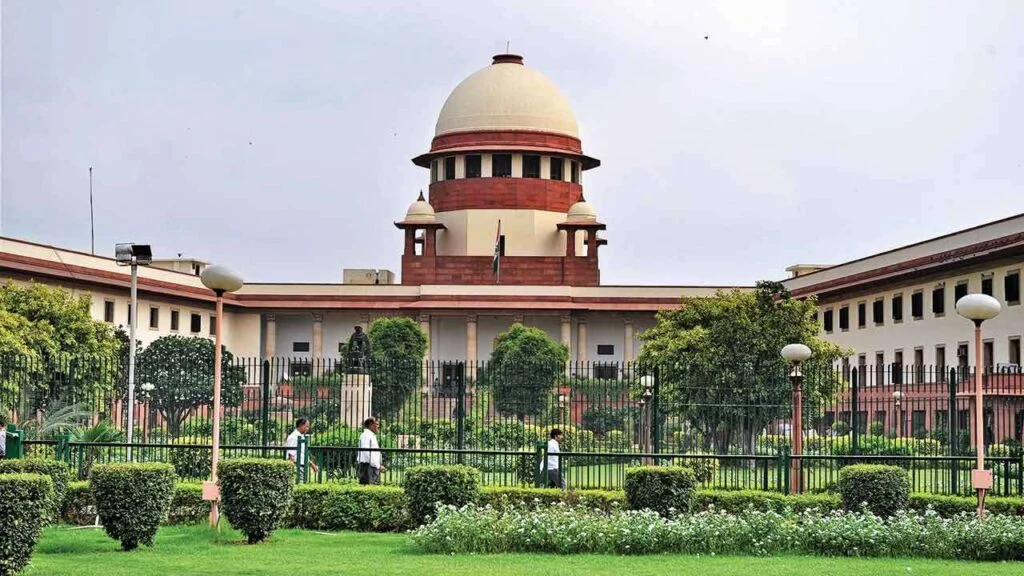
Simultaneously, multiple petitions have reached the Supreme Court of India. A petition by noted Assamese scholar Hiren Gohain, former DGP of Assam Harekrishna Deka, senior journalist Paresh HareKrishna and senior advocate SantanuBorthakur challenges the alleged hate speech and seeks directions for enforcement of existing hate speech laws. The CPI(M) and the CPI have jointly approached the apex court, demanding mandatory registration of FIRs against the Chief Minister. Constitutional conduct groups have sought guidelines to regulate public officials’ speech. Trinamool Congress MP Mahua Moitra has also moved the Court, seeking accountability mechanisms.
A group of 12 eminent citizens, including former Delhi Lieutenant Governor Najeeb Jung, filed a petition urging the Court to frame binding guidelines to prevent discriminatory or communal remarks by public officials, even when such a speech does not meet the narrow criminal definition of hate speech.
Senior advocate Hafiz Rashid Choudhary has also filed a petition in the Guwahati High Court.
These petitions collectively argue that the absence of timely FIRs reflects selective enforcement and undermines public confidence in the rule of law.
During preliminary hearings, the Chief Justice of India observed that “part of the election is fought in the Supreme Court,” highlighting judicial concerns about courts becoming arenas for political contestation. Nonetheless, the Supreme Court has, in recent years, taken an active role in addressing hate speech.
In earlier cases, the apex court has emphasised that freedom of speech under Article 19(1)(a) is subject to reasonable restrictions in the interests of public order and morality. It has also directed states to act suo motu in registering cases of hate speech, even without formal complaints.
Legal experts note that the present cluster of petitions could push the Court to clarify the standard for determining when political speech becomes unlawful incitement, particularly when amplified through social media and digitally edited content. If the Court issues fresh guidelines, they could define accountability norms for elected representatives nationwide, especially regarding communal rhetoric during election campaigns.
At the heart of the controversy lies a constitutional dilemma: how to reconcile robust political debate with the imperative to preserve communal harmony. India’s constitutional framework guarantees free expression but also mandates equality before the law and prohibits discrimination on religious grounds.
Petitioners argue that public officials, by virtue of their office, must adhere to higher standards of constitutional morality. Even if certain remarks do not strictly violate penal provisions, they may still erode the secular fabric of governance.
Defenders of the Chief Minister counter that political speech addressing demographic change or border security is protected discourse and that criminalising such speeches risks chilling democratic debate.
What began as a controversial social media post has evolved into a nationwide legal reckoning. With multiple complaints, FIR demands, and PILs pending before Gauhati High Court and Supreme Court, the case represents a test of India’s institutional capacity to respond to allegations of hate speech by high-ranking officials.
The judiciary now faces the delicate task of balancing electoral politics, constitutional rights, and public order. Its eventual rulings may not only determine the legal fate of Assam’s Chief Minister but also set enduring standards for political discourse in the digital age.
As Assam heads toward elections, the courts’ decisions could resonate far beyond the state’s borders shaping the contours of permissible speech and the meaning of constitutional responsibility in the world’s largest democracy.