

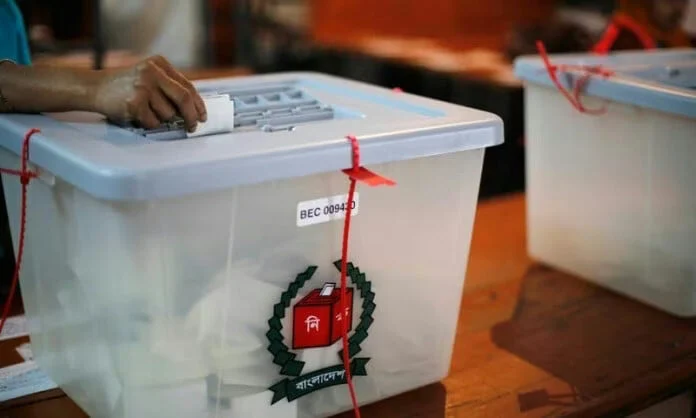
Voters in Bangladesh have endorsed an ambitious package of constitutional reforms in a nationwide referendum held alongside parliamentary elections on February 12, with 60.26 per cent turnout and a decisive majority backing the proposed changes, according to the Bangladesh Election Commission (BEC).
Official results show 48,074,429 votes cast in favour of the reforms and 22,565,627 against. Election Commission Senior Secretary Akhtar Ahmed announced the figures in Dhaka, describing the outcome as a clear mandate for structural political change.
Polling took place in 299 of the country’s 300 constituencies after voting was suspended in one seat following the death of a candidate from Bangladesh Jamaat-e-Islami (BJI). While the High Court temporarily barred the declaration of parliamentary results in two constituencies, EC officials confirmed there was no legal obstacle to including referendum ballots from those seats in the national count.
A Mandate for Institutional Restructuring
The referendum, introduced by the interim administration led by Nobel Peace Prize laureate Dr. Muhammad Yunus, proposes far-reaching reforms aimed at recalibrating Bangladesh’s political architecture after years of intense polarisation.
At the heart of the approved measures are constraints on executive authority and new safeguards intended to prevent the concentration of power. Following are the most consequential provisions:
- The governing party will no longer be able to amend the Constitution unilaterally.
- Major constitutional amendments will require approval through a national referendum.
- A two-term, 10-year cap will apply to the office of Prime Minister.
- A bicameral legislature will be established to create a more balanced parliamentary system.
- The Deputy Speaker and heads of key parliamentary committees will be drawn from the opposition.
- The judiciary’s independence will be strengthened.
- The President’s discretionary power to pardon convicted individuals will be curtailed.
- Fundamental rights will be expanded, including explicit protections against arbitrary internet shutdowns.
- Women’s representation in parliament will be progressively increased.
- Constitutional recognition will be extended to the languages of ethnic minority communities alongside Bangla.
- The ruling and opposition parties will jointly participate in forming the caretaker government, Election Commission and Public Service Commission.
Taken together, the reforms represent the most comprehensive attempt in decades to rebalance power among the executive, legislature and judiciary in the South Asian nation of more than 170 million people.
Regional Divergence
Despite the nationwide endorsement, the reforms met resistance in Gopalganj, long considered a political stronghold of the Awami League and the home district of former prime minister Sheikh Hasina. In all three constituencies there, ‘No’ votes outnumbered ‘Yes’ ballots by wide margins.
In a notable parallel development, the Bangladesh Nationalist Party (BNP) captured all three parliamentary seats in the district, a first in the party’s history.
A Turning Point?
The referendum’s approval marks a pivotal moment in Bangladesh’s political evolution. Supporters argue that the reforms will institutionalise checks and balances, reduce executive dominance and restore public confidence in democratic governance. Critics, however, caution that implementation – particularly the transition to a bicameral system and the enforcement of term limits – will test the country’s political consensus.
With the referendum passed, attention now turns to how swiftly and effectively the incoming parliament moves to operationalise the reforms – and whether they will usher in a more durable equilibrium in one of South Asia’s most politically dynamic states.