

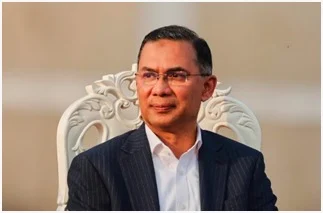
Prime Minister Tariq Rahman will not be attending the upcoming BRICS Summit in India. Dhaka has already informally communicated this decision to New Delhi, according to multiple diplomatic sources from both Bangladesh and India.
The sources further confirmed that a designated representative will attend the summit on behalf of the Prime Minister. However, an official public announcement from the government regarding this matter is still pending.
Clarifying the government’s position, Foreign Minister Dr.Khalilur Rahman briefed journalists at the Ministry of Foreign Affairs on Monday, stating that no decision of principle had been taken regarding a presidential or prime ministerial bilateral visit to India at this time. He emphasised that the invitation to the BRICS Summit was extended to the Chairperson of BIMSTEC rather than directly to the Prime Minister of Bangladesh.
Foreign Ministry Briefing and High-Level Envoy Meeting
High Commissioner of India to Bangladesh, Dinesh Trivedi, held his first formal courtesy meeting with Prime Minister Tariq Rahman in Dhaka. Foreign Minister Khalilur Rahman confirmed that Dhaka urged Delhi to expedite the extradition of Sheikh Hasina, who has been sentenced to death for crimes against humanity, as well as a suspect in the murder of July Revolution martyr Sharif Osman Hadi. India was explicitly told that it must foster a positive environment to move bilateral ties forward.
The Foreign Minister noted that Delhi appears to have understood the gravity of Bangladesh’s reaction to the events of August 5 in Delhi, and High Commissioner Trivedi assured Dhaka that Delhi would not engage in actions that demean or disrespect Bangladesh.
Context Behind the BRICS Invitation and Protocol Controversy
According to a diplomatic source, initial discussions regarding a potential full bilateral visit by Prime Minister Tariq Rahman to India took place during the meeting with Trivedi. Because India is already aware that Prime Minister Rahman will not attend the BRICS Summit, future bilateral scheduling was broached, though no concrete decisions were reached.
A senior official handling VVIP movement at the Foreign Ministry confirmed that no preparation is underway for a Delhi visit. Instead, diplomatic protocols are fully focused on Prime Minister Rahman’s upcoming trip to New York on September 21 to attend the United Nations General Assembly.
On July 14, Indian Prime Minister Narendra Modi invited Tariq Rahman to attend the BRICS Summit Outreach Programme scheduled for September 12–13 in Delhi in his capacity as the Chairperson of BIMSTEC. Ministry officials noted with dissatisfaction that the title ‘Prime Minister’ was omitted before Tariq Rahman’s name in the formal letter, which was viewed as a breach of diplomatic protocol that India should have addressed.
Strategic Calculations and Expert Analysis
Diplomatic analysts view India’s invitation through the BIMSTEC framework as a strategic manoeuvre. Tensions between Dhaka and New Delhi have escalated following perceived aggressive moves by India, particularly allowing deposed leader Sheikh Hasina a platform in India to issue political statements, which created severe discontent among Bangladesh’s top policy makers.
International relations analyst Prof. M. Shahiduzzaman characterised BIMSTEC as an ineffective organisation favored by India as an alternative to SAARC. He argued that there is no operational justification for the Prime Minister to visit Delhi under the BIMSTEC banner and recommended maintaining a strategic distance until India fundamentally recalibrates its policy toward Bangladesh.
Bilateral Focus on Extradition, Border Issues, and Sovereignty
During the Foreign Ministry briefing, Dr.Khalilur Rahman detailed that Bangladesh stressed the judicial extradition of Sheikh Hasina, as she has been convicted by a constitutional pillar of the state. Bangladesh also provided all requested documentation regarding the primary suspects in the murder of July Revolution figure Sharif Osman Hadi, demanding their immediate extradition.
Matters regarding border killings and unilateral push-ins were also raised briefly. Dr.Khalilur Rahman emphasised that political activities by convicted individuals on Indian soil disparage Bangladesh’s judiciary, expressing confidence that India now understands the situation and will avoid actions that disrespect Bangladesh’s core state institutions going forward.
Response from the Indian High Commission
In a press statement released after the high-level meeting at the Cabinet Division in the Bangladesh Secretariat, the Indian High Commission stated that High Commissioner Dinesh Trivedi conveyed warm greetings from Prime Minister Narendra Modi to Prime Minister Tariq Rahman. The statement highlighted India’s intent to work jointly with the government and people of Bangladesh with a positive, constructive, and forward-looking approach.
Speaking to journalists following a subsequent meeting with Home Minister Salahuddin Ahmad, Envoy Trivedi described Prime Minister Tariq Rahman as a well-regarded public figure and noted that their interaction was warm and cordial. Trivedi emphasised that geography, shared history, and neighbourly ties between Bangladesh and India cannot be altered, expressing optimism that existing challenges would be resolved constructively through sustained high-level engagement.