

MOHAMMAD NAUSHAD KHAN analyses the results of recent bye-polls in different states.
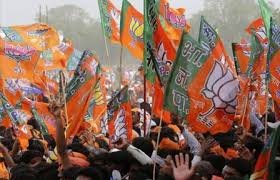
The outcome of recent bye-polls in various states is neither big achievement for the combined UPA, nor a stunning defeat for the NDA. But the fine prints of the verdict has got underlying message for both. For UPA, or secular parties, the verdict calls to adapt to the changing political atmosphere, keeping on the backburner their age old political rivalries with numerical understanding and flexibility. For NDA, the verdict cautions against politics of hate and reminds them not to deviate from developmental plank and promise of good governance for the sake of achieving maximum polarisation.
The writings on the wall are crystal clear that divisive agenda aimed at polarising may work for some time but not always. In politics, there are no permanent friends or foes and the togetherness of the JD-U and the RJD is a well thought strategy to remain alive and ticking when polarised sentiments are running high. The political significance of such an alliance will help regional parties remain relevant and decisive in political corridors. And it can turn out to be fruitful in places where strong regional parties are traditionally poles apart to formulate wider coalition to face ire of even maximum polarisation. The ruling coalition will try to divide them to win small or big electoral battles at local, state or national level.
The big question: will political parties in Uttar Pradesh learn something from the Bihar experiment? Or will they simply remain firm to their respective ideologies and political rivalries without having a second thought on the damage and political erosion they have suffered during the Lok Sabha polls?
Regional parties have their own reservation and logic to keep from other regional stronghold party in Uttar Pradesh. The reason they believe it would erode their own political support base. But now after the Lok Sabha polls, such loss of votes and support would be much less from loss that may follow by remaining alone when all efforts are made to achieve maximum polarisation. Now, it is for the regional parties to asses as to which loss they would try to avoid. There may be some loss on the either side after alliance but collectively they might gain to keep them politically relevant and dominant in political formation and equation.
In the Bihar bye-elections, the BJP-LJP unimpressive performance as compared to last Lok Sabha polls has not resulted out of JDU and RJD coming together. The other factor which should be a cause to worry for the NDA is its loss of support base in terms of vote share. During Lok Sabha polls, NDA vote share in these assembly constituencies were 45.3 per cent which has come down to 37.3 per cent. There has been decrease of 8 per cent as compared to performance during Lok Sabha polls. On the contrary, the vote share of the RJD and JD-U combine has gone up from 40.3 per cent in Lok Sabha to 44 per cent which amounts to an increase of 4.6 per cent gain. Now, the percentage drop in the vote share and the decrease in the number of tally after spectacular gain during the last Lok Sabha polls must be a cause of concern for the BJP and strong reason for them to introspect as to what led to such demoralising performance just after three months.
BJP managed to win Narkatiaganj, Hajipur, Banka and Mohania seats, RJD has won Rajnagar, Chapra and Mohiuddinagar, while JD (U) won in Jale and Parbatta and Congress won Bhagalpur seat from BJP. Of the total 10 bye-elections seats, the JD-U, RJD and Congress combine managed to win 6 seats while the BJP and the LJP got only 4 seats. In terms of performance of the BJP, the bye-election results are even more surprising if compared with the 2010 assembly election verdict in these seats for the BJP. In 2010 assembly election, BJP had won six out of these 10 seats. Out of the 18 bye-election seats in Bihar, Karnataka, Punjab and Madhya Pradesh, Congress and its allies won 10 seats while seven seats went to BJP and one to its ally SAD.
Now after bye-elections in four states the preparation is in full swing for the bye-elections to be held in Uttar Pradesh for one Lok Sabha seat and 10 Assembly seats to take place on 13 September. The manner in which BJP leaders are using divisive language and formulating strategy in the run to the preparation of the bye-polls suggests that BJP has not analysed the fallout of the recent bye-elections. Very recently, Union Minister for Minority Affairs Najma Heptulla has stirred controversies by saying that all Indians are Hindus and that the Constitution does not allow reservation to minorities.
Similarly, India is for Hindu and all Indians are Hindus has been raised time and again since the NDA government came to power by its various stake holders, allies or fringe elements associated with it.
Of the total 600 riots that took place after the Lok Sabha polls, nearly 200 riots have occurred in places where bye-elections are to be held. At equal intervals divisive and hate theories are dished out and exploited to have maximum polarisation in order to make it BJP versus the rest contest. And it could only become possible when there is maximum polarisation.
The data put forward by NDTV reveals how propaganda were made to highlight the alleged abuse of Hindu women by Muslim men in an attempt to paint a communal colour to derive political mileage.
The report further reveals that Muslims were accused in seven of the 37 rape cases reported this year. The accused were Hindus in the remaining 30 cases. This year, there have been 334 rape cases in the districts of Meerut, Bulandshahr, Ghaziabad, Gautam Buddh Nagar, Baghpat, Hapur, Saharanpur, Muzaffarnagar and Shamli. In 25 cases, the accused are Muslim and the women Hindu. This is almost the same as the number of cases – 23 – in which the women are Muslim and their attackers are Hindu. In 96 cases, the accused and victims are Muslim. And in 190 cases – the highest number – the accused and the victims both are Hindu. In UP or elsewhere, love jihad and conversion are being used to alienate communities socially apart from one another.
On 28 August, first anniversary of Muzaffarnagar riots, no serious attempt was made to make an assessment of the damage done to the social cohesiveness and the idea of togetherness apart from loss of lives, wealth and property. In Saharanpur riots, according to Assocham (Associated Chambers of Commerce and Industry) Study riots in Saharanpur have resulted in the loss of Rs 244 crore. Forget the amount of loss that may take place in the aftermath of the trust deficit between the two communities. Will the political parties really evaluate the kind of damage suffered?
The best example to evaluate is the fallout in Meerut which is more than enough to shake up the consciousness of the people and the political class that apart from human and material loss, the loss of image at the international forum as a disturbed place will have far reaching consequences. Look in the way the disturbance in Meerut has affected its image which was once considered to be a fertile land for investment. Are all these loses not national loss? Can we imagine the loss we have suffered due to communal violence since Independence?
A report published in the Hindustan Times on 27 August is an eye opener for our political parties. They must realise how badly they will hit the interest of the country after every riot. According to a report in June 2011, American financial services firm Morgan Stanley placed Meerut fifth on the vibrancy index of India’s top cities. Today, Meerut seems to have blown it all away. The religious divide in this city and the entire strife torn district, the largest in West UP, is palpable. The resultant ghettoisation belies Meerut’s march towards globalisation. Once thriving on the industry growth, the city has fallen prey to its polarised past after the UP riots.
Let the people and the politicians pledge not to harm the pace of growth of any city for their vested political interests if they really want to develop smart cities in the near future. And then only the idea of a developed nation can be achieved. And for that, political parties must keep the fringe elements associated with them at distance and do not allow them to overshadow their social measures for the people with hate and divisive agenda at equal intervals. Let peace and tranquillity prevail.