

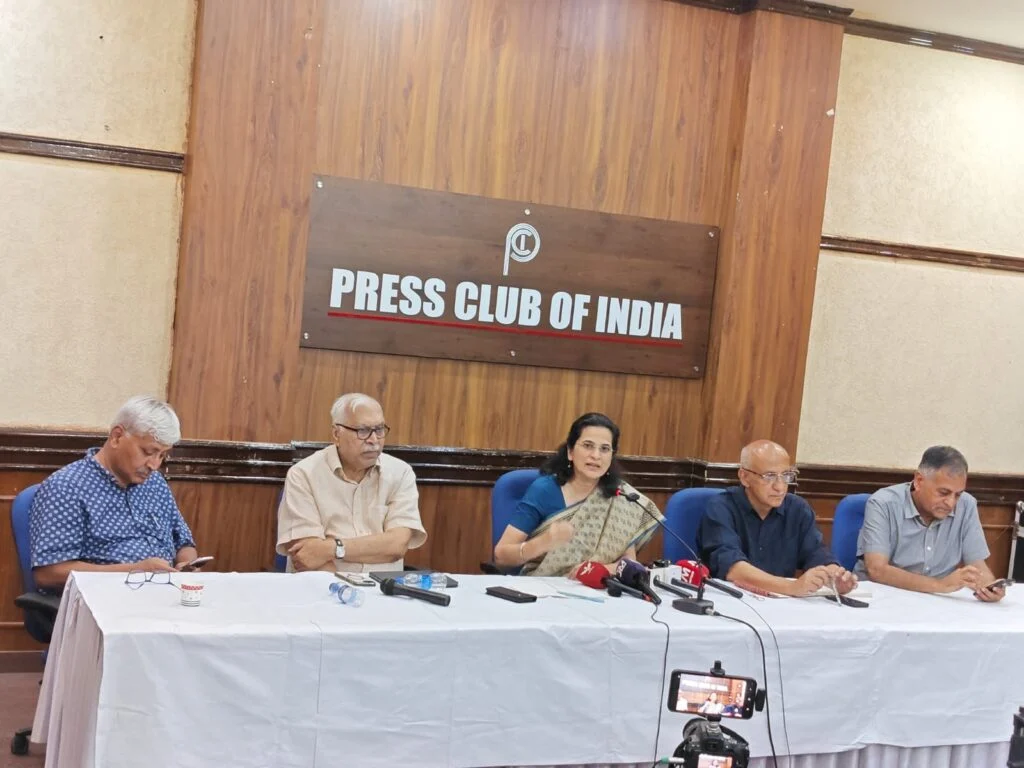
As the Election Commission of India began the third phase of the Special Intensive Revision of electoral rolls on May 14, activists, former constitutional authorities, and public intellectuals raised concerns over the exercise, alleging that it threatens democratic integrity and risks disenfranchising large sections of voters.
The concerns emerged during a discussion on “SIR, Elections and One Nation One Election” organised in New Delhi by the Constitutional Conduct Group and the Group on Federalism and Elections.
Former Election Commissioner Ashok Lavasa questioned the constitutional basis and transparency of the revision process. Referring to the ECI’s use of Article 326 of the Constitution to justify the exercise, he asked whether the Commission would disclose how many citizens had effectively been excluded from electoral rolls under the provision.
Lavasa said several unanswered questions around the SIR had remained unresolved for nearly a year. He recalled earlier Supreme Court observations stating it would intervene in the event of largescale voter deletions. “Now that mass deletions have occurred, the question is when that intervention will happen,” he said.
Transparency activist Anjali Bharadwaj highlighted voter deletions in West Bengal, alleging that many excluded voters possessed valid documents such as passports and birth certificates. Nearly 27 lakh names were removed from electoral rolls in West Bengal.