

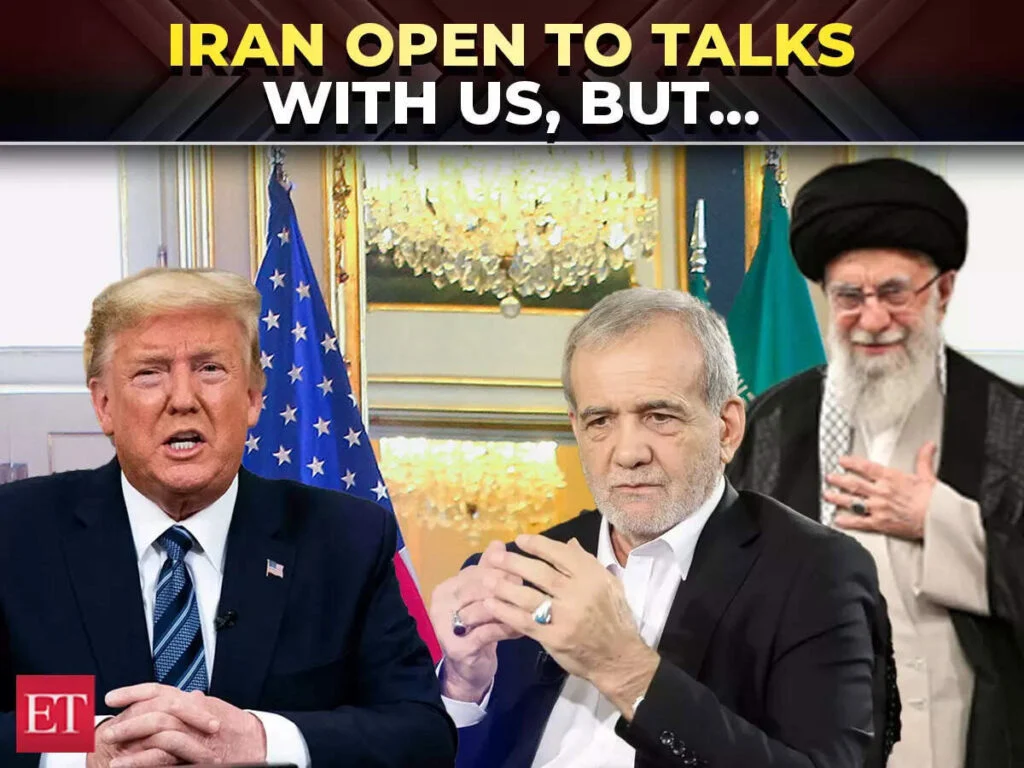
The much-awaited peace process involving Pakistan, Iran, the United States, Israel, and Lebanon represents one of the most complex and consequential geopolitical developments of the 21st century. These actors are entangled in a web of historical rivalries, ideological conflicts, proxy wars, and strategic alliances that extend far beyond regional boundaries. The success or failure of peace efforts among them has profound implications not only for West Asia’s stability but also for global peace and the world economy. The 10-day ceasefire between Israel and Lebanon, Trump’s willingness to go to Pakistan to sign any deal and opening to Strait of Hormuz by Iran are welcome sign and a step forward towards peace and stability not only in the region but in the entire world.
Recent developments highlight both volatility and potential for peace. A fragile ceasefire between Israel and Lebanon, brokered by the United States, underscores ongoing diplomatic efforts to de-escalate tensions. However, the situation remains unstable, with intermittent violence and deep mistrust between parties.
At the core of the conflict lies the longstanding rivalry between Iran and Israel, often described as a shadow war that has now escalated into direct confrontation. Iran supports groups like Hezbollah in Lebanon, while Israel, backed strongly by the United States, seeks to counter Iranian influence across the region. This has transformed Lebanon into a frontline state and a key arena for proxy conflict.
Pakistan, though not directly involved militarily, plays a crucial diplomatic role. Positioned between the Islamic world and Western alliances, it has attempted to balance relations with both Iran and the United States. This delicate balancing act reflects its broader strategic importance in facilitating dialogue and preventing further escalation.
The importance of peace in this region cannot be overstated. The West Asia serves as a geopolitical crossroads connecting Asia, Europe, and Africa. Instability here often triggers global repercussions, including refugee crises, terrorism, and disruptions to international trade.
One of the most critical factors is energy security. The Strait of Hormuz, heavily influenced by Iran, carries nearly 20% of the world’s oil supply. Any conflict that threatens this passage has immediate consequences for global markets. Disruptions have already led to sharp increases in oil prices, inflation, and supply chain instability worldwide.
Moreover, prolonged conflict undermines investor confidence, increases military spending, and diverts resources away from development. In contrast, historical evidence shows that peace agreements in the region can yield substantial economic benefits, including increased GDP growth, trade expansion, and foreign investment inflows.
The ongoing tensions between Iran, Israel, and their allies have already demonstrated how regional conflicts can destabilise the global economy. Rising oil prices, disrupted supply chains, and increased shipping costs have affected industries ranging from agriculture to manufacturing.
For instance, the blockage or threat to maritime routes has caused insurance premiums for shipping to rise sharply and forced countries to seek alternative, often more expensive, trade routes. Additionally, disruptions in fertilizer exports from the region have implications for global food security, particularly in developing nations.
Financial markets also react strongly to geopolitical instability. Even the announcement of temporary ceasefires has led to declines in oil prices and rebounds in stock markets, illustrating how sensitive the global economy is to developments in this region.
The United States remains the most influential external actor in the region. Its role is multifaceted – simultaneously acting as a mediator, a military power, and a strategic ally of Israel.
On one hand, Pakistan has facilitated ceasefires and peace talks, demonstrating its capacity to bring conflicting parties to the negotiating table. Recent diplomatic efforts between Israel and Lebanon, for example, were largely driven by US intervention.
On the other hand, US policies have often been criticised for exacerbating tensions. Its unwavering support for Israel, coupled with sanctions and military actions against Iran, has contributed to a perception of bias. This has complicated its role as a neutral mediator and, at times, intensified regional polarisation.
Furthermore, US strategic interests such as maintaining dominance in global energy markets and countering rival powers often shape its policies in ways that may not always align with long-term peace building.
Israel’s role in the peace process is equally critical and controversial. As a technologically advanced and militarily powerful state, Israel prioritises its national security above all else. Its actions against Iranian proxies, particularly Hezbollah in Lebanon, are framed as defensive measures aimed at preventing existential threats.
However, critics argue that aggressive military strategies and territorial policies have fuelled resentment and prolonged conflict. The continued presence of Israeli forces in contested areas and its pre-emptive strikes against perceived threats often escalate tensions rather than resolve them.
At the same time, Israel has shown willingness to engage in diplomatic normalisation with certain Arab states, indicating that peace is possible under the right conditions. The challenge lies in extending such efforts to more adversarial relationships, particularly with Iran and its allies.
Pakistan and Lebanon occupy unique positions in this geopolitical landscape. Pakistan, as a nuclear-armed Muslim-majority country with ties to both the West and the Islamic world, has the potential to act as a mediator. Its neutrality and diplomatic outreach could play a constructive role in reducing tensions.
Lebanon, meanwhile, represents both the consequences of conflict and the potential for peace. Its internal divisions and the influence of non-state actors like Hezbollah complicate governance and diplomacy. Yet, recent ceasefire agreements suggest that even deeply entrenched conflicts can move toward negotiation.
The peace process involving Pakistan, Iran, the United States, Israel, and Lebanon is a defining test for global diplomacy. It highlights the challenges of balancing national interests with collective security and underscores the interconnectedness of modern geopolitics.
Peace in this region would not only prevent further humanitarian crises but also stabilise global energy markets, economic growth, and reduce geopolitical tensions worldwide. However, achieving this requires genuine commitment from all parties, particularly the United States and Israel, whose policies significantly influence the trajectory of the conflict.
Ultimately, sustainable peace will depend on moving beyond short-term strategic gains toward long-term cooperation, mutual recognition, and inclusive dialogue. Without such efforts, the region and the world will continue to bear heavy costs of conflict.
The concept that “not a single place on earth will be safe unless we make all places safe” is a widely recognised sentiment in modern global discourse, particularly regarding pandemics, conflicts and environmental crises. Therefore, the world leaders should learn lessons from the US-Israel and Iran war.