

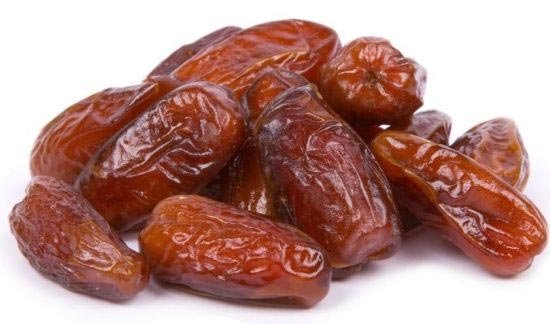
The Muslims worldwide have the tradition to end the Siyaam (fast or fasting) by taking date fruit. This is based on the saying of the Prophet Muhammad (peace and blessings of Allah be to him), “break your Siyaam by eating dates as it is purifying”. About 20 fruits and fruit bearing plants have been identified in the Holy Qur’ān, but it is the date-palm which is referred the most.
The 20 plants mentioned in the Holy Qur’ān include date palm, fig, ginger, grape, garlic, henna/camphor, lentil, manna, olive, onion, pomegranate, summer squash, sweet basil, athel tamarisk, tooth-brush tree, arak, mustard, acacia, cucumber, gourd, leek, cedrus (cedar or Lote-tree) and Euphorbia.
The Bitter Thorn and Blessed Tree are yet to be identified. The Bitter Thorn is the tree in the Hell and is mentioned in Surah Al-Ghashiyah (88, meaning The Overwhelming Event): 6-7. The Blessed Tree is mentioned in Surah Al-Ra’d (13, meaning The Thunder): 29. The Qur’ānic botany continues to be an active area of research.
The date palm is mentioned by name 20 times, at eight places individually and at 12 places with other fruits. The corresponding 20 Ayah occurring in 16 Surahs of the Holy Qur’ān are: Al-Baqarah (2): 266; Al-An’am (6): 99, 141; Al-Ra’d (13): 4; Al-Nahl (16): 11, 67; Al-Isra (17): 91; Al-Kahf (18): 32; Maryam (19): 23, 25; Ta Ha (20): 71; Al-Mu’minun (23): 19; Al-Shu’ara’ (26): 148; Ya Sin (36): 34; Qaf (50): 10; Al-Qamar (54): 20; Al-Rahman (55): 11, 68; Al-Haqqah (69):7; and ‘Abasa (80): 29 respectively.
Throughout the blessed month of Ramadhan, dates are a common ingredient in the Muslim diet. Let us have a closer look at this familiar fruit, which is also known as the tree of life and king of the oasis. The botanical name of the date-palm is Phoenix dactylifera. In Arabic the date-palm is known as Nakhl, and the fruit is known as Tamar. We shall note the names in several other languages: Tamar (Hebrew), Khajur (Hindi, Urdu, and several other Indian languages), Khurma (Persian, Urdu), Kharjur (Sanskrit), Khejur (Bengali), Finik (Russian), Datil (Spanish), Date (Italian), Datteir (French), Daten (German), Datum (Dutch), Datas (Portugese) and so on.
The history of date-palm cultivation can be traced to eight thousand years. Every part of the date-palm has good use: The wood and leaves provide timber and fabric for houses and fences; the leaves are also used for making ropes, baskets etc; the stalk is used as fuel. The fruits famous for their delicious and sweet taste are taken directly or processed to produce vinegar, pickle, bakery items and flavours. The date seeds are used as cattle feed after they have been softened by soaking and crushing.
The date-palms are usually un-branched. It is interesting to note that the branching occurs only in the male plants! The date-palm trees grow as high as 100 feet with leaves up to 15 feet. There are typically a dozen bunches of dates per tree. A bunch weighs about seven kilograms and has a thousand dates. The life of a date tree is over 150 years. There are about a thousand varieties of dates. Some of these are facing possible extinction. The date fruits vary in size, shape and colour. These numerous varieties have different names in Arabic. According to the estimates of the World Food Agricultural Organisation, there are over hundred million date-palms in the world, producing two million tons of dates each year. About 65% of these are grown in the Arab countries.
Dates are very delicious and easy to store as they are light. Date is one of the most valuable foodstuffs. Date consumption is one of important sources of supplying minerals and vitamins and elements in a very balanced nutrition regime. About 70% of the fruit is sugar. Dates are excellent sources of numerous minerals including: iron, potassium, magnesium, sulphur, copper, calcium and phosphorus. Besides it has several vitamins, fibre and proteins. A hundred of dates provide the body about 277 kilo-calories shortly after eating it. An individual needs about 2500-3500 kilo-calories a day. This is the medical explanation why the dates are consumed at the end of each fast.

TABLE
Dates (variety: medjool) Nutritive Value per 100 grams
Source: United States Department of Agriculture (USDA) National Nutrient Data Base, http://www.ars.usda.gov/nutrientdata
Principle Nutrient Value Percentage of RDA
Energy 277 Kcal 14%
Carbohydrates 74.97 g 58%
Protein 1.81g 3%
Total Fat 0.15 g <1%
Cholesterol 0 mg 0%
Dietary Fiber 6.7 g 18%
VITAMINS
Folates 15 µg 4%
Niacin 1.610 mg 10%
Pantothenic acid 0.805 mg 16%
Pyridoxine 0.249 mg 19%
Riboflavin 0.060 mg 4.5%
Thiamin 0.050 mg 4%
Vitamin A 149 IU 5%
Vitamin C 0 mg 0%
Vitamin K 2.7 µg 2%
ELECTROLYTES
Sodium 1 mg 0%
Potassium 696 mg 16%
MINERALS
Calcium 64 mg 6.5%
Copper 0.362 mg 40%
Iron 0.90 mg 11%
Magnesium 54 mg 13%
Manganese 0.296 mg 13%
Phosphorus 62 mg 9%
Zinc 0.44 mg 4%
PHYTO-NUTRIENTS
Carotene-ß 89 µg —
Crypto-xanthin-ß 0 µg —
Lutein-zeaxanthin 23 µg —
RDA: Reference Daily Intake or Recommended Daily Intake, which is considered sufficient to meet the dietary requirements of most individuals.
Because of its rich chemical content the dates have been used as a medicine since ancient times. The tradition among the Arabs and the Muslims to place chewed (softened) dates in the mouth of new born babies carries great virtue and benefit. Date is effective in treatment of infantile paralysis and it is recommended to give some grains of date to children suffering infantile paralysis. Dates strengthen the nervous system. Because of the magnesium present in them the dates are good for the kidneys. Dates are also helpful in treating sore throat and all the pulmonary infections. Persons suffering diabetes can use dates instead of industrial sugars like cane sugar, since the existing magnesium within dates help the operation of pancreas and kidneys. On the other hand vitamin B2 within dates absorbs sugar components of other foodstuffs. Dates are also good for heart and respiratory problems.
The Holy Prophet (peace and blessings of Allah be to him) said, “Whoever eats seven ajwah dates in the morning will not be harmed by poison or black magic for the rest of that day until the night.” He also said, “The ‘ajwah date is from Paradise and it is an antidote against poison.” The ajwa variety of dates is very effective in combating cardiovascular problems. Nutritious, health, medical and industrial value of the date is not fully recognised. The researchers all over the world is searching and investigating in the matter.
Dates are excellent choice of food for the pregnant women and those who have just given birth. This fact is indicated in the Holy Qur’ān:
(Surah 19, Maryam, Ayah 23-25)
And [when] the throes of childbirth drove her to the trunk of a palm-tree, she exclaimed: “Oh would that I had died ere this, and had become a thing forgotten, utterly forgotten!” Thereupon [a voice] called out to her from beneath that [palm-tree]. Grieve not! Thy Sustainer has provided a rivulet [running] beneath thee; and shake the trunk of the palm-tree towards thee: it will drop fresh, ripe dates upon thee.
(English Meaning by Muhammad Asad from http://www.IslamiCity.com/)
This was the prescription given to Virgin Mary at the time of birth of Jesus, the blessed Prophet of Allah. It was a prescription to make the delivery easy and comfortable.
Date seeds are soaked (for softening) and ground and used as an excellent animal feed. Their oil is suitable for use in soap and cosmetics. Date seeds contain 0.56–5.4% lauric acid (useful in chemical analysis, particularly for finding the molar masses). They can also be processed chemically as a source of oxalic acid (used in dyeing processes and bleaches). The seeds are also burned to make charcoal for silversmiths, and can be strung in necklaces. Date seeds are also ground and used in the manner of coffee beans, or as an additive to coffee. Experimental studies have shown that date seeds exhibit anti-genotoxic and reduce DNA damage caused by certain chemicals.
In recent decades, the plants mentioned in the Holy Qur’ān and the Hadith (Prophetic Traditions) have acquired a special interest of the gardeners, botanists and the scientists in general. This has led to the creation of special gardens which are commonly known as the “Qur’ānic Botanical Gardens”, serving as exhibitions and dedicated research centres. The UNESCO (United Nations Educational, Scientific and Cultural Organisation) is also taking an interest in such gardens and has set up one in Qatar.
A unique biological garden featuring the plants mentioned in the Holy Qur’ān has been created in the Education City, Doha (capital of Qatar). Known as the “Qur’ānic Botanic Garden”, it is under the umbrella of the global Qatar Foundation Green Project. This Qur’ānic Botanical Garden comprises all the plant species mentioned in the Holy Qur’ān, and those in Sunnah (Deeds of the Prophet) and Hadith (Sayings of the Prophet). It also exhibits botanical terms mentioned in the Holy Qur’ān, explaining them in the context of modern science. It regularly holds conferences and other events.
It is high time to cultivate some Qur’ānic/Prophetic plants in and around Muslim institutions such as Masajid (mosques); Madrasas (Islamic Seminaries); Eid-Gah Grounds; Qabristan (Graveyards); among others. The government ministries and state forest officials should be introduced to the importance and the need for cultivating the Qur’ānic/Prophetic plants. Such initiatives will benefit the complete region in more than one way. After all, the plants have medicinal use and a commercial value through local markets and exports. If an agency such as UNESCO can take interest, when will others be inspired?
The research on date-palms is an active field establishing old sayings and leading to numerous new discoveries. An old Arab saying goes: “The uses of date-palm are as many as the number of days in the year”. With all the rapid advances more and more nutritional values of dates are being understood. Do not miss to end your Siyaam (fast) with dates when the sunset appears. It is your date with dates! The dates are round the year!
The branching is rare in date-palms. The famous “Imperial Palm” having eight branches is located in the botanical garden, Huerto del Cura, Elche, Alicante province, Spain. It is estimated to be about 165 years old and weighs ten tons.
[HAJIRA KHAN is studying at Indian School Salalah, Salalah, Oman; and SAMEEN AHMED KHAN is on the Engineering Department, Salalah College of Technology (SCOT), Salalah, Oman. rohelakhan@yahoo.com]