

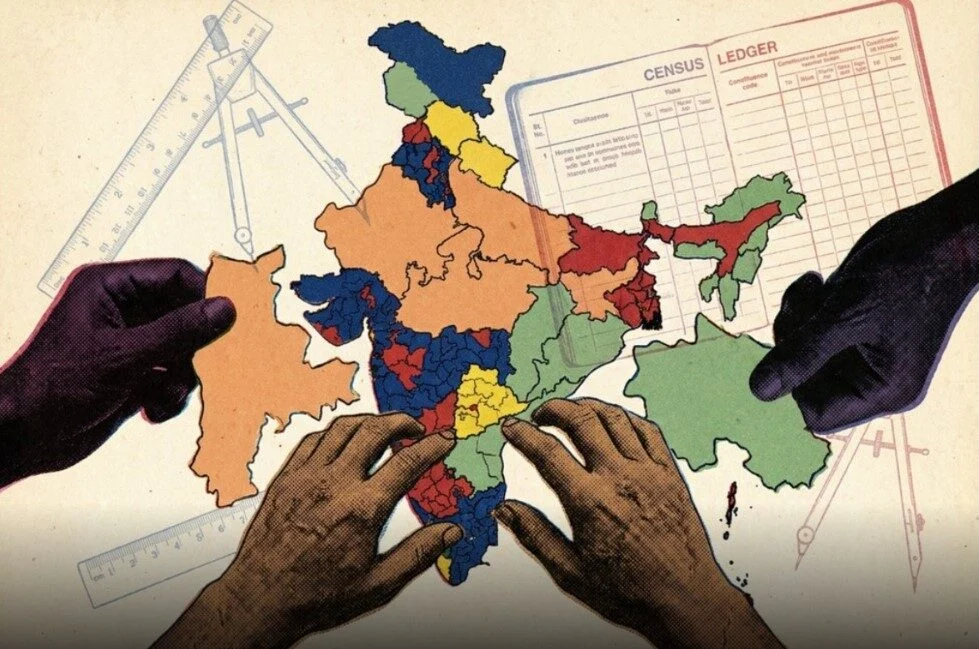
The debate on delimitation has raised concerns over its impact on Muslim representation and the broader democratic structure in India. The process, which involves redrawing constituency boundaries based on population data, remains pending due to delays in conducting a fresh census.
The women’s reservation law passed in 2023 links its implementation to delimitation after a new census. Recent attempts to advance delimitation without updated census data triggered political pushback, leading to a pause in the process.
Experts warn that delimitation, if carried out without safeguards, risks altering electoral outcomes. In the past, changes in constituency boundaries have reduced the influence of Muslim voters in several regions. In Assam, the transfer of Muslim-majority areas between constituencies altered voter balance. Dhubri saw an increase in Muslim voters, while Barpeta’s share dropped to around 35%. In seats like Naoboicha, redistribution weakened the role of Muslim voters across multiple constituencies.
In J&K, the number of assembly seats rose from 83 to 90 after delimitation. Jammu gained more seats compared to Kashmir, where Muslim populations form a majority. Such shifts have raised questions about equitable representation.
The issue extends to reserved constituencies. In some cases, seats with higher Muslim populations have been reserved for STs, limiting electoral participation for Muslim candidates.