

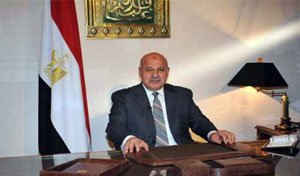
Morsi Plays His Ball Smartly to Stump Last Few Wickets of Ousted Regime
SYYED MANSOOR AGHA analyses the situation prevailing in Egypt and compliments President Morsi for defeating successfully the ‘conspiracy’ to derail democracy.
In spite of disturbing news from Egypt, it seems today (Friday, 7 December 2012), that President Mohamed Morsi is firm in his resolve to push hard the legal process of delivering a democratic system of governance for his country after six decades of dictatorship, while his opponents – whom people of Egypt rejected twice, first at the time of electing lawmakers and second while electing President for the country – are hitting hard to derail the process. Morsi’s opponents rejected President’s call for “dialogue” on Friday (7 December 2012) and stuck to bullying tactics by fanning public sentiments. They are demanding to “cancel the constitutional declaration and withhold the referendum on the draft constitution” which was passed overwhelmingly by the Constituent Assembly on 30 November. Morsi has ordered referendum on 15 December and Muslim Brotherhood indicated possibility of its postponement provided opposition comes at the dialogue table. It seems that opposition is not interested in the process of conciliation and compromise, and wants to destabilise the elected President.
Unmindful of unethical demands and violent protests, President Morsi seems determined not to budge under the pressure and to expose the conspiracy to derail the process of transition of power to elected representatives.
Morsi, in a televised speech on Thursday (6 December), assured the “temporary nature” of the decree regarding judiciary and declared its validity only until new constitution is in place and fresh elections for disbanded Assembly are held. He also assured the nation that these steps “are not meant to concentrate power” but to devolve it to a democratically-elected parliament.
Morsi called the violent protests a work of “infiltrators” inside the opposition. He said some protesters had been paid and armed to perpetrate “thuggery” and “terrorism.” However, offering olive branch to his opponents, he called for a “national dialogue” on all contentious issues.
Earlier Prime Minister Hisham Qandil also offered a “national dialogue,” and called upon the people to keep calm. Vice President Mahmoud Makki said that “the door is open” to amend any disputed article of the draft Constitution in the Parliament yet to be elected.
PRESIDENTIAL DECREE
The present row of protests started after President issued a decree on 22 November 2012 declaring, “The president can issue any decision or measure to protect the revolution.” The decree as read out on television by presidential spokesman Yasser Ali said, “The constitutional declarations, decisions and laws issued by the president are final and not subject to appeal.”
Reacting over the order, Mr. ElBaradei wrote on his Twitter account, “Morsi today usurped all state powers and appointed himself Egypt’s new pharaoh; a major blow to the revolution that could have dire consequences.”
He also said no judicial body can dissolve the Shoura Council (upper house of parliament) that was busy in drafting constitution and functioning as the Constituent Assembly. President extended the time limit for finalising the draft till January end.
In a related development, the President sacked prosecutor general Abdel Meguid Mahmud, and appointed Talaat Ibrahim Abdallah in his place. Mahmud was appointed envoy to Vatican last month, but he defied the executive order and continued to attend the office. The president, dismissing Mahmud, ordered “fresh investigations and retrials” in the cases dealing with the deaths during uprising against the Mubarak regime. Opposition has blamed the newly elected President to be soft to culprits of violence.
WHY EXTRAORDINARY STEPS
It was feared that the Supreme Constitutional Court (SCC), a legacy of Hosni Mubarak’s regime, might disband the Shoura Council (Upper House) and thus effectively block the drafting of the Constitution. It is worth mentioning that the SCC had, earlier in June, declared the law under which the National Assembly (Lower House) was elected. Following it, the ruling country’s interim military rulers promptly dissolved the Assembly and assumed full legislative authority on the eve of swearing-in ceremony of Mohamed Morsi as President. The Assembly remained in session merely for four months. The court was scheduled to hear a bunch of similar petitions against Shoura on December 2 and decide on the “validity of elections laws which dictate the formation of the Shoura Council.”
Pronouncing the Presidential Decree, President’s spokesman Yasser Ali said, the declaration is aimed at “cleansing state institutions” and “destroying the infrastructure of the old regime.”
President Morsi, in an interview with the national TV Channel, warned the nation of a conspiracy and foreign hand which forced him to take the drastic steps. He said, “I have sent warnings to many people who know who they are, who may be committing crimes against the homeland.” Referring repeatedly to “secret information” about a “conspiracy” and “real and imminent threats to the democratic process”, he cautioned: “If anybody tries to derail the transition, I will not allow them.” ”To the corrupters who hide under respectable cover, I say, ‘never imagine that I can’t see you’,” he declared. “I’m on the lookout for them and will never let them go.”
Morsi refrained to name any, but his advisers called the harsh steps as “regrettable but necessary” response to “genuine threats” to the political transition from what they call the deep state – the vestiges of the autocracy of former President, especially in the “news media and the judiciary.”
THE CONSPIRACY
A London-based satellite TV Channel, al-Hiwar reported on 26 November that barely 10 days before Israel’s attack on Gaza an Egyptian Presidential aspirant Amr Mousa unexpectedly arrived in Ramallah and had a secret meeting with former Israeli Foreign Minister, Tzipi Livni. The report was based on an interview with Abdel Bari al-Atwan, editor-in-chief of Al-Quds al-Arabi newspaper. Atwan claimed the existence of intelligence reports documenting the secret meeting held on November 4. The report mentioned that “Ms Livni made a direct request to Amr Mousa to pre-occupy Egyptian President, Mohamed Morsi, during this period with internal affairs” so that hardliner leadership of Israel “may achieve” its political targets before ensuing elections. The attack was aimed to divert attention of the people from internal problem and win the election on emotive issues.
It is believed this is what in effect happened as Amr Mousa returned from his visit and led the withdrawals from the Constituent Assembly without providing any reason convincing to public opinion. So much so that he had an altercation with the head of the Constituent Assembly and blocked an article which he himself had proposed. This matter occupied Egyptian public opinion and talk show programmes and he escalated his attack on President Morsi as the attack on Gaza escalated.
According to Atwan, “These reports coincide with statements made by Israeli Middle East expert, Binhas Anbari, in an interview with the satellite TV channel ‘Russia Today’. Anbari asserted that Egyptian President, Mohamed Morsi, aborted the Israeli operation in Gaza before it began, and that “we counted on forces inside Egypt to preoccupy him with internal political and economic affairs.” This evidence supports the President’s theory of “foreign hand” in the present events.
CONSPIRACY DEFEATED
Mohamed Morsi successfully defeated the “Tzipi Livni-Amr Mousa” secret agenda first by effectively prevailing upon the Zionist regime of Israel to stop slaughter of Palestinian Arabs in Gaza; secondly by stopping the judiciary from disbanding the Constituent Assembly. Though he extended the term of the Assembly for two months on 26 November, but it was feared that the Court might pass ruling to annul the extension and the Assembly itself. In a sudden move that shocked opponents as well as judges, the Assembly in a marathon sitting, stretched all over the day and night of 29 November 29, passed all 234 clauses of the draft constitution one by one and put its seal in the early hours of Friday. Eighty-five out of 100 members participated in the process. However, no member from Coptic Christian Minority was present though the draft has amply and explicitly provided protection for their religious and social rights. Any member from anti-Morsi groups was also not present. The document was forwarded to the President the same day and he declared referendum on to be held on 15 December. (Text of the draft constitution can be read in full on http://www.egyptindependent.com/news/egypt-s-draft-constitution-translated)
This further infuriated the judges of SCC and they took an unprecedented step to stop work. Mr. Morsi made efforts to calm down the judges by explaining to them in a meeting that sweeping powers he had assumed were temporary only till the referendum on the constitution and election of the Assembly within 90 days thereafter. He assured that his decree is merely for “sovereign matters” but this was not taken generously and the judges refused to return to work. However they were firm to hear the petitions against the Shoura on 2 December. But this did not happen for the reason of demonstration outside the court building. Judges were assured full protection by Interior Ministry but they refused to come. Later, in a statement, the judges blamed a campaign of “moral assassination” being waged against them, and said an “environment charged with hatred and malice and the need for revenge” led to Sunday’s “appalling and shameful scene.”
RESIGNATIONS
Since Morsi issued his decree, six of his advisers have resigned. However, Army is on his back and the number of demonstrators is declining. Only 300 persons demonstrated at President’s House on Thursday night. Muslim Brotherhood has directed its supporters not to demonstrate to avoid bloody clashes which resulted in the death of 5 persons and injuring over many persons last week. In a promising development, the Supreme Judicial Council – the highest administrative body overseeing courts – agreed Monday (3 December) to oversee the national referendum on draft constitution.
The development means the vote will have judicial supervision, which is required by law. It had been uncertain in light of developments Sunday, 2 December, when Egypt’s top judges suspended work indefinitely. It means that Egypt is almost set to hold the referendum on draft constitution on 15 December and elections to the Assembly in March 2013. If opposition is confident of public support, it should show its strength during referendum and election. As per draft document, National Assembly will have power to amend any article. The related article has defined two means for amending the document in future. The president of the Republic can put forward proposal for an amendment, or one-third of the members of parliament can move the motion. If passed by two-third majority of the members, the amendments would be put forward to a referendum.
[syyedagha@htomail.com]