

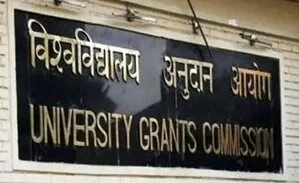
The controversy surrounding the University Grants Commission’s Promotion of Equity in Higher Education Institutions Regulations, 2026 has become far more than a legal disagreement over regulatory competence. It has evolved into a mirror reflecting India’s unresolved struggle with caste, religion, power, and the limits of reform within deeply unequal social structures. The Supreme Court’s interim stay on the Regulations has intensified this debate, provoking sharp responses from academics, civil society groups, and political movements who see the episode as symptomatic of a broader resistance to social justice.
At the heart of this debate lies an uncomfortable truth: discrimination in Indian higher education is not an aberration but a structural reality. M.M. Ansari, former UGC member, articulates this with unsettling clarity. According to him, casteism and communalism are not accidental deviations but are embedded within Hindu society, its religious traditions and political expressions. In such a social order, institutions of governance like the state, bureaucracy, police, and even the judiciary are overwhelmingly dominated by the same privileged social groups that benefit from these hierarchies. As a result, laws aimed at curbing discrimination often remain weak in enforcement, selective in application, and vulnerable to dilution.
Ansari’s critique compels a return to a foundational question posed by Dr B.R. Ambedkar: can a society structured around caste ever deliver genuine equality? Ambedkar’s eventual rejection of Hinduism was not merely symbolic but grounded in his recognition that a religion sanctifying graded inequality offered no ethical space for dignity and justice. That insight remains painfully relevant today. Dalits and religious minorities continue to be grossly underrepresented in positions of institutional power, while proportional representation, central to Ambedkar’s vision of democracy, remains elusive. Under a political dispensation ideologically influenced by the RSS and BJP, critics argue that hostility toward minorities and Dalits has become increasingly normalised rather than challenged.
In such a context, equity laws face formidable obstacles. Ansari argues that unless caste itself is dismantled, a task bordering on the impossible legal reforms alone cannot eradicate structural discrimination. Yet this is not an argument for abandoning reform. Instead, it highlights why strong, explicit, and enforceable mechanisms like the UGC Equity Regulations are indispensable. They may not eliminate caste, but they can expose, constrain, and penalise its operation within institutional spaces.
This pragmatic yet urgent approach is echoed by Prof. Salim Engineer, Chairman of Markazi Taleemi Board, Jamaat-e-Islami Hind. Welcoming the 2026 Regulations, Prof. Salim describes them as a long-overdue acknowledgement of the discrimination entrenched in India’s higher education system. The formal recognition of bias based on caste, religion, gender, disability, and region is, in his view, a significant step forward. However, he is unequivocal that recognition without enforcement is meaningless.
Drawing on past experience, Prof. Salim warns that equity committees risk becoming symbolic bodies if they function under the control of institutional authorities. Grievance redressal mechanisms have historically failed precisely because they lack autonomy, diversity, and accountability. To avoid repeating this pattern, he stresses the necessity of mandatory representation of SCs, STs, OBCs, and religious minorities within equity bodies, along with the inclusion of independent members such as retired judges. Only such structural safeguards, he argues, can inspire confidence among marginalised students and staff.
Prof. Salim’s intervention is particularly significant in foregrounding the experiences of religious minorities, especially Muslims, whose challenges in higher education are often rendered invisible. Despite constitutional guarantees, Muslim students routinely confront social exclusion, prejudice, and administrative neglect. These realities demand equity frameworks that are precise, community-sensitive, and enforceable. Equity, in other words, cannot remain an abstract ideal; it must respond to lived experiences of discrimination in their specific forms.
Equally important is Prof. Salim’s insistence that elite and autonomous institutionssuch as IITs, IIMs, and other premier bodiesmust not be exempt from rigorous equity norms. These institutions are frequently portrayed as bastions of meritocracy, yet they have witnessed alarming instances of exclusion, mental distress, dropouts, and suicides among marginalised students. Shielding them from equity regulations only reinforces the false binary between excellence and social justice.
The political dimension of the debate has been sharply articulated by the CPIML Liberation. The party condemned the Supreme Court’s stay on the Regulations, describing its observations as reflective of a “myopic and privileged outlook.” Labeling the rules as “vague” or “capable of misuse,” the party argues, trivialises the brutal everyday reality of caste discrimination on campuses.
By invoking the tragic deaths of Rohith Vemula, Dr PayalTadvi, and Angel Chakma, CPIML Liberation challenges the myth of a “casteless society.” UGC data showing a 118% increase in complaints of caste-based discrimination between 2019 and 2024 further dismantles claims that caste no longer matters. For the party, the Equity Regulations represent a delayed response to years of struggle by victims’ families and activists demanding institutional accountability. The stay, they argue, signals capitulation to Brahminicalpressure, a familiar pattern in the history of social reform.
Adding a crucial legal perspective, Dr Narender Nagarwal, Professor of Law at the University of Delhi, raises serious concerns about the Supreme Court’s conduct. He points out the irony that the 2026 Regulations emerged directly from the Court’s own order in Abeda Salim Tadvi&Anr. v. Union of India (2025), where the UGC was explicitly directed to finalise and notify equity regulations. The interim stay, issued without hearing the respondent’s counsel, appears to violate basic principles of natural justice. The silence of the Union government’s legal representatives, Dr Nagarwal notes, is equally troubling and suggests tacit approval of the stay.
Crucially, the Regulations were born out of a 2019 PIL filed by Radhika Vemula and Abeda Salim Tadvi, mothers of Rohith Vemula and PayalTadvi, whose deaths exposed the lethal consequences of institutional caste discrimination. Ignoring this history, Dr Nagarwal argues, undermines the credibility of both the legal process and the constitutional promise of justice.
Taken together, these voices underscore a stark reality: equity in higher education cannot be achieved through tokenism or cosmetic reform. In a society structured by caste and communal hierarchies, meaningful equity measures will inevitably provoke resistance from dominant groups, institutions, and even constitutional bodies. Yet retreating from such measures only entrenches injustice.
The UGC Equity Regulations may be imperfect, but they represent an attempt to confront uncomfortable truths. Staying them without proposing a stronger alternative risks reinforcing the very inequalities the Constitution seeks to dismantle. As Ambedkar warned, political democracy cannot endure without social democracy. The battle over the UGC Equity Regulations is ultimately a test of India’s willingness to confront its structural injustices or continue denying them under the illusion of equality.