

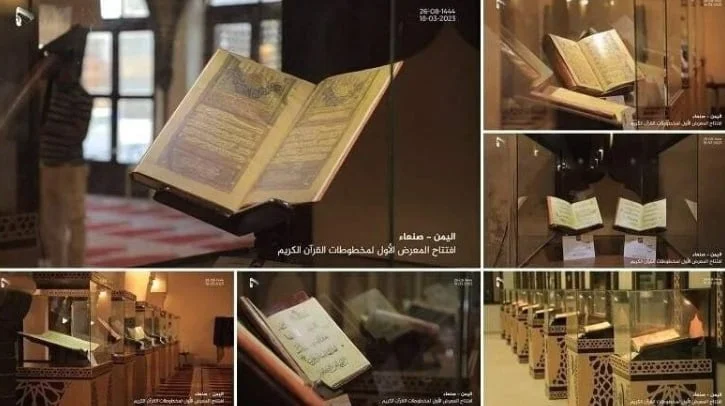
Researchers from the University of Hamburg and the Berlin State Library have launched a long-term scientific project to study historic Qur’an manuscripts discovered at the Great Mosque of Sana’a, one of the world’s most important collections of early Qur’anic texts.
The collection holds 929 Qur’an manuscripts uncovered in 1973. Dating from 7th to 11th centuries, these manuscripts carry deep academic importance for understanding the history of the Qur’an and early Qur’anic manuscript traditions.
Yemen’s current political situation prevents researchers from accessing the originals. To work around this, around 24,000 microfilm images, together with 5,000 colour slides and black-and-white photographs produced during the 1990s, were transferred to the Oriental Department of the Berlin State Library in 2019 and then digitised. This digital collection now allows scholars to study the Sana’a manuscripts thoroughly without needing to travel to Yemen.
With funding from the German Research Foundation (DFG), Islamic studies specialists from both institutions have launched a 12-year research project to examine and analyse the collection in detail.
The first phase runs from 2026 to 2029 under the title “From Minute Details to the Bigger Picture” and has received 934,301 euros in DFG funding. Researcher Alba Fedeli of the Berlin State Library and Professor Thomas Eich of the University of Hamburg’s Department of Islamic Studies lead the project.