

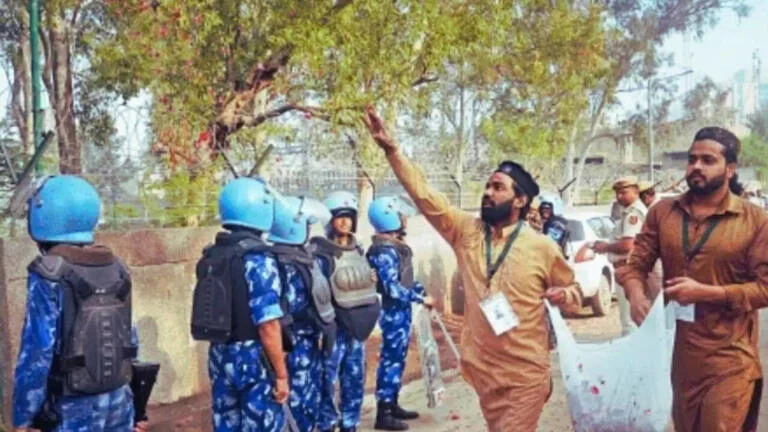
With peaceful Eid celebrations ensured in Uttam Nagar in Delhi amid severe threats, the Delhi High Court, Delhi police, APCR and Uttam Nagar residents have set a model for the rest of India, particularly when hate-filled intolerance is on the rise and communities are divided more than ever before. In fact, they all helped the idea of India and the essence of Eid prevail in this part of the national capital.
Festivals, such as Eid, carry a deeper significance as they become opportunities to strengthen social harmony and reaffirm the shared values that bind communities together. The recent peaceful Eid celebrations in Uttam Nagar, stand as a powerful example of how institutions and citizens can work collectively to ensure unity, safety, and mutual respect.
At the heart of this success lies the proactive and balanced role played by the Delhi High Court. Upholding the principles of justice, fairness, and constitutional rights, the court ensured that necessary guidelines and safeguards were in place well before the festivities began. Its oversight and timely interventions reinforced confidence among citizens that their rights would be protected while maintaining law and order. Such institutional vigilance is crucial in a diverse society, where even small misunderstandings can escalate if not addressed promptly and fairly.
Equally commendable was the role of the Delhi Police. Known for their ground-level engagement and responsiveness, the police adopted a community-oriented approach in Uttam Nagar. They worked closely with local leaders, monitored sensitive areas, and ensured a visible yet reassuring presence throughout the celebrations. Rather than relying solely on enforcement, the police prioritised dialogue and trust-building, which proved instrumental in maintaining a peaceful environment.
Community outreach programmes, flag marches, and coordination meetings ahead of Eid helped create a sense of preparedness and mutual understanding. By engaging with residents from all backgrounds, the Delhi Police demonstrated that effective law enforcement is not just about authority but also about partnership with the people.
Another key contributor to this harmonious outcome was the Association for Protection of Civil Rights. As a civil society organisation, APCR played a constructive role by promoting awareness, encouraging lawful conduct, and fostering communication between communities and authorities. Their efforts helped ensure that concerns were addressed through dialogue rather than confrontation. Organisations like APCR act as bridges, connecting institutional frameworks with grassroots realities, and their involvement is vital in nurturing trust and inclusivity.
Central to the success of the celebrations were the local Muslim community members themselves. Their commitment to celebrating Eid with dignity, responsibility, and sensitivity towards their neighbours set a powerful example. By cooperating with authorities, adhering to guidelines, and promoting messages of peace, they demonstrated that faith and civic responsibility go hand in hand. Their actions reflected the true spirit of Eid with compassion, generosity, and unity.
At the same time, the broader population of Uttam Nagar, cutting across religious and cultural lines, played an equally important role. Residents showed respect for each other’s traditions, extended support where needed, and actively contributed to maintaining a calm and welcoming atmosphere. Such mutual respect is the foundation of any peaceful society. It is not just institutions, but everyday citizens who ultimately determine whether harmony prevails.
Residents of Uttam Nagar in Delhi marked a peaceful and symbolic moment after Eid al-Fitr prayers, as members of the Muslim community showered flower petals on police personnel amid tight security. The gesture reflected goodwill following recent tensions in the area. Earlier in the month, the locality witnessed violent clashes that left a 26-year-old man dead, reportedly triggered by a dispute over water balloons during Holi, making the calm and harmony during the festival especially meaningful.
The significance of this collective effort extends far beyond Uttam Nagar. In a country as diverse as India, where multiple religions, languages, and cultures coexist, maintaining peace during festivals is of national importance. Each successful example of communal harmony reinforces the idea that diversity is not a challenge to be managed, but strength to be celebrated.
Peaceful celebrations also send a strong message against divisive narratives. They demonstrate that communities are capable of rising above differences and working together for the common good. This is particularly important in today’s interconnected world, where misinformation and rumours can spread rapidly. A united and vigilant community acts as the best defence against such threats.
Moreover, the collaboration between institutions like the Delhi High Court, law enforcement agencies like the Delhi Police, civil society groups such as APCR, and local communities illustrates a model that can be replicated across the country. It shows that when all stakeholders act with responsibility, transparency, and goodwill, even potentially sensitive situations can be handled with maturity and success.
The peaceful Eid celebrations in Uttam Nagar also highlight the importance of proactive measures. Waiting for problems to arise is never an effective strategy. Instead, early planning, open communication, and community engagement are crucial to preventing conflicts. The combined efforts seen here serve as a blueprint for future events, not just in Delhi but across India.
In addition, such instances strengthen the democratic fabric of the nation. They reaffirm faith in institutions, encourage citizen participation, and promote a culture of dialogue over discord. When people see that their voices are heard and their concerns are addressed, they are more likely to cooperate and contribute positively to society.
Ultimately, the story of Uttam Nagar’s Eid celebrations is one of hope and inspiration. It reminds us that peace is not an abstract idea rather it is a practical outcome of collective efforts. It requires vigilance from institutions, responsibility from communities, and goodwill from individuals.
As India continues to navigate its rich diversity, examples like these serve as guiding lights. They show that harmony is achievable, that differences can coexist peacefully, and that unity is strengthened through mutual respect and understanding.
In celebrating Eid peacefully, the people of Uttam Nagar have not only honoured a religious festival but have also reaffirmed a shared commitment to the values that define India and above all pluralism, tolerance, and unity in diversity.