

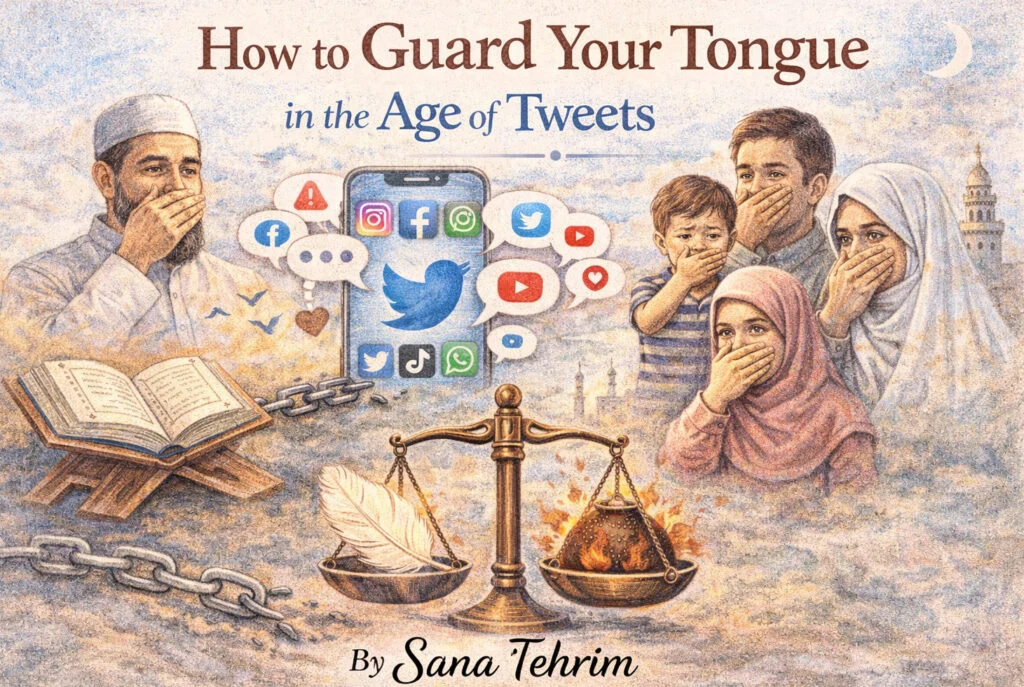
Never before has it been so easy to express opinions and never before has speech carried consequences so swiftly and so widely. Social media allows thoughts to be shared instantly, often without reflection. A few typed words can reach thousands within seconds, shaping opinions, damaging reputations, or igniting discord. Yet while technology has changed the medium, accountability has not changed at all.
Every word we type is recorded not only by algorithms and servers, but by Allah. The Qur’an reminds us that two angels sit with every human being, recording every utterance. What is posted online is not fleeting; it is preserved for the Day of Judgement.
The question we must ask ourselves is simple and serious: Would I still say this if I knew it would be read from my Book of Deeds?
The Tongue: A Double-Edged Sword
The tongue is like a double-edged sword. It can be a source of immense good, spreading truth, comfort, and guidance or a cause of great harm, spreading lies, mockery, and fitnah.
Prophet Muhammed ﷺ warned that most people will enter Hellfire because of what their tongues earned. In the age of tweets, this warning carries even greater weight. A single careless post can undo years of good character.
Mu‘adh ibn Jabal رضياللهعنه once asked the Prophet ﷺ whether people would be held accountable for what they say. The Prophet ﷺ replied that people would be dragged on their faces into Hellfire because of what their tongues harvested. This was said in an age of spoken words how much more severe is the matter when words are permanent, public, and endlessly shared?
The Three Gates of Speech
In a world that encourages instant reactions, Islam teaches intentional restraint. Before you post, comment, or speak, let your words pass through three essential gates.
Gate One: Truth
- Are your words based on verified facts, not assumptions or rumours?
- Have you confirmed the source, or are you relying on “I heard”?
- If certainty is lacking, silence is safer than speculation.
Allah ﷻ warns in the Qur’an, “Do not follow what you have no sure knowledge of. Indeed, all will be called to account for their hearing, sight, and intellect.” (The Qur’an 17:36)
Sharing unverified information is not harmless; it is accountability waiting to happen.
Gate Two: Kindness
- Even if it is true, does it need to be said in this way?
- Will it hurt someone unnecessarily?
- Can it be expressed with mercy and dignity?
Truth without kindness easily becomes cruelty. The believer’s speech reflects compassion, not humiliation.
Gate Three: Necessity
- Will this bring benefit, or does it merely add noise?
- Is this the right time and place?
- Are you the right person to say it?
Not everything true and kind must be spoken. Wisdom lies in knowing when silence is more pleasing to Allah than speech.
If your words cannot pass all three gates – truth, kindness, and necessity,do not let them out.
Divine Warnings: Meaning & Purpose
Allah leaves no ambiguity regarding harmful speech: “O believers! Avoid many suspicions, for indeed, some suspicions are sinful. And do not spy, nor backbite one another. Would any of you like to eat the flesh of their dead brother? You would despise that! And fear Allah. Surely Allah is the Accepter of Repentance, Most Merciful.” (The Qur’an 49:12)
Backbiting is described in the strongest possible terms to show its gravity. Online gossip, mockery, and character attacks fall directly under this warning.
Guarding the Tongue: A Mark of True Faith
Turning away from vain and harmful talk is a defining quality of righteous believers. In Surah Al-Mu’minun, Allah lists avoidance of ill speech immediately after prayer showing how central it is to faith. “Successful indeed are the believers,those who humble themselves in prayer,those who avoid idle talk.” (The Qur’an 23:1-3)
The Prophet ﷺ said: “Whoever guarantees me what is between his jaws and what is between his legs, I guarantee him Paradise.”(Sahih al-Bukhari)
The tongue and desires are among the greatest causes of human destruction; it is what people say and what they desire.
When asked who the best Muslim is, the Prophet ﷺ replied: “The one from whose tongue and hands other Muslims are safe.”(Sahih al-Bukhari)
Guarding the tongue is not just a religious concept; it’s a daily struggle that every person faces, especially today, when a single tweet, comment, or message can reach hundreds of people in seconds. It requires conscious effort, self-awareness, and a willingness to pause before speaking or posting.
- Leave what does not concern you: In a world where everyone feels pressured to comment on everything, silence can be a form of wisdom. Not every trending topic needs your opinion, and not every argument deserves your energy. Sometimes, stepping back protects your peace and your character.
- Do not backbite by mentioning someone’s faults in their absence: It is easy to talk about others in private chats, group discussions, or social media threads. Yet, sharing someone’s flaws even casually can deeply hurt them and weaken trust. Islam reminds us to treat others with the same dignity we wish for ourselves.
- Do not slander or lie: Rumours spread faster than truth online. Forwarding an unverified message or exaggerating a story may seem harmless, but it can damage reputations and mislead many people. The Prophet ﷺ emphasised that truthfulness is a core quality of a believer.
- Avoid vulgarity, abuse, and curse words: When emotions run high, harsh words come easily. But the way we speak reflects who we are. Respectful language does not make you weak; it shows strength, maturity, and inner discipline.
- Do not speak or post while angry: Most people regret words spoken in anger. A moment of pause,closing the app, taking a breath, or delaying a response can prevent lifelong regret. Islam values self-control and calmness, even in disagreement.
- Increase the use of the tongue in remembrance of Allah, truth, and goodness: Our tongues can wound, but they can also heal. A kind message, a sincere compliment, a prayer, or words of encouragement can transform someone’s day. Islam invites us to use our speech to spread goodness, justice, and compassion.
Umar ibn Al-Khattab رضياللهعنه said:“Keep your tongue moist with the remembrance of Allah, for that is a cure. Avoid speaking about people, for that is a disease.”
Choosing Silence, Choosing Integrity
Choosing silence with wisdom does not mean remaining quiet in the face of injustice. Islam commands believers to speak the truth, but with knowledge, sincerity, and wisdom not from impulse, ego, or anger. The Prophet ﷺ said, “Whoever believes in Allah and the Last Day should speak good or remain silent.”
In a world where words travel faster than thought, silence can be an act of worship, restraint a form of strength, and thoughtful speech a path to salvation. In the age of tweets, the believer is the one who wields words with taqwa, conscious that every sentence typed is a step either toward Jannah or away from it.
Every word we speak or share carries weight shaping hearts, influencing minds, and recording our character before people and before Allah. To guard the tongue is to guard the soul; it’s to choose wisdom over impulse, mercy over anger, and truth over noise. While the world celebrates loudness, Islam calls for mindfulness; while the world normalises harm through words, Islam calls for dignity and compassion.
May we learn to pause before we speak, verify before we share, and use our words only for benefit, justice, and kindness. May Allah protect our tongues from harm and make our speech a means of His pleasure and closeness. Ameen.