

These elections were very important not only for Turkey but for the entire region where Presidential elections have most often been a mockery of electioneering process, observes MOHAMMAD PERVEZ BILGRAMI
The landmark victory of Turkey’s long-standing Prime Minister, Recep Tayyip Erdogan in the 10 August, 2014 Presidential election has embarked a new era in Turkish politics where a President was elected for the first time in direct election through popular votes. Thus, Erdogan has become Turkey’s 12th President.
Erdogan won the Presidential race in the first round with 52 per cent of valid votes leaving behind his nearest rival Ekmeldin Ishasnglou, a joint Republican People’s Party (CHP) and the Nationalist Movement Party (MHP) candidate, supported by 12 other small political parties with various ideological backgrounds, with about 14 per cent aggregate margin. Selahattin Demirtas of pro-Kurdish People’s Democratic Party (HDP) managed to get nearly 10 per cent votes.
These elections were very important not only for Turkey but for the entire region where Presidential elections have most often been a mockery of electioneering process.
This year witnessed three presidential elections in the region – in Algeria, post-coup Egypt and war- ravaged Syria. In Algeria, Abdel Boutfilkah won the elections with 81.5% votes, in Syria Bashar Al-Assad with 88.7% and above all in Egypt, its ‘most loved’ leader Al-Sisi got 96.1% of votes where his nearest rivals were invalid votes, and not the rival candidate, Hamden Sabahi. As against these manipulated victories, in Turkey the incumbent Prime Minister, Erdogan, with his huge popularity and proven track record of 12 years, could manage to get only 52% popular votes.
These elections have opened a new chapter in the history of Turkey where the country has already entered into a semi-presidential system, and may soon become a presidential democracy after the scheduled parliamentary elections in June 2015, where AK Party is eying the two-third majority in the Grand National Assembly.
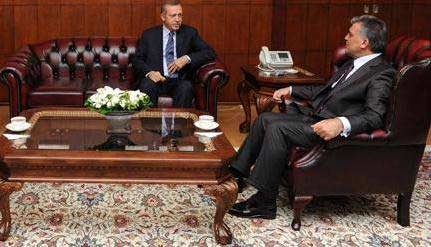
Erdogan will assume charge on 28 August from the outgoing President, Abdullah Gul, one of Erdogan’s close friends and one of the founding members of AK Party.
As Erdogan vows to transform the presidency into a powerful position – this electoral victory is the first step that will change the political system in Turkey where an elected president will automatically have more say in the administration boosted up by a direct mandate of people.
Erdogan, with a charisma, mass appeal and wonderful performance in economy, became the most popular prime minister in Turkey’s history, and now he has to take the charge of presidency. It is believed that he will continue his brilliant performance from Cankaya Palace (the house of Turkish President in Ankara) for the next 10 years. The constitutional amendment allowing two terms, each of 5 years, for the President thus permits him to remain President beyond the 100th anniversary of the Republic in 2023. For this, he will have to win the 2019 Presidential election.
It is worth mentioning here that over the past 12 years, Prime Minister Erdogan and his AK Party had won eight consecutive elections, and is also expected to win the upcoming Parliamentary elections.
But bad times are still hovering over Turkey’s skies; all the global and regional pro-status quo forces are waiting for the opportunity to halt Turkey’s pro-change policies, and Erdogan will have to face the challenges with great vision.
Global and regional counter-revolutionary forces along with their local handlers tried to oust Prime Minster Erdogan through orchestrated crisis of Gezi Park events, 17 December graft scandal and finally with the Presidential nomination of Al-Azhar alumnus, the former head of Organisation of Islamic Cooperation (OIC) Ekmeleddin Mehmet İhsanoğlu .
On 21 August Turkey’s ruling AK party nominated Foreign Minister Ahmet Davutoglu to replace Recep Tayyip Erdogan as prime minister of the country. A close ally of PM Erdogan, Davutoglu has held the post of foreign minister since 2009. He will officially take the office on 29 August.
Final settlement of the Kurdish issue will be on the top of President Erdogan’s agenda, and a recalibrated policy to solve the crisis in neighbouring Iraq and Syria will also feature on his to-do list.
It is not only the AK Party supporters and the common conservative Turks who faced inhuman treatment under the Kemalists, the Kurds are also jubilant with Erdogan’s yet another electoral victory; the Egyptians, Tunisians, Libyans, Syrians, Iraqis, Palestinians and the masses of other Arab -Muslim countries thus see a ray of hope for the entire region presently in devastating tumult.