

Islam’s major legacy to the world is the gift of its religion. That would have been quite sufficient by it. But there are many other assets spawned by this cultural tradition which deserve recognition and which daily influence our lives.” (I. Zepp, p. 139)
“From the eighth to the thirteenth century C.E. the Muslim empire extended across North Africa, the Middle East, and Central Asia, from Spain to the borders of China. Unified and inspired by the religion of Islam, its people met a new society, a multi-ethnic “Muslim World” whose members were Arab, Afghan, Aramaean, Berber, Egyptian, Indian, Persian, Spanish, and Turk – Muslims, Christians, Jews, Hindus, and Zoroastrians. Diverse cultures flourished within the Empire and made great achievements in many fields.…
“Arabic was the lingua franca of the Empire, the language of commerce, culture, diplomacy, and science, just as Latin would be in medieval Europe and English in our times. Capital of the Arab (and Muslim) Empire, Baghdad was for several centuries the cultural centre of the medieval Muslim world. Its brilliant intellectual life revolved around Beit al-Hikmah (House of Wisdom), an academy, library, museum, observatory, and translation centre. Founded by the scholarly Caliph Mamoun in 830 C.E., the Beit al-Hikmah was the most important institution to be established since the Alexandrian Library in Egypt in the third century B.C. Before any institution existed in northern Europe, great universities and libraries also developed in Muslim and Arabic cities such as Damascus, Alexandria, Fez, Cordoba, and Palermo. In just one of Cordoba’s 70 libraries, for example, 400,000 books were collected.” (Arab World Studies Notebook, p. 273)
The greatest single contribution of the Muslims and Arabs to Western civilization was their recovery and subsequent introduction to the West of ancient learning. At Beit al-Hikmah, hundreds of Greek, Persian, Sanskrit, and Syriac manuscripts were preserved and carefully translated into Arabic. Had the priceless manuscripts been lost, “the world would have been as poor as if they had never been produced.” (Phillip Hitti, The History of the Arabs. N.Y.: St. Martin’s Press) In some cases only the Arabic translations remain, such as the seven books of Galen’s Anatomical Procedures, and in many instances the Arabic translations were far more accurate than the Latin versions which succeeded them.
Here are some of the most important contributions Islam made to Western and Eastern civilizations:
Techniques of irrigation developed by Muslims working in the Fertile Crescent were imitated by European farmers. Muslims were excellent cartographers; their maps were far more accurate than those of Europe. Arabs brought paper to Europe.
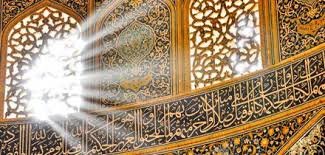
Book of the Ten Treatises on the Eye by Hanayn ibn Ishāq, 9th century Anatomical plate from a Persian Medical Treasure: Arabs and Muslims invented the pointed arch, without which the Gothic cathedral would have been impossible. Note the vaulted ceilings, the endlessly unfolding arcades, and the high-niched portals in many Muslim buildings, especially mosques and palaces.
Under inspiration of Islam, Arabs were known for various forms of ornamentation, carving, weaving, damask, embossing, leather craft, and wood and metal work. Muslims invented the clock pendulum, the magnetic compass, and the astrolabe. They were the first to create instruments to measure special weights and gravities of elements and did so with great precision.
Ibn al-Haytham (died 1039), sometimes called Alhazen in the West, was the first to suggest the damming of the Nile River at Aswan, a project accomplished in the 20th century.” (Zepp, p. 153) He is also considered the founder of optics.
Without the simplicity and flexibility of Arabic numerals, the decimal system, and the concept of zero – all adopted by the Arabs from the Hindus – Western science could not have advanced as it did. The Muslims developed the concept of irrational numbers; made algebra an exact science, founded analytical geometry, plane and spherical trigonometry, and incorporated into mathematics the dimension of time.
Arabs and Muslims introduced the letter “x” for an unknown quantity. Muhammad ibn Musa al-Khwarizmi (780-850), a Persian compiled the oldest known astronomical tables in Arabic and the oldest Arabic works on arithmetic and algebra, words that come from Arabic. Arithmetic called after al-Khwarizmi, and algebra from al-jabr, which in Arabic means “to restore broken parts”. Al-Khwarizmi introduced the Hindu-Arabic numerals to replace the Latin numbers, and this established the system of counting.
The crusades in the 11th and 12th centuries introduced Europe to Arab Medicine. Wounded crusaders lucky enough to be treated by the Arab hakim (wise men) observed humane and effective techniques and discovered a highly developed profession.
The Muslims were the first to:
• organise public health services, and doctors attended patients in hospitals, at home, in prison, and in rural areas.
• use anaesthesia in surgery;
• cauterise wounds;
• discover that epidemics arise from contagion through touch and air;
• endow special institutions for lepers, the lame, and the blind;
• discover that fever was not a disease, but a result of the body’s fight against disease;
• carry ambulatory hospitals on a camel’s back (a kind of eighth century MASH); and
• To separate pharmacology from medicine and the writing of prescriptions.
Abu Bakr Muhammad al-Razi (865-925) has been called “the unchallenged chief physician of the Muslims.” He wrote 100 major scientific works, including the first clinical account of smallpox. His enormous encyclopaedia of medical wisdom was translated from Arabic into Latin in 1279 and was reprinted in Venice as late as 1542, almost 700 years after his birth.
The first “Renaissance Man,” Abu Ali al-Husayn ibn Sina (980-1037), known as Avicenna in the West, was master of philosophy, poetry and diplomacy as well as pharmacy, medicine and natural science. In 997, at the age of 17, he became a physician and won esteem throughout the Arab world and Europe for the most famous medical encyclopaedia in Arabic. Summarising Greek, Arabic, Hindu, and Persian medicine, Ibn-Sina’s Canun described every known disease, both physical and mental, and every method of treatment, and all medications, evaluating 760 drugs in use at the time. The Canun was the West’s basic medical text for more than five centuries, with 30 editions in Latin and several in Hebrew.
Another “Renaissance Man” who pre-dated Europe’s Renaissance was Ibn-Rushd (Averroes), an Arab Muslim of the 12th century Cordoba. Philosopher, astronomer, and court physician, Ibn-Rush greatly influenced Christian theology, encouraging it to accept the harmony of faith and reason that had long been an integral part of Muslim culture.
Ibn-Khaldun (1332-1406), the father of modern historiography and sociology, who also did works in economics, anthropology, and political science. In Al-Muqaddamah, Ibn-Khaldun applied the methods of Aristotle and sought to prove the cause and effect pattern of events. In doing so, he developed an unprecedented “science of civilization” to explain the rise and fall of societies in their turn. The first to insist that events do not happen in a vacuum but depend upon such factors as social customs, food, climate, economics, religion, etc., Ibn-Khaldun dealt extensively with the nature of society, labour conditions, and methods of education.
There are many other contributions in the fields of astronomy (developing instruments as the compass, quadrant, sextant, and astrolabe); in the field of geography (the famous map of Al-Idrisi of Europe, Asia, and Africa, circa 1150 C.E.), the professional traveller Ibn-Battuta (1304-1377) who journeyed 75,000 miles in 30 years, Hassan Al-Wazzan, known in Europe as Leo Africanus, the world’s greatest expert on Africa, and the Astrolabe, a spherical astrolabe, the only one known to exist today.