

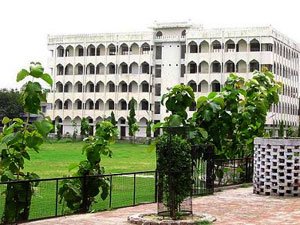
Efforts are afoot to modernise Madrasa education and to link it with mainstream. The Minister of Human Resource Development, Mr. Arjun Singh recently issued a statement regarding the formation of Central Madrasa board. He said his ministry is ready to present the bill to the Parliament in the upcoming season. Before this, the same ministry issued a statement that it is considering granting Madrasa certificates recognition equal to the Central Board of Secondary Education (CBSE) certificates.
In view of this recent development, it is noteworthy that Madrasa education system entered India with the advent of Islam and Muslims in the country in the 11th century. Ever since, madrasa education has witnessed many ups and downs in its history but now there are about 12,000 Madrasas imparting education to about 3.5 lakh students in India. These Madrasas fall into three categories.
 One category of madrasas is of those which are run by the state under State Madrasa Boards. There are seven Indian states where madrasas are operational under the boards; these are: Uttar Pradesh, Bihar, Madhya Pradesh, Jharkhand, Orissa, Assam and West Bengal. Madrasa Education Board has its deep roots in Madrasa Alia Calcutta established in 1780 in Sealdah during the British rule in association with Maulana Majuddin to man the Court, Police department and other important posts with Muslims through providing them Anglo-Arabic education. Under the Secretary-ship of Mr. Ayron various reforms were made and things were regularised and on August 15, 1821 the first public examination was held. Thus 1821 was the starting point of Madrasa Examination in Bengal, Bihar and Orissa. The building of Madrasa Alia was constructed at Calcutta in 1824, from where Madrasa education board system spread in all seven states.
Madrasa board education system played a very important role in spreading knowledge and imparting education among the Muslim community. The institution has also produced a number of literary giants. Its fertile soil has given birth to countless administrators during the British period. But the state of affairs of Madrasa board education system declined in independent India due to ir-regulation, mismanagement and negligence exercised by both the government and the people who were affiliated with this institution.
The state government started to pay the salary to the staffs and teachers very late, leading them to be absent in the beginning; then it becomes their usual trend of not going to the Madrasa properly and let the students do on their own for the examination. Above all, the corruption created more mess and provided the unqualified people with an opportunity to occupy the teaching posts. The natural corollary of all this was the decline of Madrasa board education.
In this background, if the government is really willing to improve the educational status of the Muslim community by recognising Madrasa degrees, it should take initiative at first to ensure quality education of Madrasas by forming a committee to contain these corruptions as well as monitor the quality education of Madrasa board. Otherwise, it might prove to be a major cause of further educational backwardness of the community rather than benefiting the community. If so, in the long term, the quality education of the country also will suffer.
The second category of Madrasas includes those which follow the syllabus of “Darse-Nazamia prepared by Mulla Nizamuddin (1089-1161) during the Mughal period in view of the need of the time. So it was capable to fulfil the requirements of that time. But now the time has changed. Therefore it has no capability to fulfil the demand of this modern age because it does not comprise the modern subjects. The most prominent among these Madrasas which follow the “Darse-Nazamia syllabus are Darul Uloom of Deoband and Mazahir al-Uloom Saharanpur.
The third category includes those Madrasa which follow the syllabus prepared by Darul Uloom Nadwatul Ulama in Lucknow in 1893 in order to arm the Ulama with modern and religious education. It worked for several decades to achieve this noble goal but this institution is also heading toward the path of Darul Uloom of Deoband. According to Maulana Shibli, who was one of the founders of this institution, “Darul Uloom Nadwatul Ulama has adopted Darul Uloom of Deoband as its second holy shrine”.
The last two categories of Madrasas can play an effective role in promotion of education and their products also can pick the benefits from this step of the government by qualifying in competitive examinations and occupying high posts in the government sector if they allow a little change in their syllabus in order to keep pace with the times and requirements thereof by introducing modern subjects like English, Political Science, History and Mathematics from class 6th to class 12th as per the syllabus of N.C.E.RT. Otherwise “this step of government to link Madrasas with mainstream” will go in vain. Now it is up to Ulama, to much extent, either to take benefit from this step of government or let it go in vain and miss the opportunity once again.