

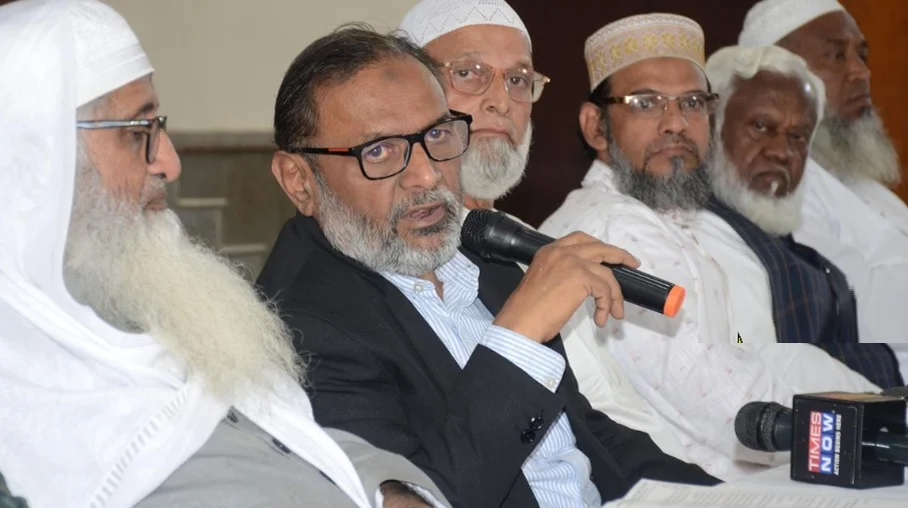
The All India Muslim Personal Law Board has expressed grave concern over the passage of an Amendment Bill by both Houses of Parliament making alleged disrespect to VandeMataram a punishable offence. The Board has termed the move contrary to the constitutional, secular and democratic ethos of the country and a serious assault on the religious freedom of citizens.
According to the Board, seeking through legislation to impose a particular religious concept or belief upon all citizens is inconsistent with the basic spirit of the Constitution of India.
In a statement, Dr. S.Q.R. Ilyas, spokesperson of the Board, said that any attempt to make VandeMataram compulsory for all sections and religious communities through legal coercion is not only objectionable but also contrary to the fundamental principles of the Constitution. He pointed out that during the framing of the Constitution, the Constituent Assembly, after detailed deliberation, accepted only the first two stanzas of VandeMataram at the national level, while the religious connotations of its other portions were not considered compatible with the secular character of the country.
Dr. Ilyas said that certain passages of VandeMataram are based on religious concepts in which the motherland is depicted in the form of a goddess and people are exhorted to worship her. Such a concept is unequivocally contrary to the fundamental Islamic doctrine of Tawheed.