

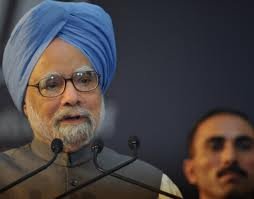
DR. S. AUSAF SAIED VASFI analyses the Indo-Pak joint moves aimed at normalisation of relations between the two nuclear neighbours and calls for more heart searching and concrete steps.
India and Pakistan have tried four, full-fledged military conclusions. But after each bout, things have gone from bad to worse. In the meantime, both honest and dishonest parties have showed inclination to solve the problems between the disputants. This has obviously not been to our liking. And the problem continues to hang fire. How long this unhappy, un-productive and un-predictable situation would continue between the two nuclear neighbours is the billion-dollar question, which, understandably, haunts each and every thinking person, including the Prime Minister of India.
Dr. Manmohan Singh, despite 26/11 attack on Mumbai, took an initiative in breaking the deadlock. He could, but did not opt for military option. The media as well as the Saffron had raised the pitch so much so that had the Saffron been in the saddle, they would not have hesitated in teaching a lesson to the enemy. What is the stuff the Saffron is made of? To quote Mr. Arun Shourie, who is a BJP nominated member of Rajya Sabha: We take two eyes for every eye and entire jaw for any damaged tooth!
The Prime Minister acted in a statesman-like manner, befitting the head of a big country.
What is noteworthy is that New Delhi’s initiative has been taken from the position of strength, not weakness. Secondly, the step has been taken from the high moral ground. This is the reading of the situation as obtaining in New Delhi.
INDIAN AJMAL KASABS
However, the behind-the-scene situation is different. Mr. Hamid Mir, the Executive Editor of Geo TV, Islamabad, in a 670-word story, revealed in The Hindu on July 28 that Pakistani Foreign Secretary Salman Bashir told his Indian counterpart Shiv Shankar Menon that India must de-link the composite dialogue process from action on terrorism, otherwise Pakistan would be forced to produce before the international media at least “three Indian Ajmal Kasabs” who were directly or indirectly part of the terrorist activities in Balochistan.
“He added that Pakistan would easily establish that the Indian consulate in the Afghan city of Kandhar was actually a control room of terrorist activities organised by the separatist Balochistan Liberation Army (BLA).
“The three Indian nationals were arrested in Pakistan in the last few weeks. According to Pakistani officials they have undeniable evidence of the links of the Indians with Bloch militants….
“The U.S magazine, Foreign Affairs (March 2009) published the report of a roundtable discussion on the causes of instability in Pakistan. Christine Fair of RAND Corporation said, “Having visited the Indian mission in Zahedan, Iran, I can assure you they are not issuing visas as the main activity. Indian officials have told me privately that they are pumping money into Balochistan” (emphasis added).
If this story rather these stories have a semblance of truth, we, it appears as if, have blotched our answer sheet.
Dr. Manmohan Singh, however in his defence of the Sharm el-Sheikh joint statement flatly denied any Indian involvement in Balochistan. India does not want to destabilise Pakistan, was his refrain. Earlier he had told his critics: our conscience is clear. Whatever the case, today, the post-Sharm-el-Sheikh Pakistan is happy and India is grieving.
DIPLOMATIC GESTURE
There is no doubt about it that a concession has been given to Pakistan. It may be out of fear or as a diplomatic gesture. To Dr. Manmohan Singh, however it is because of Islamabad’s admission of the involvement of LeT in 26/11 attack on Mumbai. He told the Lok Sabha on July 29 that it was for the first time that the neighbour had admitted that their nationals and a terror organisation based over there carried out a ghastly terror attack on India.
As far as the Pakistani province Balochistan is concerned, it looks as if the public memory is really short. Balochistan has, for long, been an issue, in bilateral relations. The only point worth mentioning is that it has been a less-pronounced one.
On Dec 27, 2005 our ministry of external affairs made the internal situation there a foreign policy concern: “The government of India has been watching with concern the spiralling violence is Balochistan and the heavy military action including the use of helicopter gunships and jet fighters by the government of Pakistan to quell it. We hope that the government of Pakistan will exercise restraint and take recourse to peaceful discussions to address the grievances of the people of Pakistan,” it said. Siddharth Varadarajan, an eminent political commentator, recalls: Islamabad hit back the same day with its foreign ministry spokesperson rejecting the Indian statement as “unwarranted and baseless”.
The statement was “tantamount to meddling in internal affairs”, the spokesman said, adding “India often shows an unacceptable proclivity to interfere in the internal affairs of its neighbours”. Next, the Pakistani spokesperson made a comparison with Kashmir: “the statement is all the more surprising from the spokesman of India, a country that has long tried to suppress the freedom struggle of the Kashmiri People”.
THE QUESTION
Why Dr. Manmohan Singh allowed Balochistan to creep into the joint statement? His response, without any reference to the three Indian Kasabs, was: Pakistani leaders have been complaining about the alleged Indian mischief in Balochistan. Mr. Geelani raised it too. We said it was bunkum. We are an open book and have nothing to hide. So he agreed to an examination of the allegation. Hence its mention in the joint statement.
There has been unease in the Congress and resentment in the Opposition as well as the UPA allies.
Political observers are discussing among themselves: Has India, at a smaller level, been doing in Balochistan what Pakistan has been doing in Kashmir? They are yet to reach a definite conclusion.
All said and done, the initiative taken by Dr. Manmohan Singh is laudable, politically correct and worthy of appreciation from diplomatic point of view.