

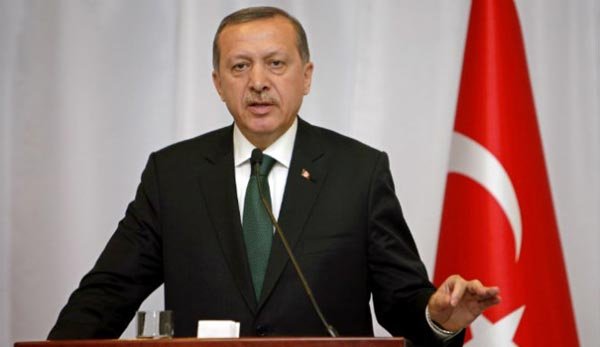
DR. ZEENATH KAUSAR hails Turkish President Recep Tayyip Erdoğan’s observation made at the recent Women and Justice Summit that men and women are not equal due to natural differences, and concludes that there should be equity rather than equality between men and women.
At the first International Women and Justice Summit hosted by Women and Democracy Association, KADEM in Istanbul, on 24 November 2014, Turkish President, Recep Tayyip Erdoğan presented some of his views on women. One of his statements which created a tough tussle and bustle between the feminists and Erdoğan was: “You cannot bring women and men into equal positions; that is against nature because their nature is different.” This view of Erdoğan made headlines in several newspapers, local as well as international.
Hulya Gulbahar, a known lawyer and women’s rights activist and a recipient of “Human Rights Honour Award” by Istanbul University’s Faculty of Law, remarks on Erdoğan in these words: “Such comments by state officials which disregard equality between men and women play an important role in the rise of violence against women…. Such comments aim to make women’s presence in public life – from politics to arts, from science to sports – debatable.” (The Times of Israel, “Battle of the Sexes, Erdoğan: Women Not Equal to Men,” 25 November, 2014)
Similarly, Aylin Nazliaka, MP from the main opposition Republican Party also made a strong remark on Erdoğan’s statements on the natural differences between men and women. She said that Erdoğan “ostracised” women by portraying them as delicate, weak and powerless and limiting their role to motherhood. In a written statement, she waged a fight against Erdoğan. She wrote: “Erdoğan has publicly committed a hate crime…. But I will continue to fight this man who sees no difference between terrorists and feminists.”(The Guardian, “Recep Tayyip Erdoğan: Women Not Equal to Women,” 24 November, 2014)
Another women’s rights activist, Riada Asimovic Akyol, a Ph.D. student at Galatasaray University in Istanbul, writes: “One of the main criticisms of Erdoğan’s speech has been his stance that women and men cannot be treated equally or cannot perform the same jobs because it goes against their “nature”. Regardless of how new or sexist this might sound to many, such views on gender differences – with an emphasis on men’s superiority – are unfortunately still widespread among many conservative Muslims (men and women) in Turkey and elsewhere.” (Al Jazeera, “On Erdoğan and Muslim Mothers: Are Erdoğan’s Remarks on Women’s Nature and Role as Mothers Reflected in Islamic Scriptures?” 28 November, 2014)
Besides the local critique on Erdoğan’s remarks on gender differences, he also faced harsh criticism at international level. Today’s Zaman reported the following on 27 November, 2014: “Disagreeing with Erdoğan’s remarks, the European Parliament’s (EP) newly appointed Turkey rapporteur, Kati Piri, said although Turkey has a proper law to protect women’s rights, such remarks do not help women who fight to gain respect for their rights.”
Nicole Ameline, the head of the UN’s Committee on the Elimination of Discrimination against Women (CEDAW), expressed her disappointment and called on Erdoğan to consider the expectations of Turkish civil society in terms of women’s rights. (Today’s Zaman, 27 November, 2014)
A serious critical analysis of the reactionary comments of the women’s rights activists and feminists on Erdoğan’s view on the equality of women reveals that it is overshadowed with misconceptions and misrepresentations. The whole controversial debate on equality of men and women may be understood better in the light of equality and identity polemics. It is nothing strange to assert here that in the popular feminist discourse equality and identity concepts are often mixed together and become hotchpotch which generally give rise to a series of confusions, misconceptions, ambiguity and controversy. This is exactly what happened here.
In simple words, Erdoğan pointed out physical differences between men and women and different types of work in a given society and said that women cannot perform certain work because they are delicate by nature in comparison to men. That is why he also said: “Their characters, habits and physiques are different… You cannot place a mother breastfeeding her baby on an equal footing with men.” He even gave an example that in Anatolia, while women were engaged in those kinds of manual work and got hunch-backs, men kept themselves preoccupied in playing cards and rolling dice in tea-cafes.
The same point can be further elucidated from few other remarks of Erdoğan: “What is particularly essential is women’s equality before justice…. What women need is to be able to be equivalent, rather than equal. Because equality turns the victim into an oppressor and vice versa.” It seems important to mention here that some Islamic scholars and leaders prefer the term ‘equity’ to ‘equality’ in order to clarify that Islam accepts basic equality between men and women, but also recognises the palpable differences between them.
For instance, Badawi uses the term ‘equity’ in his popular article “Gender Equity in Islam”. He writes: “The term equity is used instead of the common expression ‘equality’ which is sometimes mistakenly understood to mean absolute equality in each and every detailed item of comparison rather than the overall equality. Equity is used here to mean justice and overall equality of the totality of rights and responsibilities of both genders. It does allow for the possibility of variations in specific items within the overall balance and equality. It is analogous to two persons possessing diverse currencies amounting, for each person to the equivalence of US$1000. While each of the two persons may possess more of one currency than the other, the total value still comes to US$1000 in each case. It should be added that from an Islamic perspective, the roles of men and women are complementary and cooperative rather than competitive.” (Jamal Badawi, Gender Equity in Islam, American Trust Publications, 1995)
It is clear from the above that Erdoğan has used the term ‘equitable’ in the same sense as ‘equity’ used by Badawi, so as to emphasise the fact that men and women are equal but different from each other and resultantly there may be some differences in some of their areas of work. Hence, there is hardly any objectionable element here in the views of Erdoğan. It is however commendable to see that few deputies of the ruling party have tried to clarify Erdoğan’s stance on the equality of men and women and the gender differences. The deputy head of the AKP’s women’s branches, Ankara, Deputy Tülay Selamoğlu said that Erdoğan meant to say that women and men had differences through their creation. (Hurriyet Daily News, 25 November, 2014)
Former Family Minister Güldal Akşit pointed out that Erdoğan was referring to the “physical differences” between women and men in his speech. Aksit also said: “Women and men are different by creation. But we take them as equal in terms of rights and opportunities. I have been working with the President for 13 years, and I know what he meant. He believes in equality as you and we believe, and he is taking steps to this end.” (Hurriyet Daily News, 25 November, 2014)
Meanwhile, few remarks of Turkish Prime Minister Ahmet Davutoglu on 4 December, 2014, on women’s equality while addressing a meeting of the women’s branch of his ruling Justice and Development Party added fuel to the fire of criticism on the ruling party and its leaders. Ahmet said: “Why is the Gross National Product in most developed countries – I don’t want to name it but in Scandinavian countries and in many other countries – at the highest level on one side, but the suicide rate is also at the highest level there. Why?” He described the so-called “mechanical equality” as something that is beginning to “destroy the complementary relationship in life.” (Hurriyet Daily News, Gender Equality Triggers Suicides, Turkish Prime Minister Suggests, 24 December, 2014)
The message given by Ahmet Davutoglu is the same as given by Erdoğan. Ahmet used the expression, ‘mechanical equality’ and that makes things very clear. Mechanical equality may be considered a better substitute to absolute equality and the inner meaning remains the same, that is, it is not necessary that women should take up all those jobs which men perform due to their different biological constitution. There is neither any injustice nor any discrimination in this concept. This concept is thoroughly based on love, sincere regards and respect for women not on hatred, disregard and disrespect for them. But the women’s rights activists and feminists, who mistakenly believe that equality of men and women implies that women should do exactly what men do, and in a way women should become men to be equal to men, cannot appreciate it.
It seems pertinent to mention here that there are differences of opinions among feminists themselves on the concept of ‘equality of men and women.’ In the beginning, feminists mainly fought against gender discrimination in educational, economic and political fields and stood for equal opportunities for women as men for their educational, economic and political rights. (Janet A. Kourany, James P. Sterba, Rosmarie Tong, Feminist Philosophies, Prentice Hall, 1992)
However, with the passage of time, many schools of feminism developed and a significant number of feminists, including liberal, radical, gender and other feminists, started demanding absolute equal rights for women as men in all areas of work irrespective of gender differences. In fact, some of these very influential feminists like Shulamith Firestone even asserted that women should get rid of ‘nature’ if it comes in their way of liberation and development. She wrote: “The ‘natural’ is not necessarily human value. Humanity has begun to outgrow nature…. Indeed for pragmatic reasons alone it begins as if we must get rid of it.” (The Dialectic of Sex, Bantam Books, 1972, p.10) Getting rid of ‘nature’ implies getting rid of natural differences between men and women so that women may be forced to do exactly what men do so that they can enjoy equality.
This clearly shows that in the popular and influential feminist discourse, the usage of the term ‘equality’ in the context of men and women is very much different from the Islamic perspective. This category of feminists believes in the absolute equality of men and women and undermines the natural differences between men and women whereas Islam perceives basic equality of men and women and acknowledges the natural differences between men and women.
While feminists mix equality with identity and do not recognise and appreciate the identity of women as separate from the identity of men, Islam puts equality and identity in their proper places and appreciates the identity of women as different from the identity of men. Feminists in the name of equality of men and women destroy the identity of women while Islam holds equality of men and women and gives due regard to the identity of women. Feminists suspect natural differences between men and women whereas Islam respects the natural differences between men and women. It looks so polemical that feminists who claim that they champion the cause of women’s rights are seen to be snatching away the very rights of women themselves to live as women with their own identities! (See Zeenath Kausar, Politicization of Sex and Family Devaluation in Feminism: An Islamic Alternative, Kuala Lumpur: Ilmiah Publishers, 2003)
Anyways, it is good to note that Erdoğan has defended himself against such kind of criticism that he is ‘sexist’ by claiming that he has been an advocate of women’s rights throughout his political career. He blamed the media for misinterpreting and distorting his comments on equality of the sexes. He also said: “Nobody can slander me or my colleagues when it is obvious how I have personally defended women’s movement throughout my 40-year political career. (International Business Times, Turkey: President Recep Tayyip Erdoğan Claims He is a Defender of Women’s Rights, 26 November, 2014)
[The writer is Former Professor, International Islamic University Malaysia, IIUM]