

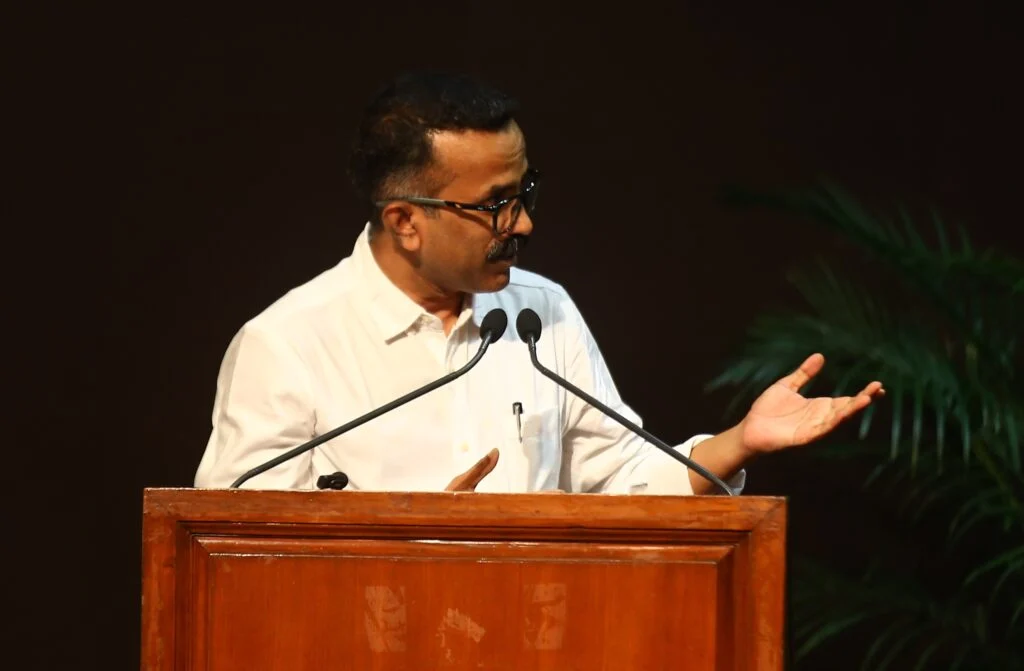
Book: Akhlq: Bharat men Mob Lynching ki VistritZameeniPadtaal (Hindi)
Author: Dayashankar Mishra
Publisher: Dayashankar Mishra, New Delhi
Pages: Pages: 241
Price: ₹499
Reviewed by Dr. Abhay Kumar
Dayashankar Mishra is a former NDTV journalist, media critic, and author. His recent book on mob lynching, based on his field study of numerous cases across different states, makes a bold argument that these anti-Muslim, anti-Christian, anti-Dalit, and anti-Adivasi incidents are ‘organised crime’ and politically designed and backed by those in power, “Mob lynching does not simply mean the killing of an individual by a mob through a physical attack. It is an organised crime being committed against Muslims, Christians and Dalits after they have been specifically identified and targeted. Mob lynching includes an assault on the rights to justice, equality, dignity, and to live with fraternity….” (p. 5)
Because of the author’s determination to confront the ruling Hindutva dispensation and examine cases of mob lynching, he had faced numerous hurdles in writing the book. Publishing it was no easy task, as several publishers turned their backs on the project – a point that he himself elaborated on in detail in an interview. This background is important because it bears testimony not only to the author’s committed scholarship but also to the extent to which freedom of expression has come under severe attack under the Hindutva regime.
At a time when speaking about issues concerning minorities, particularly Muslims, has often been avoided by mainstream journalists and political leaders seeking to remain in the good books of the ruling classes, the author speaks directly and sharply, backing his arguments with logic and empirical evidence.
Mishra argues that Hindutva forces are responsible, in various ways, for the assaults on Muslims, Dalits, and other marginalised castes and religious communities in the name of protecting the ‘holy’ cow. For example, he draws our attention to the fact that a week after the coming of the BJP government at the Centre in 2014, 28-year-old Pune-based IT professional Mohsin Sheikh was mob lynched.(p. 14)
By giving the example of the murder of Mohsin Sheikh, the author seeks to convey his larger argument that anti-Muslim elements were emboldened by the change in the political regime. Throughout the book, he attempts to establish a connection between the communal ideology of Hindutva forces and increasing attacks on minorities, Dalits and Adivasis.
The author’s approach is to study these developments in their interrelationship: the ascendancy of BJP in the political domain, the rise of hate speech, and the emergence of a pliant media that brazenly propagates communal narratives to appease the ruling dispensation – all of which are contributing factors to the rise of mob lynching. He also examines the erosion of public institutions, including the judiciary, as a result of which victims are often unable to get justice.
The author further connects the rise in cases of mob lynching and other forms of communal violence to a larger design aimed at usurping the rights of marginalised communities and reducing them to the status of ‘second-class citizens’. As the author puts it, “Mob lynching in India is creating a form of second-class citizenship for Muslims, Christians, and Dalits. Mob lynching has become the most powerful instrument for scripting religious divisions and creating untouchability in society.” (p. 60)
The author’s approach of placing cases of mob lynching in a wider context takes him back to history. He begins by examining similar cases of racist and supremacist organisations attacking minorities and marginalised communities. In other words, his use of a comparative method makes the book more in-depth. For example, he devotes two chapters to discussing the discriminatory practices imposed on African Americans by white supremacists who formed organisations such as Ku Klux Klan. The organisation was established soon after the end of the Civil War and promoted the agenda of white supremacy while opposing moves towards social reform and egalitarian policies.
Having briefly discussed the main features of Ku Klux Klan, the author draws a close parallel between this American racist organisation, which worked against African Americans, and the RSS. Notwithstanding the RSS’s denial that it bears no resemblance to Ku Klux Klan, the author draws a parallel between the two organisations: “You will see the Ku Klux Klan in the RSS. The RSS’s time has only just begun.” (p. 43)
Besides, the author also analyses the Jim Crow laws of the USA, which were enacted in the Southern United States. Introduced from the late 19th century to the mid-20th century, these laws institutionalised racial segregation. The term ‘Jim Crow’ is believed to have originated from a minstrel show in which Black African Americans were caricatured by white actors.
The author discusses these racial laws in the USA to show how white supremacists created stereotypes and spread hatred against Black people. Through these examples, the author conveys that in India, too, the media is involved in propagating anti-Muslim narratives day and night. The judiciary and other public institutions are failing to live up to the expectations of marginalised communities. Several BJP-ruled states are passing orders and enacting laws that undermine the rights of minorities and violate the Constitutional principles of equality and secularism. While some of these points have previously been raised by academics in their research papers, the author deserves credit for bringing these facts together and placing them in the context of mob lynching, thereby consolidating his larger argument.
Looking at the title of the book, many readers might wrongly assume that its focus is the brutal killing of 52-year-old Mohammad Akhlaq in UP’s Dadri region by a mob, following an announcement from a nearby temple that a cow had been slaughtered. Although the author visits Akhlaq’s house in Bishara village of Dadri and narrates a deeply painful story of his abandoned house, he also goes beyond the incident itself in his book. He describes the atmosphere in the area surrounding Akhlaq’s house. The author narrates a scene at a tea shop in Bishara village where an elderly man ordered tea for him, but the sweetness of the tea soon turned into bitterness when the elderly man said to the author, “It has become a sin to punish the person who kills a cow!”
This incident makes it clear that, after the brutal killing of Akhlaq in his village, there is still a large section of the population that does not consider the entire episode to be wrong. What is the reason behind this? Why have people forgotten humanity in the name of religion? Perhaps this incident reveals the larger argument of the book that behind the incidents of mob lynching and the hatred being spread between Hindus and Muslims, a much larger system is at work. That system can rule only by creating divisions and widening distances among people.
At several points in the book, the author argues that hate speech is the fuel that drives mob violence. The media has become an extension of the BJP’s IT cell. BJP leaders are spewing anti-Muslim venom day and night in order to rise within the party. Even during elections, Muslims are being vilified in order to secure votes from the majority community.
Among the strengths of this book are its vast canvas and politically sharp articulation. The author’s language is also very lucid yet powerful, and his narrative skill is highly appealing. The book is rich in diverse insights. He has included his own ground reporting, interviews with experts, excerpts from prominent scholars and activists working on similar themes, as well as his own poem, “What Will Muslims Do” (Muslim Kya Karenge).
While it is true that Hindutva narratives often target Muslims and seek to mobilise the Hindu majority against minorities, this is not the complete picture. In the name of cow protection, Christians, Dalits, and Adivasis are also targeted. On the pretext of stopping the ‘forced conversion’ of Hindus, Christians and their churches are attacked. Even Hindus have been victims of organised communal violence in the name of protecting the holy cow. In his book, the author has not only included stories of Muslims being victims of communal violence but has also described assaults on Christians, Dalits, and Adivasis.
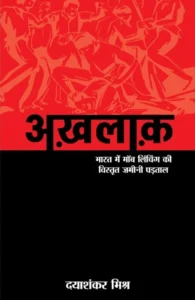 The author also includes an interview with Martin Macwan, an eminent Dalit-rights activist in Gujarat. Through Macwan’s interview, the economic angle of the violence against Dalits and Muslims comes to light, a point that was largely missing from the author’s narrative. While responding to the author’s questions, the social activist argues that the fear of lynching has been used to push Muslims out of their traditional occupations and reduce competition. In Gujarat, Muslims have been largely pushed out of the cattle trade. Muslims have been completely excluded not only from meat shops but also from the cattle trade. (p. 190)
Macwan also demolishes the myth that Muslims are only beef-eaters and Hindus are largely vegetarians. By projecting Muslims in this manner, the Hindutva narrative builds another web of propaganda in which Muslims are demonised as a threat to Hindu women, culture, and religion. However, Macwan challenges this Hindutva narrative on meat with these words: “Gujarat consumes meat in large quantities, but its politics is vegetarian. Hindus consume more non-vegetarian food. The Hindu population is larger. India has been among the world’s major exporters of meat. Where does the meat come from?” (p. 190)
Likewise, in his own essays in the book, the author exposes the Hindutva forces’ position not only on the so-called cow-protection campaigns but also on their advocacy of vegetarianism. As the author writes, “India has companies that export beef. It is a business worth billions of rupees. All of this continues unabated even during the third term of the BJP-RSS government. The names of BJP leaders have repeatedly surfaced in connection with companies dealing in beef. BJP leaders admit to eating beef in one state, while in another state they use beef to inflame people’s sentiments. Vegetarian in one state and non-vegetarian in another. A video of BJP leader Anurag Thakur eating non-vegetarian food during the 2026 West Bengal Assembly election is publicly available.” (p. 61)
In another interview with the author, Marathi writer and social activist Humayun Mursal also highlights the economic dimension to the acts of mob lynching and other forms of violence on the Muslims. Mursal explains that mob lynching is acting as a ‘design tool’ or a weapon in the hands of Hindutva forces to suppress Muslims and silence them. This tool, according to him, is also being used to push Muslims out of economic activity. As he aptly puts it, “Whatever kinds of work Muslims can do are being shut down one by one. Take the case of Junaid, for example, as seen in the incident of his lynching in Bhopal. Junaid was running a dairy, wasn’t he? To run a dairy, he needs livestock – cows and buffaloes. He had duly spent money to purchase them. He was transporting the animals. This means that, in a way, you want to exclude Muslims from the entire process.” (p. 205)
The book also includes an important write-up by historian Sarfaraz Ahmad. He hails from Solapur in Maharashtra and is a prominent scholar who writes about Muslims as a minority community facing cultural discrimination, political marginalisation, and social and economic exclusion. Ahmad contends that Muslims face attacks on multiple fronts. While their historical heritage is being erased, the rights enshrined in the Constitution are also being attacked. However, he argues that many progressive people in the state talk about the need to promote fraternity and love, but when it comes to standing up for social justice for Muslims, they do not stand firm. As he brilliantly puts it, “…whenever the issue of Muslims comes up, you talk about fraternity (bandhuta). You talk about love (mohabbat). You talk about brotherhood (bhaichara). Brother, this love and brotherhood are fine; it is your own choice, and you are free to practise them. But today, more than love and brotherhood, I want social justice…. Social justice is a much bigger thing… To counter mob lynching, we have to open the doors that have been closed. For this, social justice, rights, political representation, presence in higher educational institutions, and social participation are necessary.” (p. 217)
Ahmad’s criticism is very valid in the context of post-Independence India. While it is true that anti-Muslim agendas have intensified in recent years and that Hindutva forces have been largely responsible for this, the political history of India bears witness to the fact that Muslims have never received proportionate and effective political representation, even during the long periods when secular parties ruled the country.
Dr B.R. Ambedkar repeatedly argued that no single caste or class should be given the responsibility of looking after the interests of all sections of society. Indian society is divided along caste lines, and policymakers often fail to look beyond the interests of their own caste or social group. This is why Babasaheb emphasised that a good Constitution alone cannot ensure justice for the downtrodden unless they also have the opportunity to participate in law-making and policy implementation.
While Dayashankar Mishra is bold enough to link cases of mob lynching to organised crime in which Hindutva forces have been involved, directly or indirectly, what is lacking in the book is a sustained engagement with the roles and policies of secular parties. He is right in pointing out that when Narendra Modi was aspiring to become Prime Minister, he frequently spoke in favour of protecting cows and banning the export of beef, but once he assumed power, his language and priorities changed. However, the author does not discuss how the emergence of communal politics around the ‘holy’ cow in Indian history led to several incidents of conflict and riots between Hindus and Muslims during both colonial and post-colonial periods. The mobilisation around the cow by Hindu right-wing leaders against Muslims predates even the establishment of RSS and the founding of BJP.
[Dr. Abhay Kumar’s recently published book is Muslim Personal Law: Definitions, Sources and Contestations, Manohar, 2026. Email: debatingissues@gmail.com]