

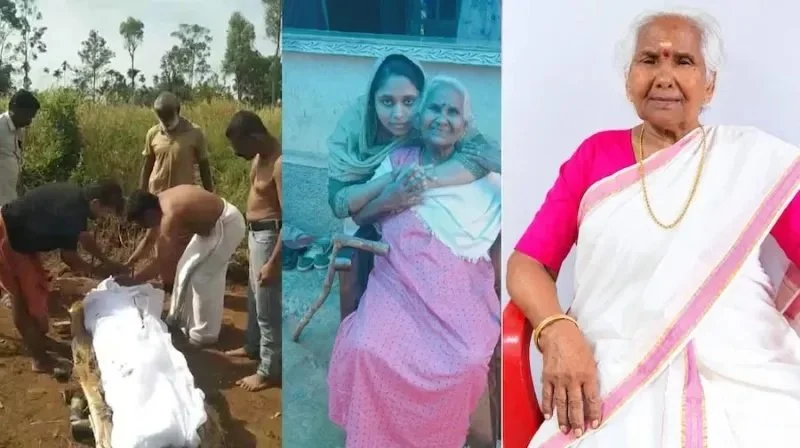
The moving story of Kalyani Amma from Kerala is a reminder that humanity, affection and neighbourly bonds are stronger than religious divisions.
There are moments when humanity speaks louder than political speeches, religious sermons and ideological proclamations. There are occasions when a simple act of love exposes the hollowness of those who spend their lives creating divisions among people in the name of religion. The story of 85-year-old Kalyani Amma and her Muslim neighbours in Kerala’s Wayanad district is one such extraordinary moment. It is not merely a story of communal harmony; it is a deeply moving account of a relationship that transcended blood, religion and social boundaries.
When Kalyani Amma breathed her last on November 10, two Muslim brothers, Kappan Razak and Sulaiman, stepped forward to perform her last rites according to Hindu traditions. They lit her funeral pyre at a Hindu crematorium, fulfilling the final wish of a woman whom they had loved and cared for as their own mother for nearly five decades.
The incident took place at Chithragiri village in Muppainad panchayat of Wayanad district. Kalyani Amma had no children or close relatives to look after her. She had lived next door to the Muslim family for almost 50 years. But the boundary wall separating their houses had never become a barrier to their affection.
For the two brothers and their family, Kalyani Amma was never merely a Hindu neighbour. She was a member of their household. They took care of her everyday needs, arranged medicines, accompanied her to hospitals and stood beside her whenever she needed help. As she grew older and her health deteriorated, their responsibility and affection only deepened. During the final months of her life, she was even living in their house.
The relationship was so intimate that she considered the two brothers her own sons. She had expressed her wish that they should perform her last rites after her death. They honoured that wish with the dignity, affection and devotion that any loving son would have shown his mother.
It is difficult to read this account without being moved. In a world where relationships are increasingly measured through narrow identities and material considerations, these brothers demonstrated what it means to be human. They did not ask whether they had the religious right to care for a Hindu woman. They did not worry about what people might say about a Muslim family performing Hindu funeral rituals. They simply honoured a relationship that had been built over half a century.
What makes this story particularly touching is that the affection was not confined to the two brothers. Their entire family participated in looking after Kalyani Amma. Their concern for her was not an occasional gesture of charity or an act performed for public appreciation. It was a sustained commitment, extending over decades.
There is a profound lesson here. Family is not always defined by blood relations, nor does affection necessarily follow the boundaries of religion, caste or community. Sometimes, the people who live across the boundary wall become closer than those who share our surname and bloodline.
Kalyani Amma’s final journey was therefore not that of a lonely woman abandoned by society. She was accompanied by a family that had embraced her without any conditions. In Razak and Sulaiman, she had found sons; in their household, she had found a home.
The brothers’ act also carries a special significance because they performed the funeral rites in accordance with her religious traditions. True secularism is not indifference to another person’s religion; it is the ability to respect that religion while extending love and solidarity beyond one’s own community.