

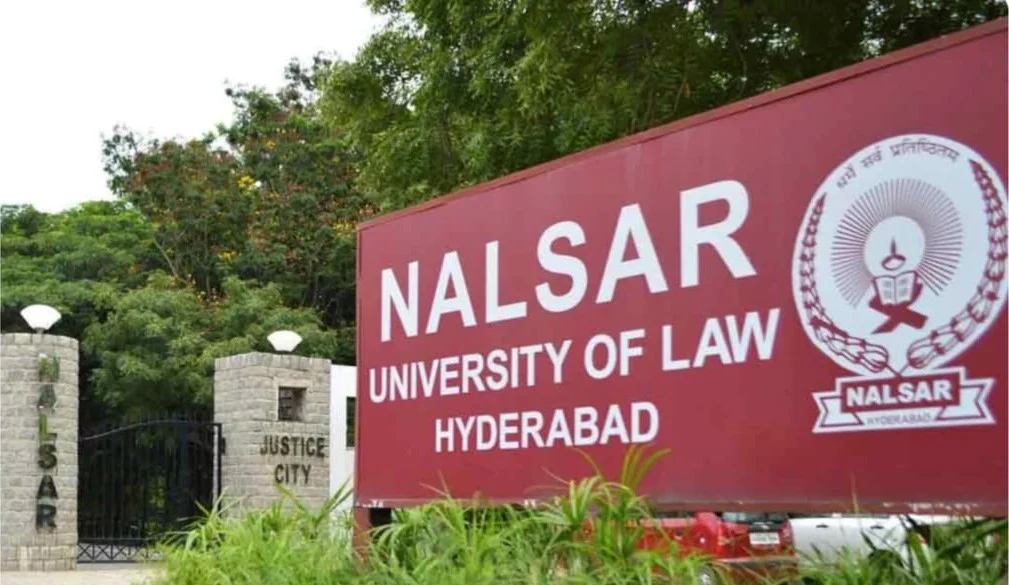
The controversy surrounding Bar Council of India (BCI) Chairman Manan Kumar Mishra’s intervention in the NALSAR University of Law controversy has developed into a much larger debate over the limits of institutional authority, students’ right to dissent and the constitutional culture expected from India’s legal profession.
The controversy began after a section of NALSAR students objected to the proposed participation of Chief Justice of India Justice Surya Kant as chief guest at the university’s convocation. Reports said around 450 students were involved in the campaign. Their objection was linked to remarks attributed to the Chief Justice during proceedings concerning alleged police action against protesters in Delhi.
What transformed a campus disagreement into a national legal controversy was the BCI’s response. On August 13, the Council, under Mishra’s chairmanship, directed that graduates of NALSAR’s 2026 batch should not be enrolled by State Bar Councils until further orders. The university was also asked to provide information about those allegedly involved in initiating, organising or mobilising the campaign against the CJI’s participation in the convocation.
The language of the order intensified criticism. The BCI suggested that a law student who showed insufficient respect for the highest judicial office could be unsuitable for becoming an advocate, teacher or judge. Critics saw this as an extraordinary attempt to link students’ professional futures with their expression of dissent. The question immediately arose: can disagreement with a constitutional authority be treated as evidence of professional unfitness?
The BCI subsequently withdrew the directive and closed proceedings against the 2026 graduating batch, saying it had considered representations from senior advocates, members of the Bar, students and public-spirited citizens and was satisfied that the batch itself had no role in any ‘disturbance or movement’.
Mishra later apologised to law students, saying that if any of his words or the correspondence had hurt them, he sincerely regretted it. He also emphasised the importance of independence of thought and peaceful protest.
But the withdrawal and apology did not end the controversy. Instead, they raised a more fundamental question about whether the original action was compatible with the BCI’s statutory responsibilities and the principles of natural justice.
Senior advocate Dushyant Dave, speaking to journalist Karan Thapar, strongly defended the students’ right to object. In the interview, Dave described the NALSAR students’ objection to the CJI as justified. His intervention is significant because he has himself served as President of the Supreme Court Bar Association and has repeatedly argued that constitutional institutions must remain open to scrutiny and criticism.
Dave’s broader argument is rooted in the idea that respect for an institution cannot mean immunity from criticism. A Chief Justice, Supreme Court judge or any other constitutional authority occupies an important office, but the office does not place the individual beyond legitimate public scrutiny. Indeed, law students are expected to learn precisely this distinction: respect for constitutional institutions and the right to question their actions can coexist.
This is where the NALSAR controversy becomes particularly important. If future lawyers are discouraged from expressing disagreement with judges while they are still students, critics argue, legal education risks becoming an exercise in obedience rather than constitutional training.
The students themselves have made a similar argument. The NALSAR Student Bar Council said that neither the Supreme Court nor the CJI is beyond legitimate scrutiny in a constitutional democracy. It also questioned whether the BCI’s intervention fell within its statutory functions and criticised the demand for information about students involved in the campaign.
Other legal voices have also questioned Mishra’s handling of the episode. Three lawyers’ collectives, representing more than 700 lawyers, subsequently demanded his resignation, arguing that the episode demonstrated weak leadership. The Bombay Bar Association separately condemned the BCI’s action, calling it an abuse of power and observing that a large section of students had effectively been condemned without being heard. It also described Mishra’s subsequent apology as belated. The controversy has therefore moved beyond the immediate question of who should attend a university convocation. It now concerns the relationship between the BCI, law schools, students and the judiciary.
There is also an important institutional distinction. The BCI has legitimate responsibilities concerning professional standards and enrolment. But disciplinary or regulatory authority cannot easily be converted into authority over students’ political, constitutional or academic opinions. A democratic legal profession requires lawyers who can challenge governments, question judges and scrutinise institutions without fearing that professional consequences will follow merely because they expressed an unpopular view.
The episode is also a reminder that dissent is not necessarily disrespect. In constitutional democracies, criticism can sometimes strengthen institutions rather than weaken them. A student who questions a judge is not automatically rejecting the judiciary; the student may be participating in the very culture of constitutional accountability that the legal profession is supposed to protect.
The NALSAR controversy has consequently exposed a deeper fault line within India’s legal establishment: whether professional discipline should emphasise conformity or constitutional independence. Mishra’s withdrawal of the order and apology have reduced the immediate threat to the graduating students, but they have not resolved that larger question.
Ultimately, the health of India’s legal system will depend not merely on the authority of its institutions but on their ability to tolerate criticism. If law students cannot peacefully disagree with the most powerful figures in the judiciary, the problem is bigger than one BCI order. But if institutions respond to dissent with dialogue, reason and due process, the episode could instead become a lesson in how constitutional democracy is supposed to function.
The NALSAR episode has thus become a test not only of Manan Kumar Mishra’s leadership, but of India’s broader commitment to academic freedom, professional independence and the constitutional right to dissent.
Senior Supreme Court lawyer Sanjay Hegde told Radiance, NALSAR students had ‘taught the profession a lesson’ by protesting politely, lawfully and fearlessly, while the Supreme Court stood by their right to dissent. He praised the graduating batch of 2026 and argued that the failure lay not with the students but with their regulator.
The lawyer criticised BCI Chairman Manan Kumar Mishra’s intervention in the controversy, saying the Bar should respectfully question his continuation as Chairman while he serves as a parliamentarian.
The SC response, according to the lawyer, was particularly significant. Chief Justice Surya Kant reportedly made clear that the issue was a dialogue between the students and the Court and questioned the Bar Council’s authority to interfere. Recalling his own experience of student activism, the Chief Justice emphasised that even students who may be wrong have the right to raise their voices lawfully. The Court stayed punitive action against the students.
The lawyer also highlighted what he described as a conflict between Mishra’s two roles. Mishra has headed the BCI since 2014 and has served in the Rajya Sabha as a BJP member from Bihar since Aug. 2024. The lawyer argued that the Bar Council’s responsibility is to protect the independence of the legal profession, whereas a ruling-party parliamentarian has a different political role.
He concluded that the controversy represents a serious test for the Bar’s independence and legacy, urging lawyers to defend the students’ right to dissent rather than suppress it.