

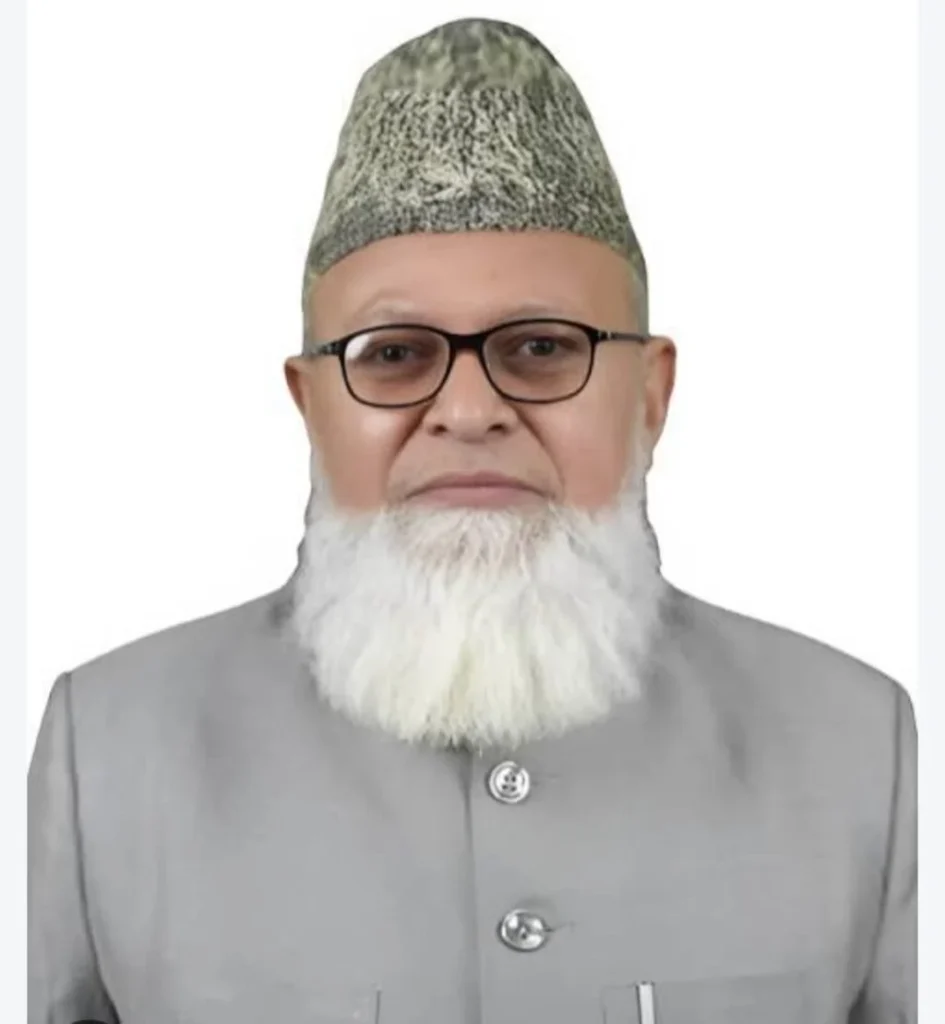
International humanitarian agencies and relief organisations should come forward to support Nepal in the aftermath of devastating floods and work with the government on long-term rehabilitation, Jamaat-e-Islami Hind National Secretary Shafi Madni has said.
Speaking to Radiance in an interview on the Nepal floods and disaster management, Madni said that while the Nepalese government was conducting rescue and emergency relief operations, the scale of destruction in some of the worst-affected areas was so extensive that rehabilitation would require sustained efforts and possibly relocation of affected communities.
Madni, who visited flood-affected areas in Nepal as part of a delegation, said the situation remained extremely difficult, particularly in areas where roads and other means of access had been destroyed. At some places, he said, government agencies were the only ones able to reach affected populations, largely through helicopters.
“Even when we went to Nepal, the situation was not very good,” Madni said, explaining that out of the three affected districts, two remained largely inaccessible. Government agencies were conducting rescue operations using helicopters and transporting essential supplies to people stranded in inaccessible areas.
In the district that could be reached by road, however, the delegation witnessed extensive destruction. According to Madni, emergency relief operations were being carried out by the government, while some NGOs were also providing assistance in the form of food, clothing, medicines and other essential supplies.
But he stressed that the challenge went far beyond emergency relief.Madni said that in several locations, the delegation had to proceed on foot to see the extent of the destruction. Entire settlements and markets had been swept away or severely damaged.Describing the force of the floodwaters, he said the river, which normally occupied a much narrower channel, had expanded dramatically, with water spreading over a vast area. “All those things were completely finished,” he said, pointing to the destruction of homes, shops and other infrastructure.
The scale of destruction, according to Madni, raises serious questions about whether the affected settlements can simply be rebuilt at their original locations.“I don’t think that there can be any rehabilitation in that area,” he said, suggesting that in some places the government may have to consider developing alternative locations where affected people can be resettled safely.The neighbouring villages have also been affected, he added, making the rehabilitation challenge considerably larger.
Madni acknowledged the government’s efforts, saying that the authorities were doing important work under extremely difficult circumstances. At the time of his visit, operations included the recovery of bodies and removal of debris and belongings from affected areas.A government army base had been established to coordinate operations, while helicopters were continuously being used for rescue and relief work.
Asked whether international organisations involved in disaster relief should visit Nepal and assess what more could be done for relief and rehabilitation, Madni said there was a clear need for such an initiative.He recalled his experience during the 2015 Nepal earthquake, when he spent about ten days in the country. At that time, several international NGOs and humanitarian organisations were involved in relief and rehabilitation efforts.
According to him, however, the presence of international agencies in the current disaster response appeared comparatively limited.Madni said that international organisations, including those with experience in disaster response and rehabilitation, could play an important role if they were invited and given sufficient space to operate.“If these big agencies come, they can be very helpful for them. They can bring the situation back to normal very soon,” he said.
At the same time, he acknowledged that the effectiveness of international agencies would depend on the conditions on the ground and their ability to reach affected populations.He also recalled that following the 2015 earthquake, there had been discussions with humanitarian organisations in Delhi before the delegation travelled to Nepal. International and Muslim-led organisations had participated in relief work at that time.
Madni emphasised that disaster response cannot end with the distribution of food, clothes and medicines.According to him, emergency relief is only the first stage. Once immediate needs have been addressed, the more difficult task of rehabilitation begins.This includes rebuilding homes and markets, restoring roads and infrastructure, helping people recover their livelihoods and, where necessary, relocating communities from highly vulnerable areas.He said the experience in Nepal demonstrated the importance of having clear mechanisms for relief organisations to access affected communities and obtain necessary supplies and financial resources.
The delegation itself was able to undertake relief activities, he said, because logistical arrangements were relatively clear at the time of its earlier work in Nepal. But difficult terrain and damaged roads continue to make access to some areas extremely challenging.Madni pointed out that a journey of only around 70-75 kilometres from Kathmandu to some affected areas could take more than four hours because of mountainous terrain and damaged infrastructure.
The Nepal experience also prompted Madni to discuss the broader question of disaster management in India.He distinguished between natural and man-made disasters, saying that natural disasters require a stronger emphasis on prevention, preparedness and community education.According to him, disaster management agencies often become most active after a calamity has already occurred. Greater resources, however, should be devoted to preventing or reducing the impact of disasters before they strike.
“In our national disaster management agencies and state agencies, preventive work should be given more importance,” he said.
He cited work carried out in Assam on river erosion as an example of the type of preventive intervention that could reduce future losses. Organisations working in Assam, West Bengal and Bihar have also undertaken efforts in flood-prone regions, he said, while engaging with government agencies.Madni argued that disaster-prone communities need to be educated in advance about the risks they face and the steps they should take before an emergency.
One of his key recommendations was that a larger proportion of disaster-management budgets should be allocated to prevention and preparedness rather than being concentrated almost entirely on post-disaster relief.“Most of the work is done after a disaster or calamity. The work done before a calamity is less,” he said.Such an approach, he argued, leaves governments and communities scrambling to respond after people have already lost their homes, livelihoods and, in many cases, their lives.
The problem becomes particularly serious in geographically vulnerable areas. In mountainous regions, heavy rainfall can trigger landslides and flash floods. In Assam and Bihar, rivers regularly cause widespread flooding and erosion. Coastal regions face the additional threat of cyclones and tsunamis.
Madni said disaster-management authorities need region-specific preparedness plans for each of these vulnerabilities.He also warned against the tendency for public and institutional attention to decline once the immediate emergency is over.
Emergency relief may continue for a month or so, he said, but rehabilitation can take years. By that stage, public attention often shifts to a new disaster elsewhere.This creates a gap between immediate relief and long-term recovery.
For Nepal, Madni believes international humanitarian agencies can help bridge that gap by providing technical expertise, resources and long-term rehabilitation support, particularly in areas where entire settlements and local markets have been destroyed.
The Nepal floods, he suggested, should therefore not be viewed simply as a short-term rescue challenge. The destruction of homes, markets, roads and livelihoods requires a comprehensive rehabilitation programme involving the Nepalese government, local communities, national NGOs and international humanitarian organisations.For Madni, the larger lesson from Nepal and India’s own disaster experiences is clear: relief must begin before disaster strikes, and rehabilitation must continue long after the headlines have disappeared.