

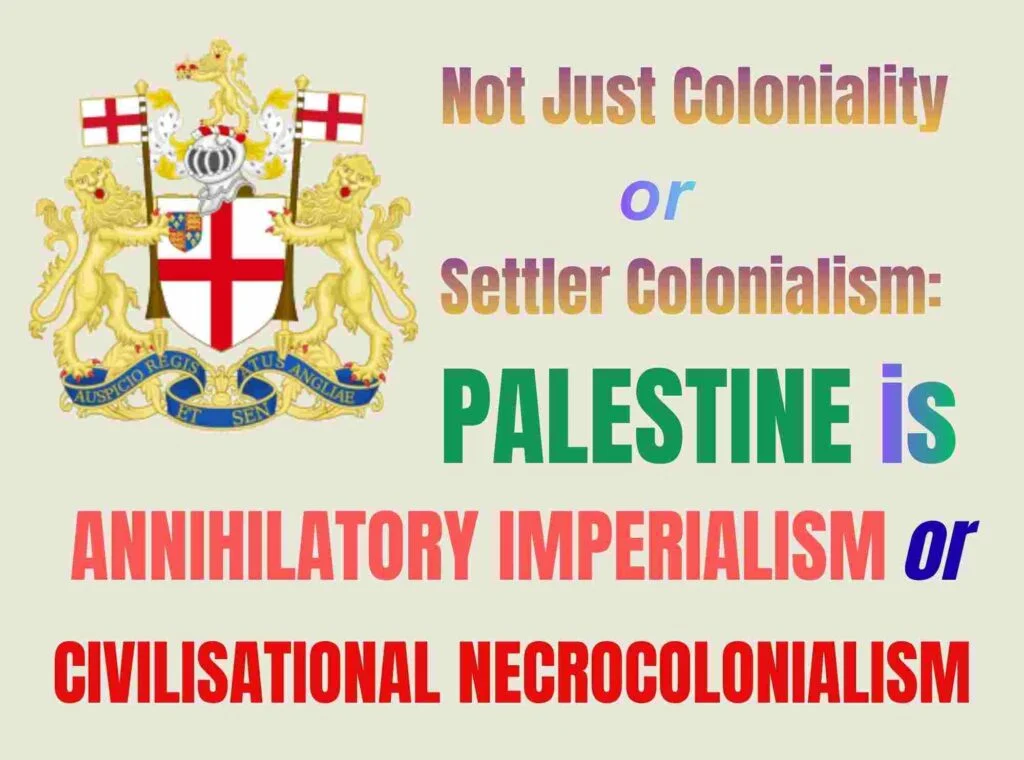
Colonialism is a policy of domination and control of a foreign land by establishing settlements, exploiting resources, and dominating the local or native population. The external power often does it by extending military force and taking territorial control. Colonising countries physically occupy and govern the occupied territory by establishing settlements and military outposts. Colonialism was a direct result of the Industrial Revolution. From the 15th century onwards, European powers started the Age of Exploration and followed it with periods of European imperialism. From Frantz Fanon to Karl Marx and Edward Said to Hobsbawm, all have written and tried to define and quantify it within their ecosystems and contexts.
Superior shipping technologies pushed European powers to a global hunt for resources to supply their agenda of global domination. Spanish and Portuguese were the first major colonial empires. Spain colonised the Americas in 1492, followed by the Portuguese expanding their colonial control to Africa, Asia, and South America. British took over as a global superpower, and by the 19th century, it controlled vast territories across Africa, Asia, the Caribbean, and the Americas. The Berlin Conference in 1884 formalised what is called the “Scramble for Africa”, where European powers aggressively divided the whole of Africa into small colonies.
By the 20th century, colonialism had started to end. Independence movements started gaining momentum, and the process of decolonisation emerged, especially after World War II. Global dominance thrives on power, which requires money and resources, which, in turn, requires a geographical area to exploit and drain. The end of colonialism ended this modus operandi, but you have to keep the giant fed and fuelled, and thus began a new way of control and domination. Neocolonialism. Initially defined by the first president of independent Ghana, Kwame Nkrumah, in his book Neo-Colonialism: The Last Stage of Imperialism. He argued that a new form of control happened through economic dependency on institutions of economic exploitation neatly designed to serve the purpose of control by the superpowers. The multinational corporations and international financial institutions were the tools of this new form of colonialism. Though the former colonies gained political independence, they were under the control of global powers like the United States and the Soviet Union through economic dependency. Bretton Woods Institutions like the IMF and World Bank became tools of the neocolonial era. An era that extends into the 21st century. From this emerged the concept of Decoloniality.
We ask a fundamental question: has colonialism ended? Are there colonies still existing? And how do we define the Palestinian Question? How does the modus operandi of the colonial and imperial past still live and thrive in Palestine? The East India Company and its colonial spirit created the state of Israel, the settler colonial proxy of the West. Yes, you read it correctly: the East India Company. We say Palestine is still a colony. It’s been colonised right from the dissolution of the Ottoman Empire to the present. The colonial masters are the same, but their names have changed. British, US and now Israel. Different names disguised to mask the colonial rule. We will call this strategy colonialism 2.0. A strategy that operates through establishing key military bases in those geographical areas or oceanic routes that were used for colonial dominance from the 15th to the 20th century. From the Suez Canal to the Strait of Hormuz and from Taiwan to the Strait of Malacca. In this article, we look deeper into the strategies used to create it in the light of colonial legacies. We will define it, especially for the Indian readers, in terms of the British colonial legacy. It’s not just colonialism; it’s something more heinous than that. It is “Annihilatory Imperialism” or “Civilisational Necrocolonialism”.
The John Company and the Ottoman Empire: The Many Shades of East India Company
British mandate in Palestine and the East India Company are two sides of the same coin. They helped establish colonial control, where external powers dominated the local population under the guise of administration. Though their timeframes are slightly different, they represent similar colonial psychology and operational styles through which they operated and controlled the regions.
Indian colonisation began with the East India Company setting foot in India in the 18th century. It was established to serve British strategic and economic interests. It established a system of control without the need for a full-scale occupation. It manipulated local rulers and played craftily with its divide-and-rule strategy, using local kingdom dynamics and politics as a tool. The breaking up of Indian land, in a similar way the Ottoman Empire too, was broken into smaller parts. It was a plan well thought out and executed by the British rule in India and other parts of the world. Leopold Amery, a politician and leading strategist, asserted that it was necessary to develop a contiguous British Empire that would run “from Cape Town through Cairo, Baghdad and Calcutta to Sydney and Willington” for which one required Controle of key strategic locations and along with it breaking any resistance not smaller pieces. They privileged certain groups or principalities over others to ensure loyalty to the company Bahadur or the Raj.
British East India Company was founded on 31 December 1600. Queen Elizabeth I (1558-1603) granted it a royal charter, which allowed it to trade, make contracts, acquire territory and maintain armed forces. The first trading post was established in 1612 in Surat after gaining rights from Mughal Emperor Jahangir. The company later expanded to Madras (Chennai), Bombay (Mumbai), and Calcutta (Kolkata). These were the epicentres of British power in India. What started as a trading company transformed into rulers, first after the Battle of Plassey (1757), where the Nawab of Bengal was defeated. With this victory, the wealthiest region of India was now under British control. Greed and power are always a dangerous combination. The laboratory of British colonisation began in Bengal, and experiments in Bengal helped the British repeat them in all parts of the world, including Palestine. Robert Travers, in his book Ideology and Empire in Eighteenth-Century India, writes: Bengal was the crucible wherein a ‘new kind of imperialism’ was forged, characterised by ‘authoritarian government, territorial conquest, and extractive revenue policies’, with an ‘emphasis on direct coercion and overt domination’.
How the company metamorphosed into complete dominance can be studied from its evolution in India. The Battle of Buxar (1764) was another pivotal event in consolidating power. The company gained the Diwani Rights (the right to collect tax) over Bengal, Bihar and Orissa. It was a form of financial control over the region. Later, in 1765, Mughal Emperor Shah Alam II gave Diwani rights to the company. Thus, it gained de facto control over major areas in India. The company Charter kept on renewing in England, and its powers expanded, ultimately leading to the passage of the Regulation Act of 1773, which marked the beginning of the British government’s direct control of the company Bahadur and India. The Charter Act of 1813 ended the trading monopoly of the company, but it retained political control. The Charter Act of 1833 transformed the company formally from a trading enterprise into a governing enterprise. Under Lord Dalhousie, the power of the Doctrine of Lapse was used to annex any territory whose king did not have a male heir. By the mid-19th century, the East India Company had become a governing power in India. The Indian rebellion of 1857 led to the passing of the Government of India Act. Thus, the trading company now metamorphosed into a full British Raj.
The blueprint of the British East India Company finds a hauntingly parallel reflection in the creation of Israel. This idea was well thought out and planned in the Zionist schemes for Israel.
Needless to say, they learned from the benevolent colonial powers of that time, the British. Theodore Herzl approached Sultan Abdul Hamid with an offer to establish a Chartered company, the John Company, for a charter in Palestine – a chartered company with privileges and headquarters in London. An offer of cash was given to Sultan Abdul Hamid II – a copybook case of East India Company. John Company was an informal nickname commonly used for the British East India Company, at times secretively to hide the real name and motives.
Jewish Colonial Trust, formed by Theodor Herzl in 1899, was the financial backbone of the Zionist movement. Though named a trust, it was a publicly traded company that allowed Jews worldwide to buy shares for the Zionist cause to achieve a Jewish homeland in Palestine….
The Establishment of a Chartered Company
The Suzerain Government shall grant a Charter to a Jewish Company for the colonisation and development of Palestine, the Company to have power to acquire and take over any concessions for works of a public character, which may have been or may hereafter be granted by the Suzerain Government and the rights of pre-emption of Crown lands or other lands not held in private or religious ownership, and such other powers and privileges as are usual in Charters or Statutes of similar colonising bodies.
This is how Dr Weizmann, one of the founding fathers of Israel, introduces the idea of Palestinian colonisation to the readers of The Times, that is to say, to the members of the British public. There can be no better comment upon his pleading than to set down again the terms in which the Zionist Organisation, of which he was the leader in Britain, had addressed itself to the members of the British Government in its ‘Formal Statement’ of the previous October: “The Jewish Chartered Company is to have power to exercise the right of pre-emption of Crown and other lands and to acquire for its own government or governments. Use all or any concessions which may at any time be granted by the suzerain.”
Similarly, the PICA (Palestine Jewish Colonisation Association) was formed by Baron Edmond de Rothschild in 1924. Its activities mirrored a corporate company purchasing land, establishing settlements, irrigation systems and schools. A corporate entity directly influences a region’s landscape from economy to administration. These entities had considerable autonomy and influence, like the British East India Company. They were quasi-governments in Palestine.
In 1902, the Jewish Colonial Trust metamorphosed into the Anglo-Palestine Bank with its headquarters in London. This later evolved into Bank Leumi, which today is the largest bank in Israel. A colonial enterprise well executed and sustained through a company. All of this happened during the Great War, thus showing that in wartime, power expands, and greed quickly follows. This is what is happening in Palestine today and in the Middle East.
Read the article in fullhere.