

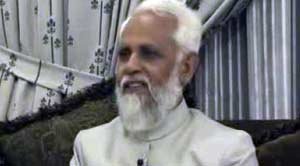
DR. ISHTIAQ AHMED ZILLI, Director Darul-Musannifin Shibli Academy, Azamgarh, and Former Professor, Department of History, Aligarh Muslim University, spoke at length on the viability of governance in early Islamic period in an interview with MOHAMMAD NAUSHAD KHAN.
What was the objective of governance in early Islamic period?
The basic objective of governance in early Islamic period was to establish a government that can fulfil the purpose of creation of human beings along with peaceful world where there is, if we can say in today’s term, participatory form of government or governance. In such type of governance those at the helm of affairs considered themselves accountable to people, and the people never followed them if they were wrong or gave a call against the basic principles of governance practised at that time.
There are many examples. The most important one is which was said by Caliph Abu Bakr. In his very first khutba (sermon) after he was named Caliph, he said that among you the weakest is all strong in my view so long as he gets what he deserved and the strongest among you is weak unless he does not give what is due of him to others.
The other very striking point is that of an incident that took place during Caliph Umar’s time. When a man asked him as to how his kurta (shirt) is longer when only one chadar was distributed. Umar, despite his position and influence, remained calm and looked towards his son. Any other people of his position could have, instead of replying to that man, scolded and shouted to him how he had dared say that. But his cool and composed way of dealing with that man is one the best examples of good governance or participatory form of governance. Caliph Umar’s son replied that he had given his chadar to his father so that the latter could make it to his size.
Whose regime do you think was the best among all, in terms of governance, and why?
The other most striking story was when Iraq was won. Earlier lands occupied after war were distributed among the people who had fought war. But, Caliph Umar called a meeting and therein some of the participants suggested to distribute the land as was done earlier, but some others were against it. After a day’s consultation, the Caliph decided to keep and preserve the land for the coming generation in the light of the Qur’ān and Sunnah. In this manner, if there ever was participatory form of governance in the entire world, it was the one practised during Umar’s caliphate. Other periods like that of Abu Bakr were limited. Even today if there is any such participatory form of governance, it is based on the structure established during Umar’s regime. His vision, crave for justice, equality and above all his readiness to face criticism was his strength. He was approachable to all; anyone could raise question. If suggestions were viable, he was ready to accept.
If practised, how the Islamic way of governance can change and shape the future of a country?
In order to follow the governance practised in the early Islamic period, there is need of two-fold strategy. And it is those who govern and those who are governed. For everything, there happens to be a situation or factors or necessities. The Almighty Allah has created a system which is based on cause and effect. It is better to create a society to accept the ideals of governance rather than simply impose on them because each and every thing that comes out is based on the requirement or on the cause and effect.
For example, if by any means a pious individual, who stands true to the basic ideals of the governance to a great extent and has the capability and capacity to provide good governance, wants to implement it, he cannot do so unless and until the people themselves are ready to incorporate the changes and ideals required to implement a two-way process of participatory governance. In other words, if the government operates, the people must equally cooperate then only we can think of good governance or participatory form of government.