

 Singapore, a prosperous and modern democratic nation, lies approximately 6,000 kilometres southeast of India. This small island city-state counts Malaysia and Indonesia as its nearest Muslim-majority neighbours.
With a total population of about six million, Singapore’s Muslim community numbers roughly 920,000, or 15.6 per cent of the populace. Predominantly of Malay ethnicity and followers of the Shafi’i school of jurisprudence, they maintain a strong commitment to their faith and a distinct cultural identity, much like their neighbours, all within the framework of a highly modern and secular society.
The community is well-served by approximately 70 mosques, six full-time modern madrasahs, and numerous part-time religious classes held in mosques. A vibrant ecosystem of Islamic social and welfare organisations further enriches the religious landscape.
Singaporean Muslims await Ramadan with the same profound devotion as Muslims worldwide. Preparations begin as early as the first day of Rajab, with a common prayer recited in mosques: “O Allah, make the months of Rajab and Sha’ban (blessings) for us and grant us the ability to reach Ramadan.”
Unlike in the Indo-Pak subcontinent, there is no tradition in Singapore of climbing minarets or scanning the horizon for the crescent moon. Moon-sighting is neither a public endeavour nor a source of uncertainty. Instead, the Islamic Society of Singapore, in coordination with several neighbouring countries, determines the dates of Islamic months, using a pre-established formula. This method confirms the astronomical possibility of sighting the new moon on the 29th or 30th day, ensuring clarity and consistency.
Consequently, the start of Ramadan and Eid are not announced by drumbeat or mosque announcements but are printed in advance on calendars, sparing the public the confusion often seen elsewhere. The call to prayer itself is even broadcast on national radio five times a day, while the use of loudspeakers at mosques is considerately limited to their premises to avoid disturbing the public.
An Atmosphere of Simple Devotion
Ramadan in Singapore is observed with profound simplicity, quiet devotion, and sincere prayer, with the vast majority of Muslims fasting. The month is marked by a notable absence of noise, in keeping with the country’s strict controls on noise pollution.
Restaurants and hotels remain open for non-Muslims and those not fasting, but unlike in some other countries, they do not operate late into the night for pre-dawn meals. Sehri is a private affair, enjoyed at home. The bustling, late-night food scenes of some nations are absent here. Traditional Malay dishes are the norm, while Muslims of South Asian descent prepare their own regional foods. Bangladeshi Muslims, a significant community, have their own markets selling distinct culinary fare.
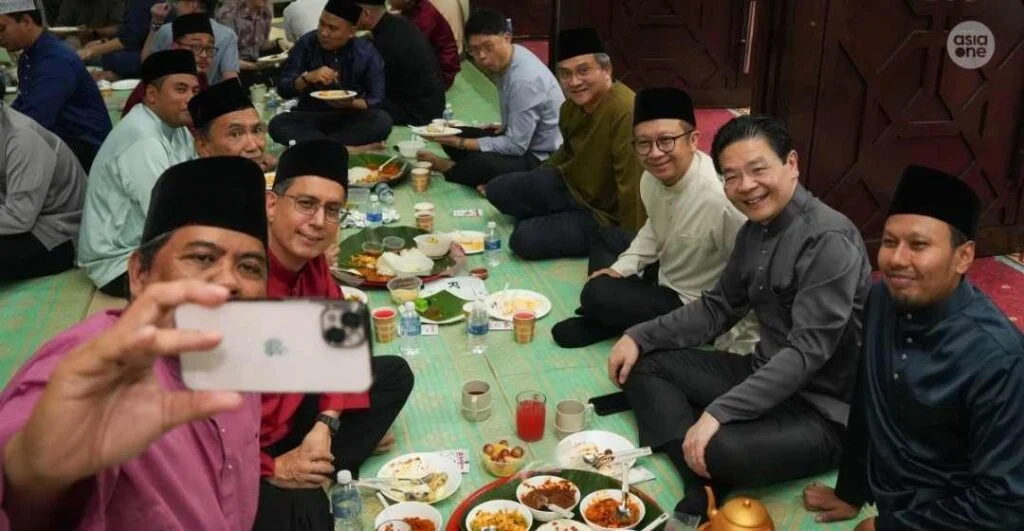
Iftar at the mosques is a model of simplicity. Instead of the fried snacks and chutneys common elsewhere, the focus is on dates, water, syrup, and a special type of savoury porridge known as bubur. This nourishing meal is served in bowls and distributed free of charge every day after Asr prayer, funded entirely by worshippers’ contributions. There are no food stalls or vendors outside the mosques.
Taraweeh and the Last Ten Days
In most mosques, Taraweeh prayers consist of eight rakats, with a few verses or a short surah recited in each. The complete Qur’an is recited over the month in only a few mosques, and its completion is marked without any distribution of sweets. The quiet reverence of the prayer is undisturbed by children’s noise or idle chatter.
Mosques provide dedicated spaces for women, just as they do throughout the year. After Taraweeh, there is only a brief flurry of activity as the faithful disperse; the mosque doors close by 10pm, reopening only an hour before Fajr. As with Friday prayers, traffic wardens help manage the crowds outside mosques
For those observing I’tikaf (spiritual retreat) during the last ten days, registration is required, and Sehri is provided for them within the mosque.
Iftar as Community and Interfaith Engagement
Unlike in some countries, there are no government-sponsored or political iftar parties. However, the 108 community centres under the People’s Association, a government organisation, each host a one-day iftar for Muslims in their district. These events are attended by non-Muslim neighbours and often feature a talk by a mosque imam explaining the significance of Ramadan. Some mosques also hold iftar programmes attended by the prime minister, ministers and other officials.
DarulArqam, known in English as the Muslim Converts’ Association of Singapore, plays a unique role in promoting Islam, particularly to non-Muslims. Every year, about 800 people embrace Islam through its efforts. During Ramadan, DarulArqam hosts a weekly iftar for up to 800 people every Saturday, preceded by an Islamic lecture and followed by Maghrib, Isha, and Taraweeh prayers. Leaders from various faiths, government officials and foreign diplomats are regular attendees at these interfaith gatherings.
A Contrast: Worship and Worldly Bazaar
The spirit of giving is most visible during Ramadan, as Muslims pay their Zakat (obligatory charity). From the very first day of fasting, lines form at all mosques and Islamic organisation offices.
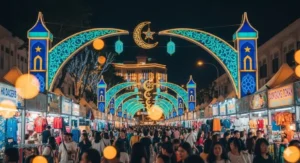
This atmosphere of deep spirituality exists in fascinating parallel with the vibrant commercialism of the country’s famous Ramadan bazaars. Held in the historic Malay enclaves of GeylangSerai and Kampung Glam, these markets begin ten days before Ramadan and run until its end. The GeylangSerai bazaar, stretching over a kilometre on both sides of a beautifully illuminated road, is arguably unique in the world. It is a meticulously clean and well-organised spectacle, drawing local Muslims and non-Muslims, as well as tourists from neighbouring countries. Here, one can find an astounding variety of food, Eid necessities, and even cars for sale.
During the last ten days of Ramadan, these bazaars are at their most crowded. They offer a worldly contrast to the spiritual pursuits of the mosque, with Muslims and non-Muslims alike seeking the pleasures of this world, while those focused on the blessings of the holy month often choose to stay away, dedicating their time to worship.
[The writer is a Singapore-based senior journalist. He may be reached on WhatsApp at +65 91195711]