

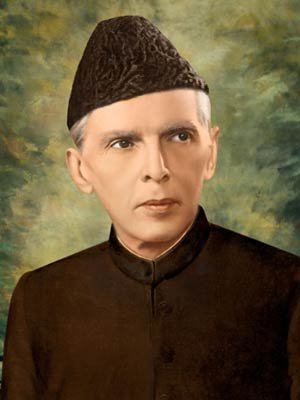
In history we can’t judge a person by one single event. We have to judge a historical figure taking into account his lifelong contribution, observes L S HERDENIA
An avoidable controversy over Mohammad Ali Jinnah has caused tension in the campus of Aligarh Muslim University and in Aligarh town. If not resolved soon, it may take shape of a communal strife.
I am not in a debate whether Jinnah’s picture should be removed or not. But here I will like to recall some interesting facts about Jinnah’s life. There is no doubt that he was a great patriot and wanted the Britishers to leave India. When Gandhiji returned from South Africa, a grand welcome was accorded to him on his arrival. Jinnah was the chief of the committee which made arrangements for Gandhiji’s welcome. It was Jinnah who saved Lokmanay Tilak from being hanged by the Britishers. Jinnah, who was a brilliant lawyer, pleaded Tilak’s case in such a powerful manner that British judiciary had to rescind the capital punishment given by the lower court. Instead Tilak was sent to a prison in Burma. M. C. Chagla, a great jurist, gives details about the Tilak case in his autobiography Roses in December. Jinnah described Tilak as a great patriot. It may be recalled that Tilak gave a great slogan which inspired several generations of Indians. His slogan was “freedom is my birth right and I shall have it”. Jinnah also stood for the defence of another hero of Indian freedom struggle Bhagat Singh.
Jinnah is blamed for the partition of India. Why was he compelled to demand a separate homeland for Muslims? During the British raj there were several Hindu organisations which held the view that Muslims can live in India but as second class citizens. Among others RSS also held such a view. Besides Dr. Munje, Sawarkar also floated the theory that India consists of two nations – Hindu and Muslim. Once this view was propagated, it caused fear in the minds of Muslims that it will be very difficult for them to live in the Hindu dominated country. In such a situation Jinnah and his Muslim League demanded some guarantees for the security and welfare of Muslims in free India. Since they failed to obtain them, the demand for a separate country for Muslims started being raised. Perhaps it was under such circumstances partition became inevitable. Even now there are leaders of right wing parties and organisations that reacting on petty issues ask Muslims to go to Pakistan. Some of them are not prepared to hire a taxi if the driver is a Muslim.
In some towns of the country extremist Hindus are not allowing Muslims to offer Namaz. They contend that Muslims can offer Namaz in such towns in which Muslim population is more than 50 per cent. As such we are creating conditions in which Muslims feel insecure.
In history we can’t judge a person by one single event. We have to judge a historical figure taking into account his lifelong contribution. For example, take Vir Savarkar, a great hero who made greatest possible sacrifice for India’s independence. He was sent to Andaman-Nicobar to spend entire life there. But later, due to some circumstances, he apologised to the Britishers and gave assurance that he will not participate in any anti-British movement. Despite this part of his life he is considered to be a great leader. We have paid tributes to him by decorating his portrait in the central hall of Parliament as an outstanding Indian.
Similarly everybody knows that Dr. Ambedkar did not participate in freedom struggle. Still he is being respected and even worshipped by almost all political parties. During my visit to Pakistan I found portraits of many Indians, including Lala Lajpat Rai in a museum. There is a movement in Pakistan to build a memorial for Bhagat Singh.
Here I will like to recall that L. K. Advani, during his trip to Pakistan in 2005 visited Jinnah’s mausoleum and paid respect to the founder of Pakistan. Advani also described Jinnah as a secular person. Similar sentiments were also expressed by former Defence Minister Jaswant Singh.
How we can forget that great poet Dr. Iqbal was also sympathetic to the demand of Pakistan. His great poem “sare jahan se achha Hindostan hamara” is played by military and police during Independence and Republic Day celebrations. It is regrettable that highly uncharitable comments are being made against Hamid Ansari, who served two terms as Vice President.
In the end I will like to say Jinnah is merely an excuse but the real objective is to arouse communal feelings. Because communal feelings result in polarisation and polarisation is used to build a solid vote bank.