

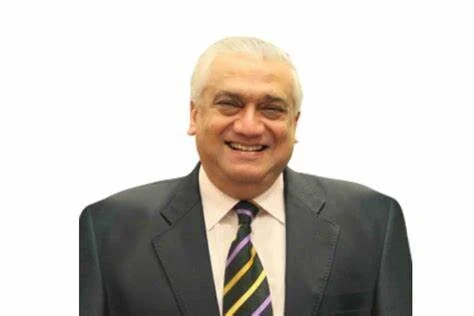
In an interview with Mohd Naushad Khan, former Indian Ambassador and West Asia expert Talmiz Ahmad analyses the unfolding developments in Iran, the role of the United States, and the far-reaching consequences for the Middle East and India’s strategic interests. Excerpts:
How would you like to assess the current situation in Iran?
Iran is undoubtedly passing through a difficult phase. The country is facing serious economic challenges.Inflation, unemployment, and declining purchasing power have put enormous strain on ordinary citizens. These domestic pressures have understandably generated protests and expressions of discontent. However, it is critical to locate these developments within a broader international context.
Iran has been under sustained economic siege for decades. What we are witnessing today is not merely a domestic governance issue but the cumulative impact of long-term coercive measures imposed by the United States. When a country’s economy is systematically strangled, social stress is inevitable. Ignoring this reality leads to a deeply misleading understanding of events inside Iran.
The United States says its actions are aimed at supporting the Iranian people. How credible is this claim?
Frankly, this claim does not stand up to serious scrutiny. If the United States were genuinely concerned about the welfare of the Iranian people, it would not have imposed sanctions that directly affect food supplies, medical imports, banking transactions, and employment. Sanctions are often described as “targeted”, but in practice they function as instruments of collective punishment.
We must be very clear: sanctions are a form of economic warfare. They are designed to create hardship, destabilise societies, and generate political pressure from within. To then express concern for the suffering population is deeply hypocritical. History shows that American policy towards Iran has never been about democracy or human rights; it has been about control, compliance, and regional dominance.
How significant was the US withdrawal from the Iran nuclear deal in shaping today’s crisis?
The unilateral withdrawal from the Joint Comprehensive Plan of Action was a turning point. Iran had complied with its obligations, a fact repeatedly confirmed by international monitoring bodies. Yet the United States walked away from the agreement for ideological and domestic political reasons.
This action sent a powerful message to the world: that American commitment cannot be trusted. It also weakened moderates within Iran who had argued in favour of engagement with the West. By undermining diplomacy, the US strengthened hardline positions and closed off avenues for peaceful resolution. The current instability is, in many ways, the logical outcome of that betrayal of diplomacy.
Do you see external interference in Iran’s internal unrest?
It would be naïve to assume that external actors are passive observers. The United States has a long history of intervention in Iran, dating back to the 1953 coup. Today, the tools may be different – media influence, sanctions, political signalling – but the objective remains the same: to weaken an independent state that refuses to align with American strategic priorities.
That said, it is equally important not to dismiss internal grievances. Iran’s challenges must be addressed by Iranians themselves. External pressure does not help this process; it distorts it. When foreign powers openly comment on protests and impose punitive measures, they provide justification for repression and polarisation.
What are the implications of Iran’s instability for the wider Middle East?
Iran is a central actor in West Asia. Any destabilisation within Iran will inevitably have regional consequences. Energy markets, maritime security, and regional political balances are all affected. The Strait of Hormuz remains a lifeline for global energy supplies, and even minor disruptions can have global economic repercussions.
Many Gulf countries understand this reality and have moved towards cautious engagement and dialogue with Tehran. Unfortunately, American policy continues to prioritise confrontation. This approach risks turning the Middle East into a permanent zone of crisis, with proxy conflicts and militarisation replacing cooperation and development.
Where does India stand in this complex geopolitical situation?
India’s interests are directly and deeply involved. Iran is not a distant country for us; it is a civilizational neighbour and an important strategic partner. Projects like the Chabahar Port and the International North-South Transport Corridor are crucial for India’s access to Central Asia and beyond.
American sanctions have already constrained India’s engagement with Iran, particularly in the energy sector. India has had to abandon favourable oil arrangements, increasing costs and vulnerability. This is a clear example of how US unilateralism imposes collateral damage on third countries.
At the same time, India has important relationships with the United States and Israel, as well as deep economic ties with the Gulf. Managing these relationships requires balance and strategic autonomy, not alignment with any one narrative.
Is India’s strategic autonomy under threat?
Strategic autonomy is always under pressure in a polarised world. The challenge for India is to ensure that partnership does not become dependence. India must articulate its own interests clearly and consistently, including its opposition to unilateral sanctions and its support for dialogue and diplomacy.
India should not be drawn into zero-sum frameworks. Its credibility in West Asia has historically rested on balanced relations and principled positions. Preserving that credibility is essential, particularly at a time of growing global fragmentation.
What is the way forward for Iran and the international community?
Iran’s future must be determined by its own people, without external coercion. Economic warfare, threats of force, and regime-change fantasies have failed repeatedly. From Iraq to Afghanistan, the record is painfully clear.
The international community, particularly the United States, must return to diplomacy, honour agreements, and recognise Iran’s legitimate security concerns. Dialogue is not a concession; it’s a necessity.
For India, the path forward lies in quiet diplomacy, regional engagement, and a firm commitment to independent decision-making. Stability in Iran is not just Iran’s concern; it’s a regional and global imperative.