

While this piece was originally crafted for the students of the Indian Institute of Islamic Studies and Research (New Delhi), its insights transcend a single audience. On the eve of the JIH’s nationwide Campaign “Ideal Neighbourhood Ideal Society”, hopefully, this message will resonate with and benefit every student especially those living in hostels.
What would you do if your roommate never cleaned the room? Or if the corridor was littered and everyone simply walked past? What if one of your friends neglected his studies, or another constantly delayed his salat? And what if someone was always late to class or never showed up at the library?
In such moments, each of us has a choice:
- to contribute to the mess and worsen the problem – “I might as well litter the corridor too.”
- to ignore it and remain indifferent – “Why should I care?”
- or to take responsibility and act – “I will help him improve.”
Of these, only the proactive behaviour – the choice to act and care enough to make a change – builds a positive, healthy, responsible, educational, and truly spiritual environment.
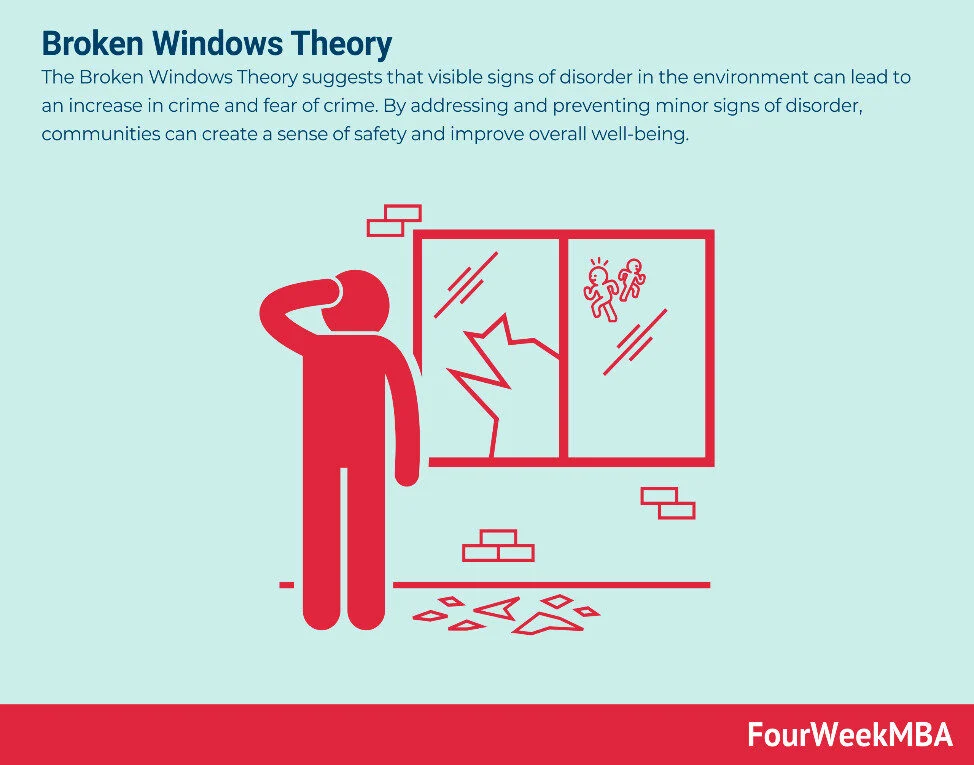
However, most people in such situations would remain indifferent and not care, thinking it’s not their responsibility. These small acts of neglect may seem harmless but they accumulate and create a negative atmosphere. This idea lies at the heart of the Broken Windows Theory, propounded by James Q. Wilson and George L. Kelling in their essay “Broken Windows: The Police and Neighbourhood Safety.”
This social concept explains how small signs of neglect or disorder, if left unaddressed, can lead to bigger problems. Wilson and Kelling illustrated this with the example of a single broken window in a building: if it is not repaired quickly, it sends a message that no one cares, inviting further damage and eventually leading to greater disorder or even crime. In simple terms, when minor issues are ignored, they tend to grow into serious problems.
To the students, especially those living in a hostel, the Broken Windows Theory offers valuable lessons. When students overlook minor issues – such as untidiness, noise, or carelessness – these small acts can gradually create a culture of indiscipline. Maintaining order, cleanliness, and mutual respect helps build a positive and cooperative atmosphere where everyone feels responsible for the shared space. Each student’s behaviour influences others: good habits, such as keeping the surroundings clean or respecting study hours, inspire others to follow suit; yet bad habits – like staying up late at night, using mobile phones excessively, or neglecting studies – spread even faster like a pandemic of indiscipline and indifference. That is why the principle of early intervention becomes so important, addressing small instances of misconduct before they grow into serious problems. Students should take collective responsibility to resolve issues promptly rather than ignore them and letting them decay into bigger problems.
At IIISR, students from diverse backgrounds come together to integrate their academic pursuits with Islamic wisdom. They must realise that intellectual growth flourishes through openness, collaboration, tolerance, and mutual respect. When they neglect their responsibilities, focus weakens and community spirit fades; but when everyone takes initiative, a culture of care, commitment, and excellence emerges. Through mutual cooperation, students can learn from one another’s strengths and progress beyond what classroom learning alone can achieve.
True learning rests on discipline and commitment. Students need to fathom that completing assignments and academic tasks on time is not a mere formality; it’s an opportunity to deepen understanding and develop independent thought. Paying full attention in class helps connect ideas meaningfully, while regular revision and reflection strengthen both memory and analysis. Attendance also matters but more than attendance what truly matters is active engagement, asking questions, contributing to discussions, and thinking critically about what is taught.
From the perspective of the Broken Windows Theory, students who consistently neglect their studies, show indifference in class, or fail to complete their tasks become like “broken windows” in their academic environment. Their lack of sincerity can gradually influence others, lowering the overall spirit of learning and discipline. If such attitudes are ignored, mediocrity spreads just as disorder does when small signs of neglect are left unattended. Therefore, it is the duty of every student to maintain a standard of diligence, sincerity, cooperation and encouragement.
The Broken Windows Theory reminds us that both progress and decay begin small. Your small acts – whether mean comments, shrugs, and indifference, or thoughtful gestures such as cleaning a corner, correcting a mistake, or helping a friend understand a new concept – multiply, either strengthening the academic environment and sense of community or eroding them. By drawing inspiration from one another’s strengths and supporting each other in areas of weakness, students can cultivate a disciplined, respectful, and harmonious environment. When everyone takes initiative and contributes positively, the hostel becomes more than just a place to stay; it becomes a shared space for growth, learning, and mutual success. Your task is to be a window that lets in light, fresh air, and new ideas, not the proverbial broken window.