

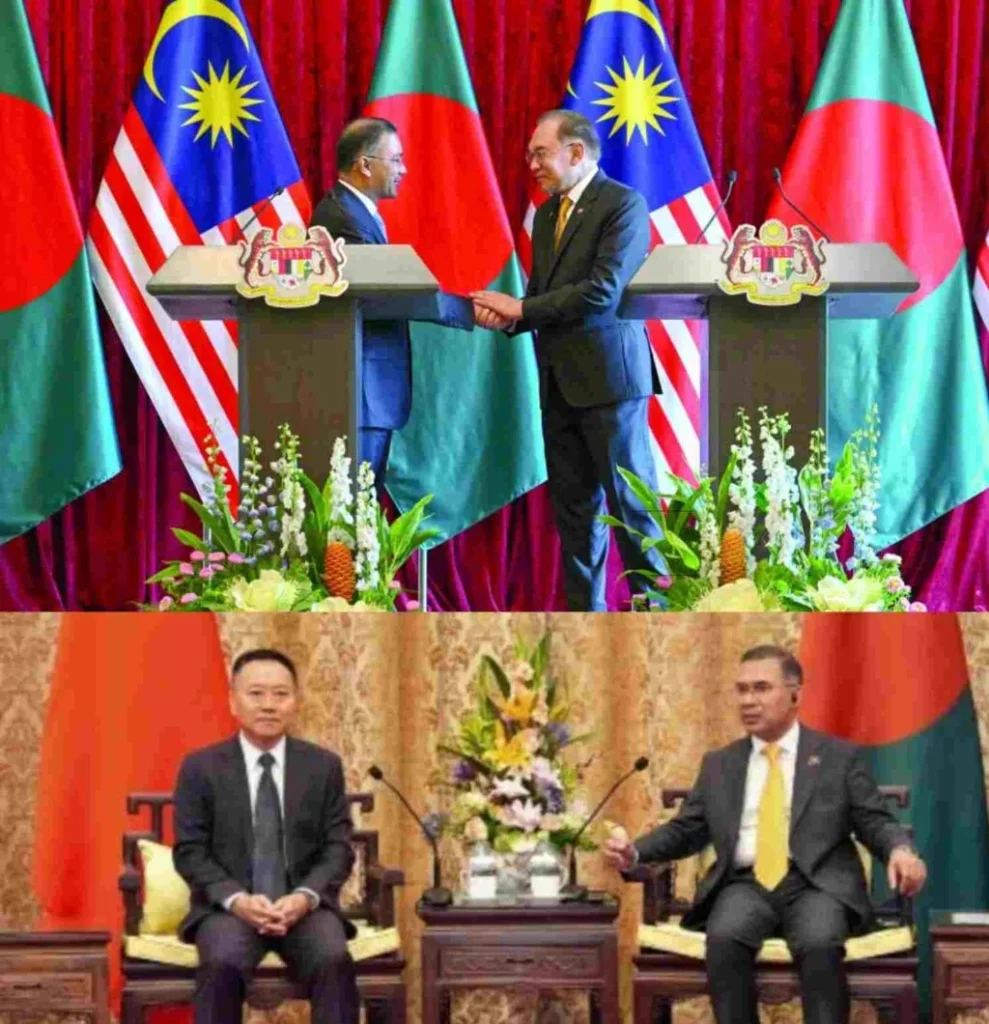
Prime Minister Tarique Rahman’s first official overseas visits to Malaysia and China represent a defining moment in Bangladesh’s diplomatic trajectory. More than ceremonial engagements, the visits reflected the new government’s priorities: attracting foreign investment, reviving overseas employment, strengthening strategic partnerships and positioning Bangladesh as an influential player in an increasingly competitive Indo-Pacific region.
With Bangladesh confronting economic pressures, including foreign exchange constraints, inflation, and the need to generate employment, the success of these visits will ultimately be measured by their economic and strategic outcomes rather than diplomatic symbolism.
Malaysia: Restoring Labour Mobility
The Malaysia visit focused primarily on reopening the Malaysian labour market for Bangladeshi workers, which has remained largely suspended since 2024 amid allegations of recruitment irregularities, excessive migration costs and worker exploitation.
The two governments discussed improving migration governance, enhancing transparency in recruitment, addressing irregular migration and expanding bilateral cooperation in trade, education and security. Although both sides expressed political goodwill, no definitive timeline was announced for resuming largescale worker recruitment. Consequently, expectations of an immediate increase in overseas employment and remittance inflows remain unfulfilled.
China: Expanding Economic and Strategic Cooperation
The Beijing visit underscored China’s continuing interest in Bangladesh as an important economic and strategic partner in South Asia. Discussions covered industrial investment, infrastructure development, manufacturing cooperation, port modernisation and special economic zones.
Several memoranda of understanding were signed, but most initiatives remain at the planning stage rather than legally binding agreements. Their long-term value will depend on implementation, financing and administrative efficiency.
The Bangladesh–Myanmar–China Economic Corridor
Among the most significant proposals was the Bangladesh–Myanmar–China Economic Corridor, envisioned as a transport and trade network connecting China’s Yunnan Province with the Bay of Bengal through Myanmar and Bangladesh.
If implemented, the corridor could substantially improve regional connectivity, facilitate cross-border trade, strengthen supply chains and position Bangladesh as a strategic logistics hub linking South Asia with Southeast Asia. The proposal also aligns with China’s broader Belt and Road Initiative, potentially bringing new investment into transport, ports, and industrial infrastructure.
India’s Strategic Concerns
Bangladesh’s expanding engagement with China inevitably carries geopolitical implications for India. New Delhi remains particularly sensitive to Chinese involvement in infrastructure projects near the Siliguri Corridor – the narrow land passage connecting mainland India to its northeastern states.
Proposed Chinese participation in the Teesta River project, port modernisation and regional connectivity initiatives has therefore attracted close scrutiny from Indian policymakers.
As regional competition between China and India intensifies, Bangladesh faces the challenge of maximising economic opportunities without becoming entangled in strategic rivalry.
Defence Cooperation without Military Alignment
Security cooperation formed another important component of the China visit. Discussions reportedly covered defence modernisation, cybersecurity, disaster management, military training and counterterrorism cooperation.
China continues to be Bangladesh’s principal supplier of military equipment. Nevertheless, Dhaka appeared cautious to avoid any agreement that could be interpreted as a formal military alliance, reflecting its longstanding preference for strategic autonomy and balanced external relations.
The Gap Between Expectations and Results
Despite the diplomatic significance of the visits, several important objectives remain incomplete. Malaysia has yet to announce a clear framework for reopening its labour market. Chinese investment commitments have not yet translated into significant financial disbursements. Likewise, progress on the strategically important Teesta project remains limited amid regional political sensitivities.
The distinction between signing memoranda of understanding and implementing largescale investment projects remains a critical challenge for Bangladesh’s economic diplomacy.
A Multi-Vector Foreign Policy
The visits demonstrate Bangladesh’s intention to pursue a balanced foreign policy rather than align exclusively with any major power.
Dhaka seeks to deepen economic cooperation with China, preserve constructive relations with India, strengthen engagement with ASEAN partners such as Malaysia, and maintain productive ties with the United States and other Western economies. This diversified approach aims to maximise national interests while avoiding strategic dependence on any single country.
Prime Minister Tarique Rahman’s inaugural foreign tour has established the broad direction of Bangladesh’s external engagement. Diplomatically, the visits strengthened ties with both Kuala Lumpur and Beijing. Economically, however, the tangible benefits remain largely prospective.
Bangladesh’s long-term success will depend on translating diplomatic goodwill into measurable outcomes: increased foreign direct investment, expanded overseas employment, enhanced regional connectivity, and sustainable economic growth. In an increasingly polarised Indo-Pacific, Dhaka’s greatest test will be maintaining strategic balance while advancing its own national development priorities.