

The 2026 Assembly elections in Assam unfold against a backdrop of heightened political polarisation, where identity, citizenship, and belonging dominate electoral discourse. In such a charged atmosphere, Muslim voters who constitute a significant demographic segment in the state have emerged not merely as participants in the democratic process, but as pivotal actors capable of influencing electoral outcomes across numerous constituencies. Their role, however, cannot be understood in isolation from the broader socio-political context marked by divisive rhetoric, contentious policy debates, and a climate of mistrust.
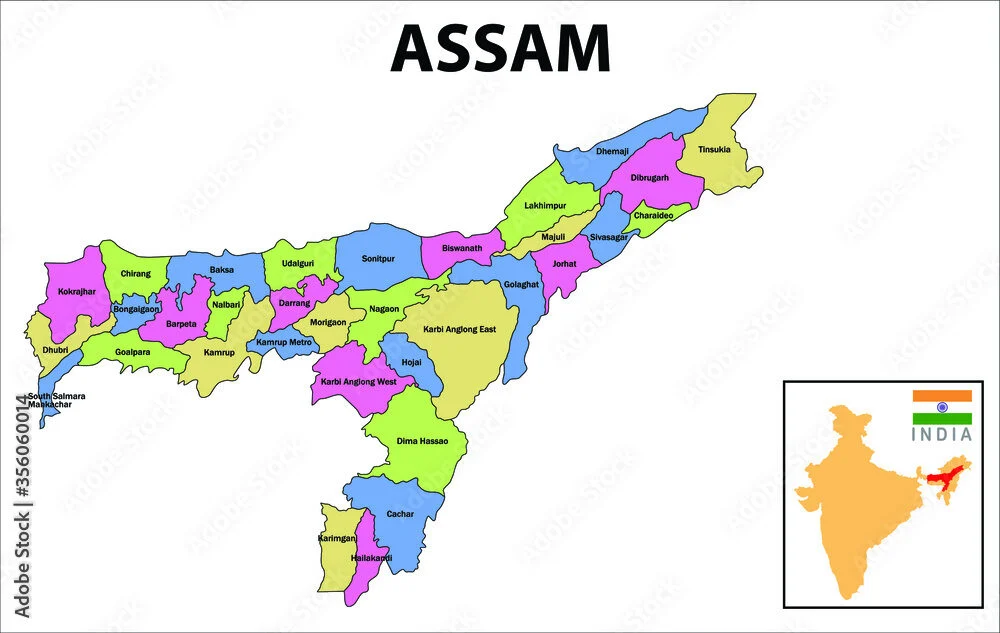
Muslims in Assam account for roughly one-third of the population, though their distribution is uneven across districts. In several constituencies, particularly in Lower Assam and parts of Central Assam they form either a majority or a decisive plurality. This demographic reality means that electoral strategies of all major political parties are, to varying degrees, shaped by the need to either consolidate or counterbalance Muslim voting patterns.
Yet, the significance of Muslim votes in 2026 is not merely numerical. It is deeply intertwined with questions of identity, citizenship, and political representation. Over the past decade, issues such as NRC, CAA, and recurring debates over “illegal immigration” have disproportionately affected Muslim communities in Assam, particularly Bengali-speaking Muslims. These developments have contributed to a sense of political marginalisation and existential anxiety, which in turn shapes voting behaviour.
The current election cycle has witnessed an intensification of rhetoric targeting Muslims, often framed around narratives of demographic change, land encroachment, and cultural threat. Such discourse, amplified through political speeches and digital media, risks deepening communal divides. While proponents argue that these narratives reflect genuine concerns about migration and resource allocation, critics contend that they often blur the line between policy debate and stigmatisation of an entire community.
In this context, Muslim voters are not only responding to party manifestos or candidate profiles but are also reacting to the tone and tenor of political communication. The presence of hate speech whether explicit or coded can have a dual effect. On one hand, it may alienate Muslim voters from parties perceived as hostile, leading to consolidation behind alternatives. On the other hand, it can also heighten communal polarisation, prompting counter-mobilisation among non-Muslim voters.
One notable trend in recent years has been the strategic consolidation of Muslim votes. Fragmentation among multiple parties historically diluted their electoral impact. However, growing awareness of the consequences of divided voting has led to more coordinated support for candidates perceived as best positioned to defeat those associated with exclusionary rhetoric. This does not imply uniformity Muslim voters are far from monolithic, with differences in class, ethnicity, language, and locality influencing preferences but it does indicate a heightened level of political pragmatism.
Political parties, in turn, face a delicate balancing act. While some seek to mobilise support through majoritarian narratives, others attempt to build inclusive coalitions that appeal across communities. The challenge lies in addressing legitimate policy concerns such as border management, economic development, and land rights without resorting to rhetoric that alienates or demonises any group.
Civil society organisations, media institutions, and the Election Commission also play a crucial role in this landscape. Monitoring and curbing hate speech, ensuring fair campaigning practices, and promoting voter awareness are essential to maintaining the integrity of the electoral process. In a democracy as diverse as India’s, the line between robust political debate and harmful polarisation must be carefully guarded.
It is also important to recognise the agency of Muslim voters beyond their portrayal as a “vote bank.” Such reductive framing overlooks the complexity of their political engagement. Like any other group, Muslim voters in Assam are concerned with a range of issues: employment opportunities, education, healthcare, infrastructure, and local governance. While identity-related concerns may be particularly salient in the current climate, they do not eclipse these everyday priorities.
Youth voters within the Muslim community represent another significant factor. With greater access to education and digital information, they are increasingly assertive in articulating their political preferences. Social media platforms have become spaces for both mobilisation and contestation, where narratives are shaped, challenged, and disseminated at unprecedented speed. This digital dimension adds another layer to the electoral dynamics, amplifying both constructive dialogue and divisive messaging.
Women voters, too, are playing an increasingly visible role. Issues such as education, safety, and economic participation resonate strongly, and political parties that effectively address these concerns may find broader support within the community. The intersection of gender and minority status creates unique challenges, but also opportunities for more inclusive political engagement.
Ultimately, the significance of Muslim votes in Assam’s 2026 Assembly elections lies not only in their capacity to influence seat counts but also in what they represent for the health of democratic pluralism. Elections conducted in an atmosphere of mutual respect and inclusive dialogue strengthen democratic institutions; those marked by fear and division risk eroding them.
The path forward requires a conscious effort by all stakeholders like political leaders, voters, institutions, and media to resist the pull of polarisation. Recognising the diversity within communities, engaging with issues rather than identities, and upholding the principles of equality and justice are essential steps toward a more cohesive political environment.
As Assam heads to the polls, the choices made by its electorate, including its Muslim voters, will shape not only the composition of the assembly but also the broader trajectory of social cohesion in the state. In this sense, every vote carries weight far beyond the ballot box, reflecting aspirations for dignity, security, and a shared future in a plural society.