

Time is a wonderful healer. As the days, months and years pass the old wound gets cured. People forget the trauma, pain, mental and physical torture suffered on a particular occasion. Ironically history is also replete with examples of glorification of event of national shame, humiliation and agony.
1789 was the one year, which an overwhelming number of people of France in the post-French Revolution days, hardly wanted to recall. True, the storming of the Bastille prison near Paris by the starving mass of the French population on July 14 of that year was a great event. What happened thereafter can never be condoned. The nightmare of 1789 and the following years had been haunting the French for decades to come. The Revolution of 1789 was followed by the empowerment of the middle-class, then the lower class backlash, the rule of Robespierre, the Reign of Terror, the execution of Louis-XVI, the last Emperor of the outgoing Bourbon dynasty and thousands of others. As if that was not enough, it was followed by rule of Directory and subsequently the coming to power of military rule under Brigadier Napoleon in 1798. This unchallenged leader finally declared himself Emperor in 1804. So 15 years and lakhs of lives later France was there from where it started. Monarchy was back and slavery, which was abolished during the Revolution, was restored.
It is another thing that Emperor – not a democrat – Napoleon did bring about some reforms – called Napoleonic Code – yet throughout his reign till 1815, when he was finally defeated in Waterloo, the institution of monarchy once again consolidated in France. But no doubt Napoleon, unlike the Bourbon rulers, was a man of insight and came from a different stock. In 1815 the then four European powers, Britain, Russia, Prussia and Austria installed the old Bourbon dynasty and tried to reinstate the old style of conservative monarchy. But France again witnessed revolution in 1830 to be followed by another in 1848, when it declared itself as a republic. But it took another century and a couple of more big upheavals to become a complete democracy after the World War-II. It was in 1946 that all the French citizens got opportunity to vote. Before that women were not allowed to take part in the electoral process.
So it took 157 years for France to become a full-fledged democracy and 59 years to become a partial democracy – in 1848 it became a republic where only males were allowed to vote. Now the pains and trauma of the 1789 and afterwards were all forgotten. The Revolution, which in that year failed in many respects, is now being hailed as one of the greatest steps towards democracy. The year 1789 is trumpeted all over the world, but 1798 is conveniently ignored though this was the year, which saw a unique military take-over or coup de tat in the world. Napoleon taught to the future military generals the art of snatching power, especially during chaos and disorder.
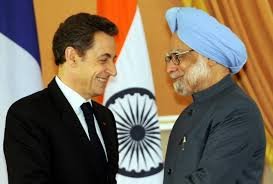
Exactly 220 years later the Prime Minister of the greatest democracy of the world, Manmohan Singh, was the chief guest at the National Day Parade in Paris on July 14. This was in response to President Nicholas Sarkozy’s invitation as the chief guest in the Indian Republic Day Parade of 2008. A contingent of 400 Indian army, navy and air force personnel took part in that event – for the first time on a foreign soil.
No doubt the 18th century France produced men like Voltaire, Rousseau, Montesquieu, etc. who had a great impact on the anti-monarchy struggle. Yet this was certainly not the first such movement in the history. Over 12 centuries before that Imam Husain also stood against the autocracy and laid down his life.
Yet the credit goes to the West that it highlights the French Revolution of 1789 as a great event. Along with the Glorious Revolution of 1688 in Britain and the Independence of America in 1776 it is considered a giant leap forward in the world of democracy. Though the West has always projected itself as the champion of democracy yet throughout these two centuries it has either been consolidating colonialism or supporting tin-pot dictators and military rulers all over the Third World. At times it provides lip service for its brand of democracy a la in Iraq and Afghanistan today. And when that democracy proves detrimental to the western interest the same champions of equality, liberty, fraternity and freedom of speech try to disturb and dismantle it as we saw in Iran recently and in Algeria in 1992 when the Islamic Salvation Front (FIS) almost won the election – there are innumerable other such examples.
And those who have alternative political ideology, much better than the western one, are shying away from presenting it.