

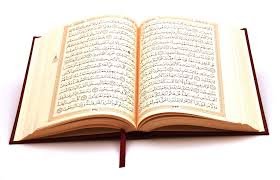
In today’s so-called glamorous world we find evils, in all forms and sizes, around us. Today’s materialistic world has no place for values. Moral science lessons that were taught in our schools have become contradictory and irrelevant. The TV programmes, internet, mobile phones, etc. have become our virtual teachers these days. We – our families and children – are getting more wrongs than rights from these sources. In the given situation all over the world today the only shield against ever increasing evils and falsehood is the Qur’ān and Prayer.
On getting closer to the Qur’ān we come across the following 45th Ayah of Surah Ankabut in which Allah says:
“(O Prophet), recite the Book that has been revealed to you and establish Prayer. Surely Prayer forbids indecency and evil. And Allah’s remembrance is of even greater merit. Allah knows all that you do.”
The address apparently is directed to the Holy Prophet but, in fact, it is meant for all the believers. We are being told to recite the Qur’ān and establish the Salat as they are real protection for us from the most violent storms of evil and falsehood which we find around us in our so-called modern society. But we cannot achieve this by mere verbal recitation of the Qur’ān and when our Prayers are only restricted to few prescribed physical movements. Rather we must also try to understand the Qur’ānic teachings and follow them in our day to day life.
Similarly, our Prayers should be such that it becomes the very function of our heart and the motivating force for our morals and character. Just for verbal recitation of the Qur’ān, a Hadīth says: “They will recite the Qur’ān, but the Qur’ān will not go beyond their throats; they will leave the Faith just as the arrow leaves the bow.” (Bukhari, Muslim, Mu’atta). The Qur’ān makes five demands from each one of us, which are as follows:
1. A Muslim is required to believe in the Qur´an;
2. He is required to read it;
3. He is required to understand it;
4. He is required to act upon its teachings;
5. He is required to convey its teachings to others.
As a matter of fact, the recitation which does not cause any change in our way of thinking, our morals and character is not what Allah and His Book expects from a believer at all. On the other hand if we believe in the Qur’ān as a Divine Book, read it and come to know what Allah has enjoined, and then go on violating His injunctions, we become real culprits, as we commit a crime not due to ignorance but after full knowledge of the law.
The Holy Prophet (peace and blessings of Allah be to him) has elucidated this point in a brief sentence, thus: “The Qur’ān is a testimony in your favour as well as against you.” (Muslim). That is, if we follow the Qur’ān rightly, it is a testimony in our favour. If what we do is precisely according to it, no jurist in the world will be able to punish us, nor will Allah in the Hereafter hold us accountable for it. But, on the contrary, if our attitude and lifestyle is opposed to it, then this Book will be a testimony against us. It will further strengthen the criminal case against us in the Court of Allah. Then it will in no way be possible for us to escape the punishment, or receive a light punishment, by making the excuse of ignorance.
The virtue of the Prayer that has been mentioned here has two aspects: it’s essential and inseparable quality that it restrains from evil and indecent acts, and its desired quality that the one who performs it should actually refrain from evil and indecent acts. As for the first quality, the Prayer does restrain us from evils. If we ponder a little over the nature of the Prayer, we can very easily admit that of all the checks and brakes that can be put on man to restrain him from evils, the Prayer can be the most effective. After all, what check could be more effective than this that we should be called upon five times a day for the remembrance of Allah, thus reminding ourselves again and again that we are not wholly free and independent in this world but are the servants of Allah – The Only. And Allah is aware of our open as well as hidden acts, even of the most secret aims and intentions in our hearts, and a time will surely come when we will have to account for all our deeds before Allah.
From the time we stand up for the Prayer till its completion, we perform continuously certain acts in which there is no third person besides ourselves and Allah who could know whether we have obeyed Allah’s law or disobeyed it. For instance, if the man’s wudu has become void and he stands up for the Prayer, there can be no one, besides him and Allah, who will know that he is no longer in the state of wudu.
Notwithstanding this, if a person offers the Prayer five times a day, fulfilling faithfully all the conditions of the Divine law in respect of the cleanliness of the body and dress, and the essentials of the Prayer and its recitation, etc., it means that through this Prayer his conscience is being awakened to life several times a day, he is being helped to become a responsible and dutiful person, and he is being practically trained that he should, under his own urge of obedience, abide by the law which he has believed in openly as well as secretly, regardless whether there is any external force to make him abide by it or not, and whether the people of the world have any knowledge of his intentions and deeds or not.
Thus considered, one cannot help admitting that the Prayer not only restrains man from the evils and indecencies, but, in fact, there is no other method of training in the world, which may be so effective as the Prayer is in restraining man from the evils. As for the question whether or not a man indeed refrains from the evils even after attendance at the Prayer, this depends upon the man himself, who is undergoing training for self-reform. If he has the intention to benefit from it, and struggles for it, the reformatory effects of the Prayer will certainly have their impact on him.
This can be explained with an example. The food we take is to nourish the body and develop it. But if a person vomits after every meal he takes, his food cannot profit him in any way. However, one cannot say that food is not nutritious for the body, because so-and-so is becoming a skeleton in spite of eating food. Similarly, if the Prayer is not offered in the right spirit and becomes mere formality, we cannot say that the Prayer does not restrain from evils, because so-and-so is unrighteous in spite of his Prayer. So for such a person it will be apt to say that he does not offer the Prayer at all. Likewise, the person who vomits everything he eats, it will be apt to say that he does not eat his food at all.
Precisely the same thing has been reported from the Holy Prophet: “He Whose Prayer did not restrain him from the evil and indecent acts, offered no Prayer at all.” Another Hadīth reported on the authority of Ibn Mas‘ud is to the effect: “He who did not obey the Prayer, offered no Prayer at all, and obedience to the Prayer is that one should refrain from the evil and indecent acts.” (Ibn Jarir, Ibn Abi Hatim).
And Allah’s remembrance is of even greater merit. This can have several meanings: (1) That the remembrance of Allah (i.e. Prayer) is a thing of much higher value. It not only restrains from evils, but, over and above that it induces people to act righteously and urges them to excel one another in good acts, (2) that Allah’s remembrance in itself is a great thing. It is the best of acts; no act of man is greater in value than this. (3) Allah has said in the Qur’ān: “So remember Me; I will remember you.” (Al-Baqarah: 156). Thus, when the servant remembers Allah in the Prayer, inevitably Allah also will remember him, and the merit of Allah’s remembering the servant is certainly greater than the servant’s remembering Allah.
Besides these three meanings, there could be certain other interpretations of the above ayah as well. Like, Allah’s remembrance is not restricted to the Prayer, but, its sphere is much vast. When a man observes fast, or pays the Zakat or performs a righteous act, he inevitably remembers Allah. Likewise, when a man refrains from an evil act when an opportunity exists for it, even this also is the result of Allah’s remembrance. Thus, the remembrance of Allah pervades the entire life of a believer.
[sahassan2013@gmail.com]