

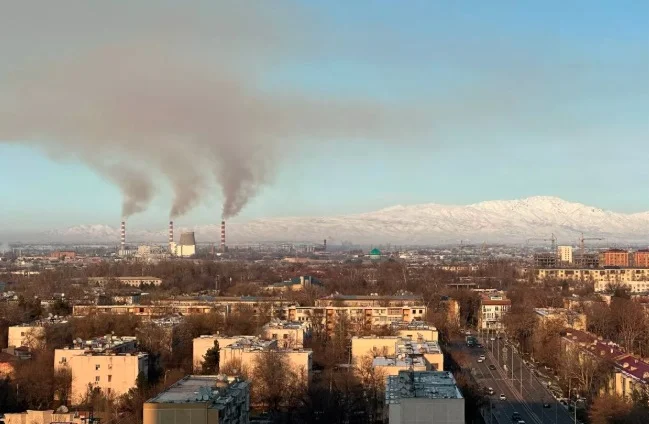
Uzbekistan has introduced strict new penalties for the open burning of waste, tires, and other hazardous material as part of efforts to combat worsening air pollution, reported The Tashkent Times. Under a law signed by the president on May 4, and set to come into force on August 5, amendments have been made to Article 88 of the country’s Code of Administrative Responsibility, which deals with air pollution violations.
The updated legislation classifies several practices as administrative offences, including the open burning of fuel, combustible substances, non-fuel material, and waste in unauthorised locations or in facilities not designed for such activities.
The law also bans the use of toxic material such as tires, bitumen, fuel oil, plastic film, synthetic cardboard, rubber, wool fibre, and similar waste products as heating fuel in greenhouses, industrial enterprises, and combustion facilities.
Individuals and officials found violating the rules will face heavy financial penalties calculated according to the Base Calculating Amount (BCA). Repeat violations within one year of the initial punishment will result in significantly steeper fines.
For individuals, fines may increase to between 25 and 50 BRVs, amounting to roughly 10.3 million to 20.6 million soums. Officials could face penalties ranging from 50 to 70 BRVs, equivalent to approximately 20.6 million to 28.84 million soums.