

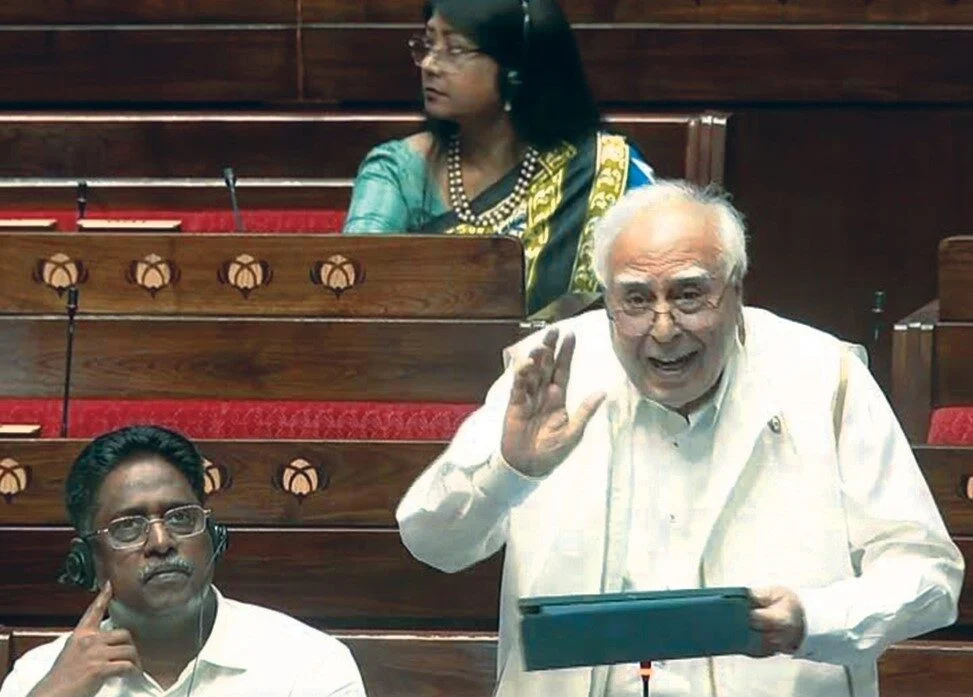
The Indian Parliament, constitutionally the highest platform of debate, dissent, and decision-making, spent valuable hours this week discussing VandeMataram. Ironically, this was prioritised even as the Opposition continued to demand discussion on the more pressing SIR issue. The choice of agenda itself raises a fundamental question: Is Parliament today being used to solve national problems or to engineer political fault lines?
In ordinary times, a debate on VandeMataram might have carried symbolic or cultural value. But the timing is conspicuous. The song’s author Bankim Chandra Chatterjee hailed from Bengal, where crucial Assembly elections are due next year. Analysts suggest that the ruling party sees an opportunity to consolidate a particular voter base, and cultural identity is being leveraged as a tool. Politics is not new to Parliament, but politics that divides instead of delivers demands scrutiny.
India today faces challenges that require urgent attention:
Unemployment remains high:CMIE reported a national unemployment rate fluctuating around 7-8% in recent months. Food inflation has crossed 9% at several points, affecting the poorest households most. Education quality and public healthcare continue to lag global benchmarks.Hate crimes and social polarisation have risen, according to multiple civil society tracking reports.Global economic uncertainties demand fiscal stability and foreign investment confidence.
Against this background, using parliamentary time for cultural affirmation seems less like patriotism and more like politics. The question is not whether VandeMataram deserves respect; it undoubtedly holds a place in India’s independence history. But whether the nation requires debates on slogans more urgently than debates on jobs, economy, farmers’ distress, and safety of minorities.
A Debate Turned into Division
Instead of discussing the historical context, literary value, or the nuances of the song, the debate largely devolved into statements portraying disagreement as disloyalty. Remarks were made implying that objections arise to appease Muslims, subtly framing Indian Muslims as the “other”. Even the Prime Minister’s comments were interpreted as reinforcing this divide. This pattern echoes a worrying narrative: Patriotism is being measured through religious-cultural conformity.
Dr. B.R. Ambedkar warned the nation against “majoritarian nationalism masquerading as national unity”, urging that true nationalism must accommodate dissent, diversity, and difference. India’s constitutional architecture rests on this foundation.
A Nation of Many –Not One Culture, One Song
India is not culturally monolithic. It is a civilisation of many languages, religions, and ideas. The Constitution recognises this explicitly: India has no national anthem of religion and no compulsory patriotic ritual. Patriotism flows from commitment, not compulsion. A democratic society negotiates differences; it does not suppress them. As former Prime Minister Atal Bihari Vajpayee once said:“Nation-building is impossible without the participation of every community.” His words today ring like a reminder.
Elections and the Politics of Identity
The pattern is familiar. Before elections, cultural or religious issues often dominate headlines: temple vs. mosque, history vs. mythology, slogans vs. identity. They ignite emotional responses, overshadowing discussions on governance.
Political scientists describe this as “manufacturing cultural urgency” – creating non-essential flashpoints to distract from measurable failures. When Parliament debates on VandeMataram instead of inflation or employment, the nation must ask: Who benefits?
What Parliament should Debate
A mature democracy prioritises issues that shape lives. India needs constructive dialogue on job creation and youth skill development, agricultural reforms and fair MSP, women’s safety and rights –NCRB data shows increasing crimes against women, climate adaptation and water scarcity, strengthening public healthcare post-pandemic, hate crime reduction and communal harmony mechanisms, education reforms and digital inclusion, federalism, minority rights, and press freedom.
These are the debates that uplift citizens. Slogans don’t feed families. Political chants in the garb of ‘patriotism’ don’t create employment. Real progress demands development policy andits implementation in the interest of the plural and inclusive nation.
India’s strength lies not in uniformity, but in coexistence. A secular nation is not one without religion, but one where all religions are equal before the state. Insisting that what pleases one faith must be acceptable to all undermines this balance.
The ruling party’s slogan SabkaSaath, Sabka Vikas, Sabka Vishwas is welcome in spiritbut must reflect in policy and its implementation in the real sense. True leadership does not divide to rule; it unites to build. Tagore envisioned India as:“Where the mind is without fear and the head is held high.”That India cannot emerge if fear replaces trust or dissent becomes disloyalty.
Parliament must Rise above Partisan Theatrics
The government has every right to table issues in Parliament. But it must ensure that the institution is not reduced to an echo chamber for electoral messaging. Nationalism must not become a stick to silence minorities or dissenters. Nor should patriotism be defined through songs, slogans, or symbolism. India needs jobs more than jingoism, hospitals more than headlines, dialogue more than division.
India stands at a crossroads. One road leads to progress through inclusion, policy, and accountability. The other to polarisation through cultural theatrics. Parliament is expected to lead the nation forward, not pull it apart along emotional lines. This land is not the property of one community; it is the shared inheritance of all. Preserving this pluralistic fabric is not merely constitutional duty; it is the moral responsibility of our leaders and citizens alike. A strong nation is built not by chanting one song, but by hearing every voice.