

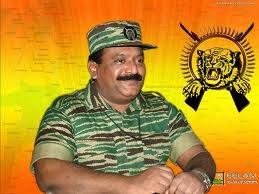
The beastly war between two communities symbolizing themselves with two different monsters – Tigers and Lions – supposedly ended after 26 long years. The former have been maimed, killed and hunted out by the latter after the horrible blood-letting. The just concluded (un)civil war, however, does not go to suggest that in the veritable forest lions are necessarily stronger than tigers.
In the island nation of Sri Lanka the former won and emerged as a king simply because their population was more than the latter. None of the two quarrelling creatures were ever known for the benign and benevolent qualities.
However, Sri Lanka is not a jungle but a democracy – in fact a classic case of democracy going awry. Ever since February 4, 1948 when it got independence till date it was never under the military rule. Elections were held routinely. Yet the worst case of blood-bath and human right violation took place for 26 long years with both sides boasting that they are bests. If the lion in the country’s flag reflects the brute strength of Sinhalas the extremist organisations of the Tamils called themselves the Liberation Tigers of Tamil Elam.
Democracy is not all about numerical strength as it is made out. It is the system of government which provides accommodation and power-sharing. There is always a scope to ventilate the grievances. The tragedy is that in many countries majoritarianism is being interpreted as democracy. There is no space for the ethnic and religious minorities simply because they do not matter in democracy. Even in India there is a group which follows the ideology of majoritarianism. In that way Hitler should also be dubbed as a democrat as he came to power for the first time by winning election.
A country, where the majority population tries to thrust its own language, culture, religion and way of life on the minority, is accused of practising majoritarianism. A political scientist would never call it a democratic country even if fear and fair elections are held every year and the army never seizes power.
In Sri Lanka the power struggle started from the very first day. The 74 per cent strong Sinhalas always suspected 18 per cent Tamils – 13 per cent Sri Lankan Tamils and five per cent Indian Tamils. While Sinhalas are mostly Buddhists, Tamils are generally Hindus. Besides, there are about 7-8 per cent Muslims. The tragedy is that it is not Sinhalas alone who practise majoritarianism, but the Tamils too ruthlessly massacred Muslims on a number of occasions simply because they did not fight for them.
In the initial days the Sinhalas adopted the preferential policy and rejected the Tamil demands for more autonomy to them. Their language was not recognised and they were not given proper representation in the jobs. The majority community looked at the Tamils as outsiders having the backing of Indians. As the Tamils of Sri Lanka were closely linked to the Tamils of Tamil Nadu, the Sinhala-dominated government tried to keep the minority Tamils in tight leash.
As Tamils had links with India and enjoy historical clout even in Sri Lanka, they started hitting back plunging the entire country into a civil war. One of its Presidents and Prime Ministers and a former Indian Prime Minister, besides thousands of Sinhala and Tamil civilians and army personnel lost their lives in the last over a quarter century. India, which in the beginning always supported the Tamils for obvious reasons, sent its peace keeping forces after the agreement signed between Sri Lankan President Julius Richard Jayawardane and Indian Prime Minister Rajiv Gandhi in 1988. But the LTTE, which was opposed to the agreement, started targeting the Indian Peace Keeping Forces in the jungles of that country forcing the V P Singh government to withdraw the army in 1990, but not before India lost over 1,000 soldiers. The Tamils, whose cause India always espoused, not only stopped there but assassinated Rajiv Gandhi. The LTTE unleashed a new culture of suicide bombing on the Indian soil too. It soon became the most ruthless terror group of the world which in 2007 also acquired air-power. The Sea Tigers had already been active in that country. The rise of LTTE also emboldened other terror groups of the region in the later years.
Sri Lanka’s strategic location is such that none can afford to allow the Lions and Tigers to quarrel for ever. But then after India got a bloody nose, big powers started interfering. They wanted to keep the pot boiling. To increase its influence in the Indian Ocean China started supporting the Sinhala-dominated government while the Tamils got support from several western friends and Tamils living in Europe and USA. The deadlock finally ended with numerically strong Lions overcoming Tigers.
Uneasy peace has returned to Sri Lanka. The defeat of the LTTE delivered a crushing blow to the real cause of the Tamils, though many strongly disapprove of its style and approach. But the permanent peace can be restored only after the two communities learn the art of power-sharing and accommodating each other.