

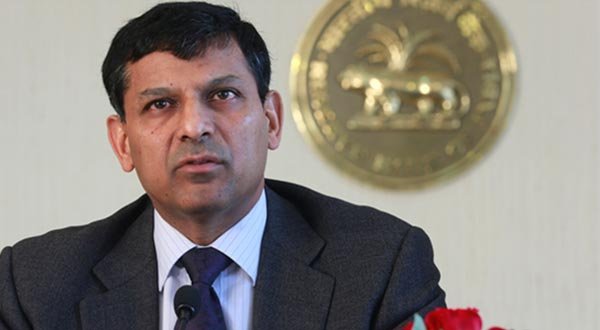
Once again calls for monetary easing and demands for RBI to reduce interest rates have been doing the rounds before the customary Central Bank’s monetary policy review meeting on 2 June 2015. The typical arguments in favour of reducing interest rates is the supposedly lower than expected inflation and weak growth. Cheaper credit will somehow boost the economy and we may start seeing the promised “ache din” again. But are things really so simple? And if lowering interest is good, why shy from “zero interest” – merely because of its association with Islam?
ROUTINE CLARION CALL
Oped articles, editorials and calls from experts in the MSM (main stream media) have started pouring in for RBI Governor Raghuram Rajan to cut repo rates by at least 25 basis points if not 50 basis points. (One basis point is one-hundredth of a percentage point. The repo is the rate at which the Central Bank lends to other banks). Eight out of 11 economists polled by The Wall Street Journal, predicted that Rajan will lower the repurchase rate by 0.25 percentage point to 7.25%, while the remaining three economists forecast that the Central Bank will maintain the status quo due to fears of uncertain agriculture output with forecasts of below average monsoon. Since the start of 2015, the RBI has cut rates by 50 basis points in two tranches. The benchmark repo rate now stands at 7.5%. For the current year, the RBI has an inflation target of 6% with the intention of bringing down inflation to 4% in the medium term. Experts say the current rate of borrowing (7.5%) is slowing down the Indian economy and with the rate of consumer inflation now having slipped to 4.87% in April, which was the lowest in four months – this is the right time for monetary easing.
THEORY BEHIND MONETARY EASING
Action by a Central Bank to reduce interest rates and boost money supply as a means to stimulate economic activity is known as monetary easing. Monetary policy is the process by which the monetary authority of a country controls the supply of money, often targeting an inflation rate or interest rate to ensure price stability and general trust in the currency.
Further goals of a monetary policy are usually to contribute to economic growth and stability, to lower unemployment, and to predictable exchange rates with other currencies. Monetary policy is referred to as either being expansionary or contractionary, where an expansionary policy increases the total supply of money in the economy more rapidly than usual, and contractionary policy expands the money supply more slowly than usual or even shrinks it. Expansionary policy is used traditionally to try to combat unemployment in a recession by lowering interest rates in the hope that easy credit will entice businesses into expanding. Contractionary policy is intended to slow inflation in order to avoid the resulting distortions and deterioration of asset values.
NEVER ENDING JUGGLERY
Once interest rates are reduced and credit becomes cheaper, the economy starts growing, aiding employment and wage-growth. However, excessive economic growth can in fact be very detrimental. At one extreme, an economy that is growing too fast can experience hyperinflation. At the other extreme, an economy with very low inflation may slip towards stagnation. The right level of economic growth, and thus inflation, is somewhere in the middle. It’s the central bank’s job to maintain that delicate balance. A tightening, or rate increase, attempts to head off future inflation but dampening the economy. An easing, or rate decrease, aims to spur on economic growth with the threat of inflation and economic difficulties.
INTEREST MAINTAINS POOR-RICH DIVIDE
Once the principle of earning through interest is accepted by society, it leads to a permanent chasm between the rich and the poor. The rich class dominates all the wealth-creating resources and hoards them for personal gain and self-aggrandisement. As for the poor, no helping hand is extended to them. They either commit suicide and hence salvage themselves from the punishment of life or earn their livelihood by resorting to crimes and taking dirty and shameless jobs. Towards this end, banks, financial institutions, provident funds, insurance companies and cooperative societies are established.
And only one spirit pervades all these various economic strategies: create more money out of money. Be it through business transactions or interest. According to the capitalist point of view, there is no difference between interest and trade. In the capitalist system, not only do interest and business blend with each other, but rather they become the very fabric of the business infrastructure. For the capitalists, interest and trade are equivalent to each other. One cannot prosper without the other. Without interest, the entire capitalist system will collapse.
EQUITY AND ZERO INTEREST PRINCIPLE
Classic finance theory states that for companies seeking capital to grow, debt is better since it’s a cheaper form of financing than equity. You take out a loan for a period of time, you either pay (or accrue) interest over the life of the loan, and then you pay it all back – it’s done, it’s off the books, and your debtors go away; whereas equity is considered expensive since you are selling shares and the equity buyers may hold such shares forever. Debt is thus a cleaner structure, and assuming you can put the loan to work in a way that generates a higher return than the interest you pay, debt is typically the preferred way to finance growth.
However, what is conveniently forgotten is that in case of a default the bank continuously receives profit on its principal and the rate of profit goes on increasing with the passage of time. Thus liabilities for business keep growing exponentially damaging the entrepreneur-climate and spirit irreparably and stifling new ventures and enterprise. Growth naturally suffers and you have recessions and depressions causing mass unemployment. Secondly, the equity based investor is a true partner in both the profit and loss of business and takes his share in proportion to the volume of the profit.
Debtors on the other hand claim a fixed rate of profit irrespective of the outcome of business and so this is a very unequal and unjust partnership which will always lead to mutual hatred and mistrust. Moral of the story: usury kills growth while equity spurs business and stimulates the economy without any externalities attached. If lowering interest rates is good for the Indian economy why dread zero interest?
[Arshad Shaikh PMP is an Electronics Engineer from Pune and holds a Green Belt in Six Sigma from ASQ. A telecom industry veteran, his passion is to write on current affairs, economics, humanities etc. from an Islamic perspective. email: bismillah@gmail.com twitter: @Arshadzzzz]