

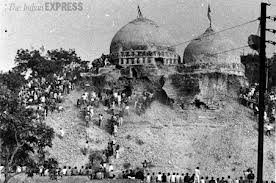
SOROOR AHMED argues that if we cannot remember or apologise for the demolition of Babri Masjid, we need at least to mourn with the Muslims the naked barbarism against thousands of innocent people in those heydays of L.K. Advani-led Ram Janmabhoomi movement.
A nation has every right to remember the victims of 26/11 on its first anniversary. We can contest the way it should be observed: whether special prayers should mark the occasion or there should be musical concert or some other forms to observe the anniversary of that fateful day. But we have to keep the memory of those ghastly incidents alive so that posterity could know as to what actually happened in those dark and barbaric 60 hours between November 26 night and November 29 morning last year.
A year later we need to tell the perpetrators that we stand united. We must continue to expose their design. If the 10 terrorists wanted to provoke communal holocaust in India and drive a wedge between Hindus and Muslims by their heinous act, they need to be told that they have failed totally in their objective. In the process they ended up killing – of course percentage-wise – more Muslims than Hindus. About 45 of 180-odd people who died in the blood-bath were Muslims, which amounts to something 23-24 per cent of the total casualty. The total percentage of Muslim population in Mumbai is not that high.
The expression of solidarity a year later is the best way to pay tribute to all those who died in the dance macabre. But one needs to be reminded that one should not be so selective in remembering national tragedies. We stood as a nation to condemn 26/11, but did we display similar sentiments a year after tens of thousands of terrorists of different hue – once again led by a man who came from across the border 55 years back – indulged in a much bigger mayhem on December 6, 1992. This act of terror led to the massacre of thousands of people – not just 180 – to be followed by serial bomb blasts and destabilisation of the whole country. Did we as a nation turn out on the streets of different cities on December 6, 1993, 1994, 1995…as we did on November 26, 2009?
Did we as a nation – or our feminists and champions of women’s rights – protest the manner in which Muslim women were paraded naked and videographed on the streets of Surat in the riots which sparked off immediately after the demolition of Babri Masjid? True, there was no 24×7 television channels or internet in those days yet there were enough television footage, video-cassettes and newspaper photos for people to become aware. Yet we as a nation kept our eyes tightly close.
Barring a minuscule group of what Karachi-born Lal Krishna Advani loves to call ‘pseudo-secularists’, none turn out to protest. Small Left parties such as CPI ML (Liberation) still take out rallies on that day in some towns of the country.
Yes some journalists and social activists did take to street in some cities a day or two after the demolition of Babri Masjid on December 6, 1992. They even wore black badges. But that was more as a mark of protest against the attack on media persons – many of them women – by the Sangh Parivar goons and Shiv Sainiks, rather than against the attack on secular character of the country. The hoodlums, led by Lal Krishna Advani, Murli Manohar Joshi, Uma Bharti, Pramod Mahajan, Vinay Katiyar, Sadhvi Ritambara, etc. brutally thrashed the journalists who had been there to cover the demolition of Babri Masjid. They even molested and tore the clothes of women scribes present then in Ayodhya.
What is tragic is that while there is no one in India, or anywhere in the world, to condone the barbarism of 26/11 or the Mumbai serial blasts or any such terror acts the perpetrators of December 6, 1992 still boast that they are proud of their act of terrorism. They shamelessly call it as a Shaura Diwas (The Day of Pride). At least the Congress, of course two decades later, had the courage to publicly apologise for what happened to Sikhs just after the assassination of Indira Gandhi on October 31, 1984.
If Advani wrote some days after December 6, 1992 that it was the saddest day of his life, it was not because a mosque was brought down, but because he has lost an issue to keep the pot boiling and encash it politically. Instead of apologising or remembering, we as a nation voted to power the same people who had indulged in the act of terrorism. And there is no dearth of secularists who joined hands with them a few years later – George Fernandes, Mamata Banerjee, Navin Patnaik, Sharad Yadav, Nitish Kumar, Chandrababu Naidu, Mayawati, Ram Vilas Paswan, Farooq and Omar Abdullah, etc. to name a few. While some have later deserted them, others are still strongly defending them.
December 6, 1992 did not lead to the destruction of only one mosque as it is being made out by the media. Hundreds of mosques, tombs and shrines were razed in the whole movement which started much before the infamous Bhagalpur riots of October-November 1989. Dozens of mosques were targeted in that silk city of Bihar. In Ayodhya and the twin town of Faizabad dozens of mosques, tombs and shrines, apart from Babri Masjid were razed simultaneously by the same group of home-grown terrorists. In the Mumbai riots of December 1992 and January 1993 scores of mosques were targeted, set ablaze or razed. Be it in Gujarat, Madhya Pradesh and Uttar Pradesh Muslims, even women and children, were thrown from running trains.
Yet we, as a nation, did not remember December 6 – barring some brave faces of course. If we cannot remember or apologise for the demolition of what many call a disputed structure (Babri Masjid) we need at least to mourn with the Muslims the naked barbarism against thousands of innocent people in those heydays of Lal Krishna Advani-led Ram Janmabhoomi movement.