

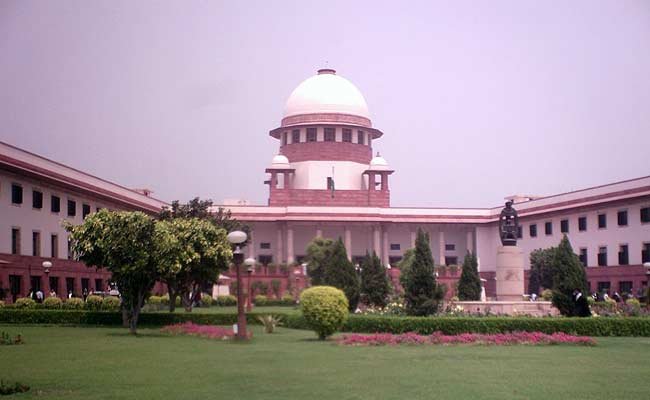
MOHAMMAD NAUSHAD KHAN analyses the recent Supreme Court guidelines on police encounters.
The Supreme Court of India recently formulated guidelines in its judgment for thorough, effective and independent investigation into police encounters, on the three writ petitions filed by People’s Union for Civil Liberties (PUCL) questioning the genuineness of nearly 99 encounters between the Mumbai police and the alleged criminals resulting in death of about 135 persons between 1995 and 1997.
S.R. Darapuri, former Inspector General of Police, Uttar Pradesh, while replying to a question, told Radiance: “Yes, the guidelines will put a check on fake encounters and that will discourage the so-called good works.”
On what more will discourage fake encounters, Darapuri said the most important thing is how soon an encounter is reported once it takes place. “These encounters are carried out under the garb of right to private defence. And once an encounter is reported, a case should be registered against the concerned police officer. At present, the police register a case against the person who is the victim of the encounter. Unfortunately, the Supreme Court has not clarified it. PUCL Andhra Pradesh rightly put up this very thing before the Andhra Pradesh High Court and the High Court agreed to it. This was challenged in the Supreme Court and the Supreme Court didn’t act on it. Actually the case should be registered against the police officer and investigated by an independent agency. And that will really put a check on it and serve the purpose.
“O, Yes. It aims at fixing the accountability because two things are there: one is operational independence and the other is making the police accountable. And through these guidelines the policemen will be held accountable for the encounter which was unfortunately so far was not there,” Darapuri observed.
On what should be done to bridge the trust deficit between the police and the common man, he replied the policemen must act according to law and they must implement the law equally. “Equality before law must be observed by the police.”
And on the question of further improvement, Darapuri said the second most important role comes is the role of the courts because after all the police is not the final authority. “There is also a sort of communal bias at the lower level courts which is evidenced by the rejection of bail applications. The accused person in custody gives his story but the lower court passes judgment blindly following the police version; the court refuses bail to the accused, leaving him to languish in jail for years together. The judiciary also requires to be reformed along with police reforms. Lower courts should be unbiased and there should be quick trial. And most importantly, when the policemen are found guilty of fake encounters or implicating a wrong person and when it is proved in the court, a case should be registered against the concerned police officers and compensation be paid to the victims from the salary of the concerned police officials.”
Ravi Nair, Director South Asia Human Rights Documentation Centre, while talking to Radiance on the recent judgement of the Supreme Court on encounters, said theSupreme Court of India in its recent judgment on 23 September 2014 has done little for police accountability when it comes to “encounter deaths” as extrajudicial executions are euphemistically called in India. The mere filing of a First Information Report (FIR) does little to end the endemic practice of cold-blooded killings by the police and other armed forces of the union. In fact, the Supreme Court judgment does not seem to have taken into account the excellent single bench judgment of the Andhra Pradesh High Court authored by Justice Bilal Nazki and further upheld by a full bench of the Andhra Pradesh High Court where the judgment was principally authored by the eminent jurist, Justice Raghuram. In fact, the Supreme Court earlier on an appeal by the Police Association stayed the full bench decision of the AP High Court. The matter rested many years later there.
“The Andhra Pradesh High Court had stated it was mandatory to file a first information report against the policemen involved in an alleged encounter. Only after a proper investigation by an independent investigative agency could the case be closed by a court of law. The Supreme Court also has not taken into account the Law Commission of India’s earlier recommendation relating to the mandatory filing of charges against policeman in custodial death cases. The Law Commission had recommended an insertion of 113 B in the Evidence Act putting the onus of proof on the policemen as they would be the only witnesses to such incidents,” Nair said.
Further, Nair also opined that unless the Supreme Court makes it mandatory that punitive compensation is paid by the authorities when human rights violations are confirmed by courts of law, the evil dance of impunity by the uniformed services will continue. No democratic country in the world also has provisions like Section 197 as in the Indian Criminal Procedure Code (CrPC) which requires prior permission from the executive to launch prosecution against policemen and all other public servants. Clearly, the executive is taking on the role of judge and jury. The latest Supreme Court judgment does little to end the climate of impunity.
SM Mushrif, former Inspector General of Police, Maharashtra, and author of the famous book Who Killed Karkare, who was also awarded President’s Police Medal for meritorious service in the year 1994, told Radiance that in the Indian Penal Code there is a chapter called right to private defence and Sections 96 to 106 relate to private or self defence. In Section 96 there is a line which says nothing is an offence which is done in the exercise of right of the private defence. Of these Sections 96, 97,100, 103 and 106 are important. Under these Sections any individual or policeman or anybody else kills someone as right to private defence then it is not an offence. But when it is done by an individual and not by a policeman or army man then he has to prove in the court that it is not an offence. But when a policeman does any encounter he is entitled to decide that it was done as private defence and therefore it is not an offence. Now the very Section 96 has to be modified and be made very clear whether an encounter has been done in self defence or it is an offence or not will be decided by the court and not by the one who has committed it. Unless and until these sections are not modified, there will be little impact because the so-called magisterial inquiry is baseless and will not serve the purpose.