

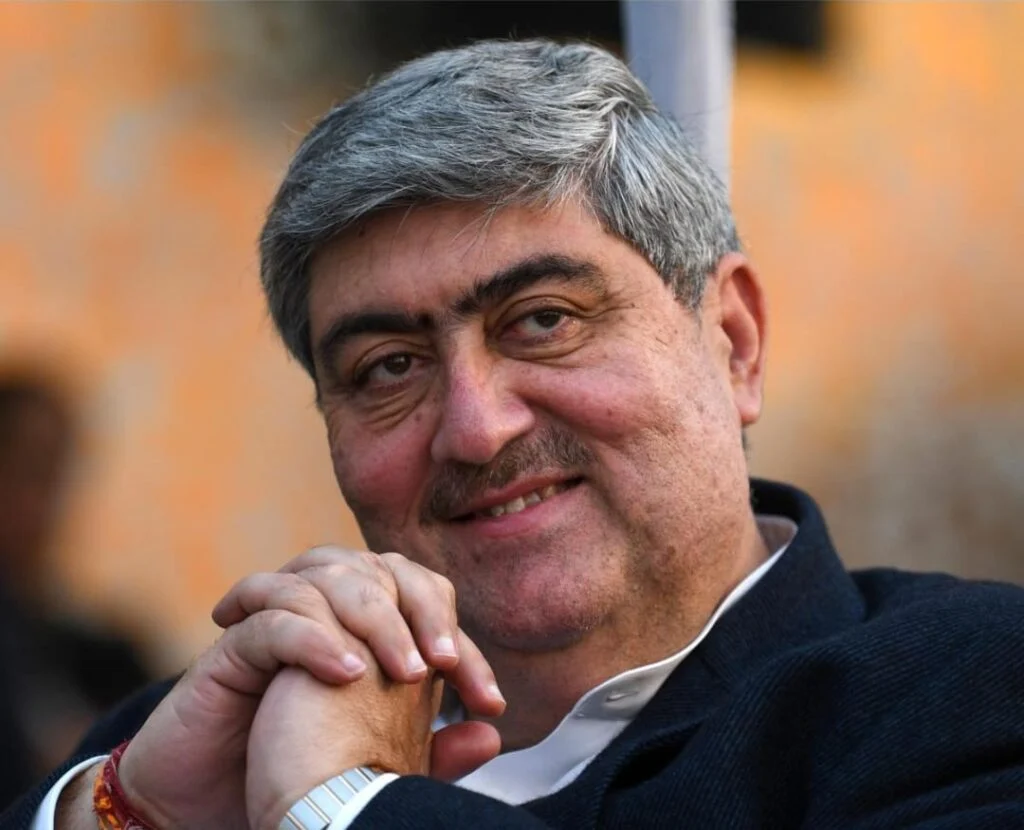
Former Supreme Court judge Justice Sanjay Kishan Kaul’s recently published memoir, Without Fear or Favour, has brought several important and sometimes uncomfortable questions about the functioning of India’s judiciary back into public discussion. Drawing upon his long judicial career, including his tenure in different High Courts and the Supreme Court, the book offers an insider’s account of institutional decision-making, judicial appointments, the relationship between the executive and judiciary, and the challenges confronting judicial independence.
What makes the memoir particularly significant is that it is not merely a recollection of important judgments or the author’s professional journey. It also provides an assessment of how the country’s highest judicial institution functions from within, including disagreements among judges, administrative decision-making and the pressures surrounding appointments to constitutional positions.
In interviews with different media organisations, including The Wire, The New Indian Express and The Print, Justice Kaul has elaborated on several of the issues discussed in his book. His conversations with journalists Karan Thapar, Kaveree Bamzai and Bhadra Sinha have brought additional attention to questions that are central to the independence and credibility of the judiciary.
One of the most striking aspects of the memoir is Justice Kaul’s candid assessment of his working relationship with former Chief Justice of India D.Y. Chandrachud. In his interview with Karan Thapar for The Wire, Justice Kaul spoke at length about his differences with Justice Chandrachud, particularly concerning the latter’s administrative approach to judicial appointments.
Justice Kaul explained that he had initially expected to work closely with Justice Chandrachud and support him during his tenure as Chief Justice. The two had known each other for decades, and Kaul believed that his responsibility as the senior-most puisne judge was to assist the CJI rather than undermine his authority. However, differences gradually emerged over the handling of appointments and the functioning of the collegium.
Justice Kaul felt that the Chief Justice should have adopted a firmer position when dealing with the government on judicial appointments. He was particularly uncomfortable with the practice of discussing proposed names with the government before the collegium had formally deliberated and reached a decision. He described this approach as a form of pre-approval rather than ordinary consultation. In his view, the collegium should first deliberate internally, arrive at its recommendations and subsequently engage with the government. Otherwise, the process risks creating the impression that the executive has an opportunity to influence decisions before the judiciary has exercised its independent judgment.Justice Kaul also questioned why Justice Chandrachud, despite his standing and relatively long tenure as Chief Justice, appeared more deferential to the government than he considered necessary.
When Karan Thapar asked whether Justice Chandrachud had been a weak Chief Justice or was too eager not to displease the government, Kaul distinguished between his judicial and administrative performance. He acknowledged Chandrachud’s intellectual ability and judicial capacity but said that, on administrative matters, particularly consultations with the government, he believed there had been excessive accommodation.These observations are particularly significant because they come from a judge who served alongside Justice Chandrachud and participated in the collegium during his tenure.
Another important revelation concerned the withdrawal of a judicial appointments matter from Justice Kaul’s bench shortly before his retirement. The matter related to the transfer of four Gujarat High Court judges. According to Kaul, the case had been listed before him, but it was suddenly removed from the list.He subsequently learnt that an administrative explanation had been offered for withdrawing the matter. He was dissatisfied with the manner in which it had been handled and felt that the Chief Justice could have spoken to him directly if there were concerns about his hearing the case.
In the interview, Kaul indicated that he believed Justice Chandrachud did not want him to proceed with the matter. He also discussed the postponement of decisions concerning the designation of senior advocates, another issue that contributed to the deterioration of their working relationship.The revelations raise a larger question: should the administrative authority of the Chief Justice remain concentrated in one office without stronger institutional consultation and accountability?
One of the central themes of Without Fear or Favour is the controversy surrounding the collegium system and the appointment of judges.Justice Kaul has been critical of the growing concentration of decision-making within the office of the Chief Justice. Although the collegium was originally intended to ensure judicial independence in appointments, he believes that its functioning has gradually become increasingly dependent on the individual Chief Justice.
He has also questioned the opacity surrounding the selection process, pointing out that the other members of the collegium are not necessarily involved in all the discussions taking place with the government.
In his interviews, Justice Kaul expressed the view that the National Judicial Appointments Commission (NJAC), which was struck down by the Supreme Court in 2015, should perhaps have been given an opportunity to function.He did not necessarily endorse the original arrangement in its entirety. Rather, he suggested that it could have been modified to preserve judicial predominance while allowing structured participation by the executive.
He argued that a system involving meaningful discussions between representatives of the judiciary and government might have been more transparent than the existing arrangement, where informal consultations can take place without the entire collegium being involved.This is an important intervention in the continuing debate over judicial appointments. The independence of the judiciary is indispensable to constitutional democracy, but independence should not become an excuse for institutional opacity. A transparent system with clearly defined procedures and accountability is essential for maintaining public confidence….
Another significant subject emerging from Justice Kaul’s interviews is the importance of protecting freedom of expression. A judiciary that protects constitutional freedoms must also remain conscious of the importance of dissent, criticism and public debate. The freedom to question institutions is an essential feature of a democratic society, not a threat to its stability.
His discussions also touch upon the relationship between the judiciary and the government under Prime Minister Narendra Modi, his personal interactions with the Prime Minister, the controversial nomination of former CJI Justice Ranjan Gogoi to the Rajya Sabha and the broader question of institutional accountability.
These subjects demonstrate that the memoir is not restricted to the internal functioning of the Supreme Court. It attempts to place judicial decisions and administrative developments within the larger political and constitutional framework.
Perhaps the most important contribution of Without Fear or Favour is that it encourages a discussion about the difference between judicial independence as a constitutional principle and the actual functioning of judicial institutions. A former Supreme Court judge speaking openly about the functioning of the institution deserves serious public attention.
Click here to read in full