

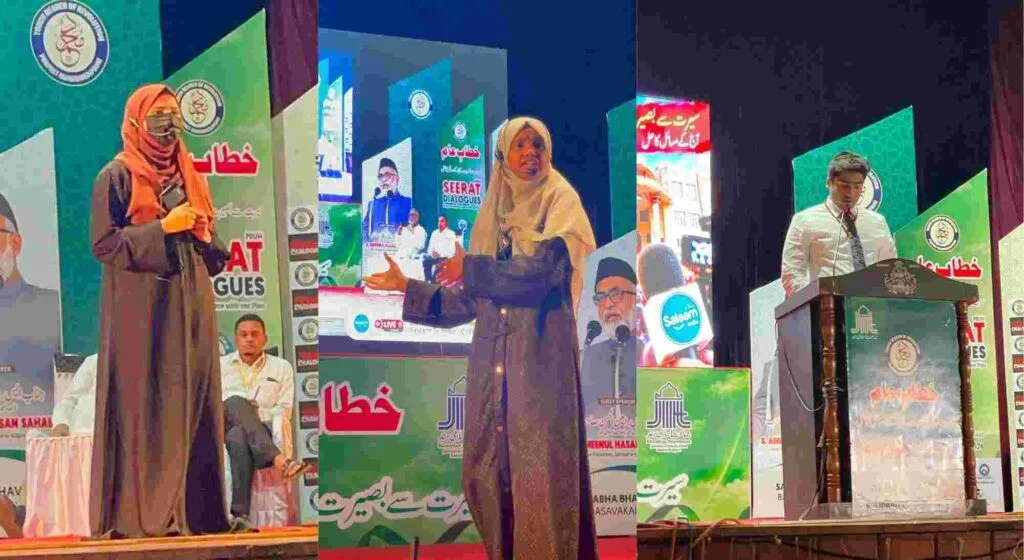
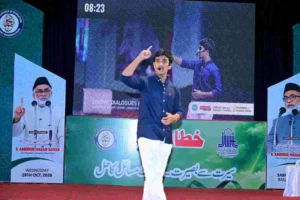
 A judge asked a young contestant about the money used to influence voters. She could have offered a prepared answer. Instead, standing before an auditorium filled with thousands, she put a question to the audience and drew them into the discussion. The exchange was brief, but revealing. Here was a student willing to think on her feet, challenge a familiar practice and expect an answer from the adults listening to her. That confidence would become one of the defining impressions of Seerah Dialogue 2026.
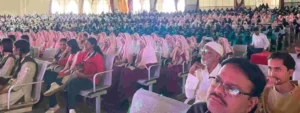
The grand finale, organised by Jamaat-e-Islami Hind in Basavakalyan, Bidar district, on Oct. 28, unfolded before a packed auditorium with a capacity of nearly 5,000. A large number of students were present, along with parents, teachers, educationists and other residents, including people from different faith communities. For much of the programme, the hall was extraordinarily quiet: thousands listened as one young voice after another spoke of the troubles they had encountered in their own society. Then came applause, generous and sustained. Even at its most enthusiastic, the gathering retained an impressive sense of discipline. The pauses before an answer, the sudden laughter at an unexpected turn of phrase and the applause after a difficult response gave the long proceedings the intimacy of a conversation despite the size of the hall.
The contest had asked children aged approximately 13 to 19 to examine contemporary social problems through the life and teachings of Prophet Muhammad ﷺ. They were to choose an issue, study its effects, meet people, collect primary and secondary information, seek guidance from the Seerah and propose what they themselves could do over the next 30, 60 or 90 days. It was an ambitious assignment for students still finding their way through adolescence. Yet the young finalists came equipped with research, questions and a visible sense of purpose.
A Small Town with Large Aspirations
Basavakalyan is a town of fewer than one lakh people. In his inaugural address, programme convener Asadullah Zaki observed that its identity lay not in its population but in the courage of its people. He spoke with pride of the town’s willingness to attempt something on this scale. The idea had taken shape through visits to schools and educational institutions, where students were offered 25 subjects ranging from poverty and family relationships to social injustice and communal harmony.
According to the convener’s written account, there were 312 registrations and 202 video presentations. Fifty-one judges took part in reviewing the initial entries; 30 students progressed to the next round and 10 reached the finale. The participants came from schools, colleges and madrasas and spoke in Urdu, Kannada and English. The 10 finalists received mentoring during the final days of preparation. Behind each 10-minute presentation stood weeks of reading, interviews, revisions and practice.
An equally telling choice concerned the conduct of the event itself. The anchors introducing distinguished guests, calling contestants to the stage and addressing the large gathering were boys and girls close in age to the speakers. They carried their responsibility with poise. In entrusting the microphone and the proceedings to the youngsters, the organisers made their approach to leadership development visible. The children were being given room to exercise judgement in public and to discover what they were capable of doing.
 When Children Listened to Society
The most influential material came from the students’ encounters with people whose experiences rarely reach a public stage. A girl exploring the neglect of elderly parents visited older residents of Basavakalyan with her college companions and asked them about family life. One 71-year-old spoke of children absorbed in mobile phones; another elder yearned for the attention that everyday family routines no longer seemed to provide. Their accounts brought into focus the loneliness that can persist inside a home even when basic needs are met.
The student connected these conversations with the Qur’anic command to treat parents kindly, especially in old age. Care, she argued, calls for time, patience and a willingness to listen. Her presentation made the audience confront a question that might otherwise be brushed aside: when parents grow frail, do their children offer them the understanding they themselves once received? The elderly people she had met were no longer anonymous examples in a moral lesson. Their words had travelled from their homes to a crowded hall. For many parents sitting there with their own children, the subject could hardly have been distant.
Another contestant went into neighbourhoods where Muslims, Marathas, Scheduled Castes and other communities live, seeking to understand what had happened to everyday trust. Conversations in two wards suggested that hesitation and diminished contact could deepen social distance. He proposed a local peace committee in which different communities would meet regularly, check rumours circulating on social media and speak to one another before misunderstandings hardened into conflict. He wanted to assess the results after the committee had worked for a period. His starting point was the Prophet’s teaching on the rights and safety of neighbours; his proposal was rooted in the streets where he lived.
‘How Are You?’– A Question That Reached the Heart
One of the strongest presentations opened with an ordinary question: “How are you?” The student noted how quickly people reply, “I am fine,” even while dealing with grief, anxiety or a crushing sense of isolation. There were examples of examination failure, pressure at home, disappointed relationships and older people facing loss. The student cited mental-health studies and a small online survey, then turned to the Prophet’s prayer for protection from worry and sorrow and his tears at the death of his son Ibrahim. Grief, the audience was reminded, need not be concealed out of shame.
The speaker proposed listening without judgement, changing the language used about mental distress and making reliable help easier to find. Asked by a judge how a student could assist someone in serious difficulty, the answer was disarmingly responsible: “I am not a professional.” The student would listen and offer support, but recommend a trusted adult or mental-health professional when necessary. The student also pointed to India’s Tele-MANAS helpline as one available avenue for support. Returning to “How are you?” at the end, the young speaker imagined a home or classroom where someone could safely reply that things were difficult. In the silence of the auditorium, it was an invitation to reconsider how we treat another person’s pain.
The economic questions were no less searching. A contestant discussing poverty was asked how women might become economically empowered in the coming years. She emphasised changing social attitudes and creating an environment in which women could participate with confidence. Another examined interest-based debt and the pressure to borrow for extravagant weddings, vehicles and displays of status. Drawing on a local inquiry and Islamic economic principles, she described profit-and-loss sharing, interest-free lending and the experience of organisations offering such assistance.
Click here to read in full