

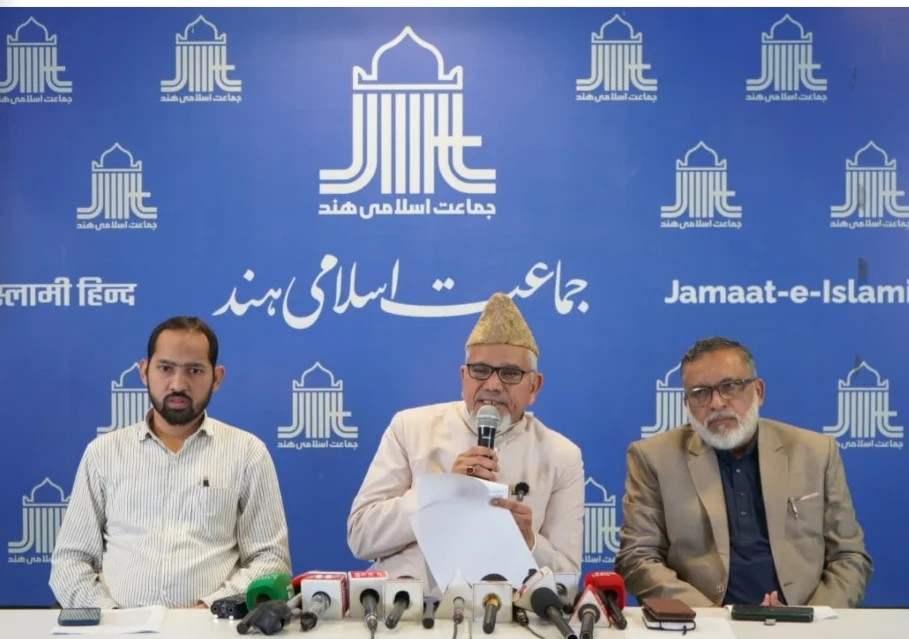
Senior leaders of Jamaat-e-Islami Hind (JIH) on May 9 voiced serious concerns over electoral processes, economic pressures, and environmental challenges during a press conference held at the organisation’s headquarters in the national capital.
Addressing the media, JIH Vice President Malik Motasim Khan called on newly elected representatives across the country to prioritise public welfare. He stressed the importance of focusing on education, safety, development, and the overall well-being of citizens in their respective states. However, his remarks were largely dominated by apprehensions regarding the conduct of recent elections, particularly in West Bengal.
Motasim Khan alleged that the Special Intensive Revision (SIR) process in the state had resulted in the disenfranchisement of lakhs of voters, thereby potentially influencing electoral outcomes. He questioned the transparency and fairness of such elections, suggesting that they may not fully align with democratic principles. According to him, marginalised communities, including Muslims, Dalits, and Pasmanda faced considerable obstacles in exercising their voting rights.
He further highlighted tensions between the central government and state administrations, claiming that interference had disrupted fair electoral functioning. Referring to incidents of post-election violence, including the burning of political party offices, he expressed concern over the deterioration of law and order. He also criticised the use of polarising narratives and hate speech during election campaigns in West Bengal and Assam, stating that such practices undermine the spirit of democracy.
In contrast, he pointed to political developments in Kerala and Tamil Nadu as examples of healthier democratic functioning. According to Motasim Khan, electoral changes in these states reflected local aspirations and demonstrated the natural and constructive evolution of democratic systems.
Emphasising the importance of a balanced political ecosystem, he underscored the need for a strong and constructive opposition. He stated that an effective opposition is as vital as a capable ruling government in ensuring accountability. He urged Opposition parties to enhance coordination, refine their strategies, and strengthen grassroots engagement.
Concluding his remarks, he called for comprehensive electoral reforms, including improvements in the functioning of the Election Commission, to restore public trust and ensure transparency in the democratic process.
Meanwhile, JIH Vice President Mohammed Salim Engineer drew attention to mounting economic, environmental, and social challenges in the wake of global geopolitical tensions involving Iran, Israel, and the United States. He warned that rising international instability could lead to significant increases in fuel prices worldwide, with India likely to face sharp hikes in petrol, diesel, and LPG costs now that elections have concluded.
Salim Engineer cautioned that rising energy prices would have a cascading effect, driving up transportation costs, electricity tariffs, and the prices of essential goods. This, he said, would place an additional burden on common citizens, particularly the working class, daily wage earners, and the lower middle class.
He urged the government to take immediate steps to mitigate the impact of inflation by introducing policies that enhance purchasing power and ensure adequate income levels for vulnerable groups. Warning of a potential economic crisis, he stressed that timely intervention is crucial to prevent widespread hardship.
In addition to economic concerns, Salim Engineer highlighted the ongoing heatwave across the country, describing it as a severe but insufficiently addressed issue. He noted that daily wage labourers and those without proper shelter are among the worst affected. Calling for urgent measures, he recommended improving healthcare facilities for heat-related illnesses, regulating working hours during peak temperatures, and providing shaded areas for public relief.
Linking the heatwave to broader environmental challenges, he criticised unsustainable development practices such as deforestation, excessive mining, and the displacement of tribal communities for industrial projects. He emphasised the need for sustainable development policies that maintain ecological balance.
Referring to recent election outcomes, Salim Engineer also expressed concern over incidents of post-election violence, particularly in West Bengal, citing attacks on communities and a growing erosion of public trust in democratic institutions.
The press conference concluded with JIH leaders urging both policymakers and political stakeholders to address these pressing issues through inclusive governance, transparent processes, and long-term reforms aimed at strengthening India’s democratic and socio-economic fabric.